
 E-Paper



Mohali police bust gang behind ₹15-cr ‘customs’ scam, 7 African nationals held
Mohali police uncover scammers’ fake call centre in Noida; gang cheated over 350 people across India and abroad


A cybercrime racket operated by a gang of African nationals, who duped over 350 people across India and even abroad of nearly ₹15 crore, has been busted by the Mohali police.
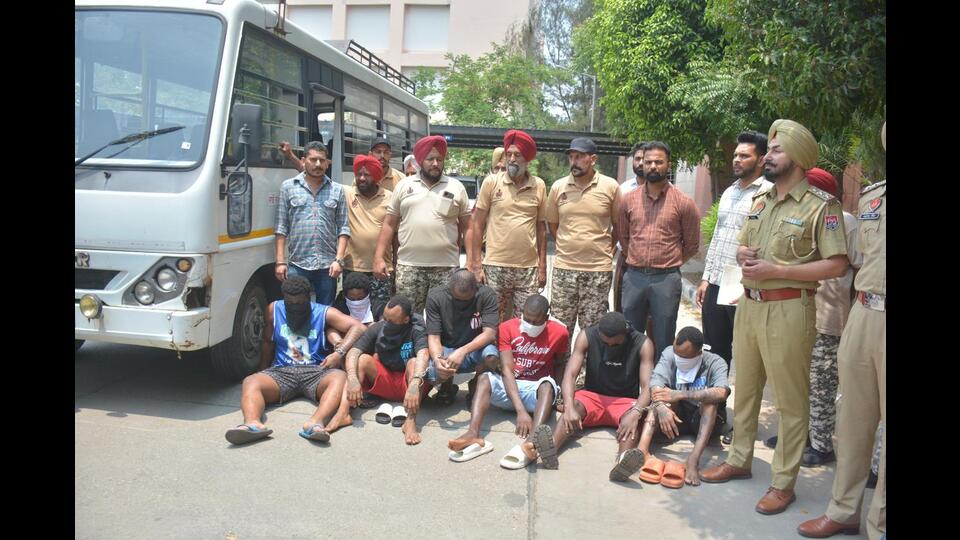
The accused, posing as UK or USA citizens over social media, lured victims with promises of expensive gifts and tricked them into paying lakhs as customs duty or bribes to receive the parcels, said police.
Probing into one such fraud reported by a city resident in January, Mohali police tracked down the gang to a rented flat in Noida, where they had been running a covert call centre, shared Mohali SSP Harmandeep Hans.
Seven accused, including five Nigerians and two Ghanaians, aged between 25 and 35, were arrested during the Friday raid.
Among them are twin brothers from Nigeria, identified as the masterminds — one a graduate and the other an engineer. Others in the gang include individuals with minimal or no education, said police, adding that most had overstayed their tourist visas.
As many as 70 smartphones, four laptops, 99 Indian and foreign SIM cards, and 31 fake bank accounts, collectively holding nearly ₹30 lakh, were recovered from the gang.
SSP Harmandeep Hans confirmed that the gang had defrauded people from multiple Indian states as well as countries like Mauritius, Indonesia and Italy.
In Punjab alone, they were behind 6-7 cases, including three from Mohali, involving losses of ₹12-13 lakh each.
DSP Rupinder Kaur Sohi added that the twins had recruited and trained new members from Ghana. The gang was initially operating from Delhi, but after a cyber police raid, they shifted their location to Noida, she added.
Lured victims with expensive gifts over social media
DSP Rupinder Kaur Sohi detailed that the gang created fake profiles on social media platforms, posing as doctors, engineers or pilots living in the UK or USA. Their targets were married people, whom they befriended through daily chats over two to three months.
Once trust was built, the scammers would claim to send the victims expensive gifts, such as watches, handbags or even bundles of US dollars, sharing photos of neatly packed parcels.
Soon after, the victims would be alerted that the gift was withheld by customs and won’t be released unless customs duties, running into lakhs, was paid.
In some cases, the gang initiated intimate conversations with their targets and later threatened to expose the chats to their spouses to extort money.


