
 E-Paper



Move to identify overstaying foreigners worries Pak-origin women in Kashmir
Recent formation of a high-powered committee by the UT administration to identify foreign nationals overstaying in Jammu and Kashmir has left nearly 350 women from Pakistan and PoK married to Kashmiri men worried as they fear face deportation that would disrupt life they have made peace with for more than decade

 Prefer HTon Google


Bushra 37, who has been running a boutique in North Kashmir’s Sopore town for a decade, is among scores of women from Pakistan, who are married to Kashmiri men and have been seeking Indian citizenship with the right to return to their parents in Pakistan. However, the recent formation of a high-powered committee by the UT administration to identify foreign nationals overstaying in Jammu and Kashmir has come as a bolt from the blue for these women from Pakistan and Pakistan-occupied Kashmir as they could face deportation, disrupting their families.
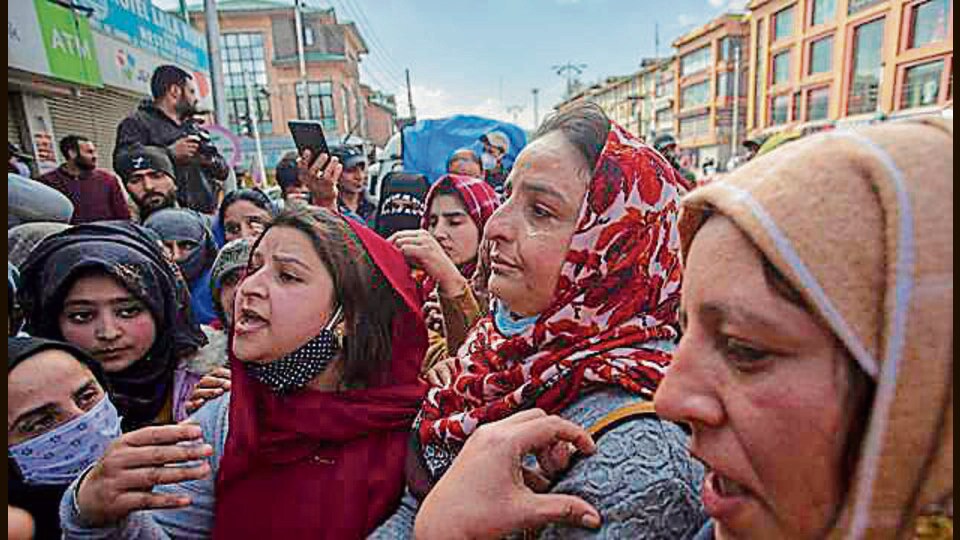
“Ever since we arrived here from Pakistan in 2012, we have been struggling for Indian citizenship. Unfortunately, we have neither been given Indian citizenship nor have we been allowed to return to Pakistan,” said Bushra, who has now built a successful boutique business.
Arrived under amnesty scheme
There are more Pakistan-origin women working at her boutique and some of them came along under the amnesty scheme of the then J&K government. “I have heard of the high-level committee created by the government. We hope that it will take a decision that will be good for all of us and our families,” she said.
Nusrat, 33, also came to Kashmir in 2012 and in 11 years, her life has seen many ups and downs, including a divorce. “When I came here, things were very different. I stayed at Tanghdar. Due to family disputes, my husband divorced me and took my two children along. Life hasn’t been easy. There are six other divorced women like me here. We feel as if we are in a big prison. We have no place to go to,” she said.
Srinagar-based Shazia, who had travelled to Kashmir along with her husband in 2012, said the formation of the new committee to check foreign nationals would add to their troubles. “It is a cause of concern for families like ours. Recently, officers sought details from us and told us that we will be allowed to travel to the other side of Kashmir to meet our siblings and relatives. Now we fear we may not be allowed to return. We have spouses and children here. My children also want to travel to meet my parents and relatives but there no guarantee we will be back here,” she said.
Last week, acting on an order by the Union ministry of home affairs, the Jammu and Kashmir government set up a high-powered committee to identify foreign nationals overstaying illegally in the Union Territory since January 1, 2011. Official sources said that the aim of the committee is to identify Rohingya Muslims, foreign nationals from Bangladesh and the families of surrendered militants who are staying in Kashmir after they returned to J&K via Nepal taking advantage of the amnesty scheme announced by the then chief minister Omar Abdullah in 2010. Surrendered militants started returning to J&K from 2011.
According to official data, more than 350 families, comprising wives and children of former militants travelled to Kashmir via Nepal. After they reached J&K, they surrendered before the police and were released later. The six-member panel is headed by financial commissioner and additional chief secretary, home, RK Goyal and has foreigners’ regional registration officer, Amritsar, two SSPs of the CID wing of Jammu and Srinagar, all district SSPs of the 20 districts and state coordinator, IVFRT, NIC, J&K, on board.
Struggle after struggle for families
Another woman, requesting anonymity, said she had come along with her husband in 2012 and is living in Baramulla. “We faced a lot of issues. Not only from the government but also from our own family members in Kashmir. Our children couldn’t get admission in higher classes and it took years of hard work and struggle to bring life back on track. Now if we will be deported, what will happen to our families here? For 13 years, I am not in touch with my relatives in Lahore. If God forbid, tomorrow I will be deported, our family will get shattered,” she said.
Her husband, a former militant who now looks after the family business, said: “We came here taking advantage of the amnesty scheme. The government should treat us like its own citizens and issue us Indian passports so that we can meet our relatives across the border and come back. Unfortunately, the new process looks as if plans are being made to deport us. Some may be happy but for most of us, it will disrupt the life we have made peace with.”


