E-Paper



MP report card: Need more open, consensus-driven approach in House: Naveen Jindal
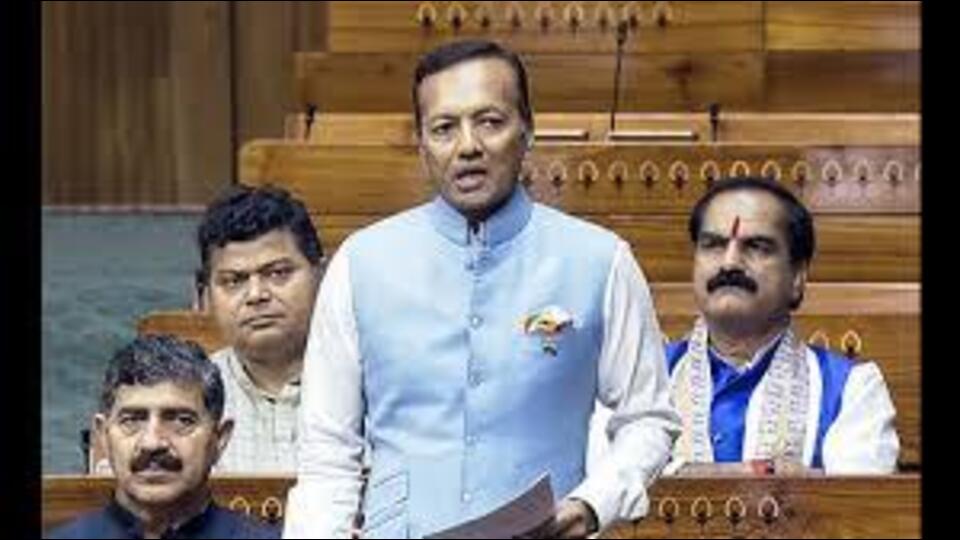
Returning to the Lok Sabha after a decade has been both an honour and an emotional moment. As a third-term MP, this year has been about further deepening my engagement with the people of Kurukshetra and raising their voices in Parliament with renewed resolve, says Naveen Jindal

 Prefer HTon Google


Ahead of 2024 Lok Sabha elections, industrialist-turned politician Naveen Jindal parted ways with the Congress and joined the BJP, a gamble that paid off. And after a decade-long hiatus, the two-term former Congress MP returned to the lower House for a third time, but this time with lotus in hand.
How would you describe your first-year experience?
Returning to the Lok Sabha after a decade has been both an honour and an emotional moment. As a third-term MP, this year has been about further deepening my engagement with the people of Kurukshetra and raising their voices in Parliament with renewed resolve. Even when I wasn’t actively involved in politics, my connection with Kurukshetra never waned. Development work continued, and ahead of the 2024 elections, people themselves urged me to contest again. Their faith — along with Prime Minister Narendra Modi’s vision of a Viksit Bharat — motivated me to return to public service.
What was the high point of the year for you personally and your party in the House?
Personally, standing again in the Lok Sabha after 10 years was a deeply emotional moment. This return came with a deeper sense of responsibility and I aspire to deliver. For the party, the 2024 mandate was historic. The people of India reaffirmed their faith in Prime Minister Narendra Modi, entrusting him with a third consecutive term—an extraordinary achievement.
The BJP-led NDA showcased its collective strength and a clear roadmap for national development. Several key legislations were passed...and many outdated colonial-era laws were modernised. In fact, I am privileged to be contributing to one such endeavour as a member of the select committee examining Income Tax Bill, 2025, that is intended to replace the archaic Income Tax Act, 1961.
Are you satisfied with the number of sittings of the Lok Sabha?
Parliament is the soul of our democracy. Each sitting is an opportunity to voice people’s concerns and shape national policy. There is always scope for improvement.
In my experience, Parliamentary Committees are where some of the most constructive and detailed work happens. They allow MPs to engage deeply, deliberate meaningfully, and operate on bipartisan lines, which is the true spirit of democracy.
While important debates do take place on the floor of the House, constructive discussion often becomes difficult, as members are expected to strictly adhere to their party’s stand. So apart from increasing the number of sittings, what we need is a more open, consensus-driven approach in the Parliament. Bringing the same spirit of collaboration of Parliamentary Committees into the House would go a long way in strengthening our democratic process.
What’s the most effective way to raise issues of public importance in the House?
The work in Parliamentary Committees, where the discussions are nonpartisan and with the sole aim of nation first, is immensely satisfying and meaningful. I am indeed privileged to be contributing as a member of different Committees, including the Select Committee to examine the IT Bill 2025. Raising issues in Parliament takes meticulous preparation, persistence, and purpose. I regularly use available opportunities like Zero Hour, parliamentary questions, and formal submissions to the ministries and raise concerns related to Kurukshetra and the nation. But for me, effectiveness isn’t just about raising an issue. It’s about resolving it. I believe in focusing on one priority at a time and following it through.
What constituency-specific issues were raised by you and what are your plans ahead?
Under the MPLAD scheme, around 165 projects of over ₹7 crore have already been recommended, covering roads, sanitation, and civic infrastructure. Additionally, ₹32 crore worth of development projects have been approved under the district plan. Inspired by my father’s (OP Jindal) belief that politics is a medium for public service, I’ve started several initiatives in personal capacity, including mobile health vans, regular health camps, the yashasvi scholarship scheme for meritorious students, and the agri startup conclave and health mela to support farmers and improve rural healthcare access.
The launch of Naveen Avsar initiative under the Naveen Jindal foundation has been a major milestone. Under this initiative, an MoU has been signed to transform ITI Behlolpur, Ladwa into an International Skill Centre. A centre for excellence is also being developed in Kurukshetra to equip our youth with future-ready skills. In the time ahead, my focus will remain on skilling youth, improving connectivity, connecting farmers with modern agri-tech solutions and making Kurukshetra a model of inclusive development.