
 E-Paper



National Family Health Survey shows improvement in Haryana sex ratio
There was a considerable improvement in the overall sex ratio that went up from 876 women (per 1,000 men) in 2015-16 to 926 in 2020-21 as per the National Family Health Survey

 Prefer HTon Google


The number of births delivered by C-section (caesarean) at private and public health facilities in Haryana has seen 7.8% rise in last five years, according to Phase-2 data of National Family Health Survey-2019-21 (NFHS-5). Also, there was a considerable improvement in the overall sex ratio that went up from 876 women (per 1,000 men) in 2015-16 to 926 in 2020-21.
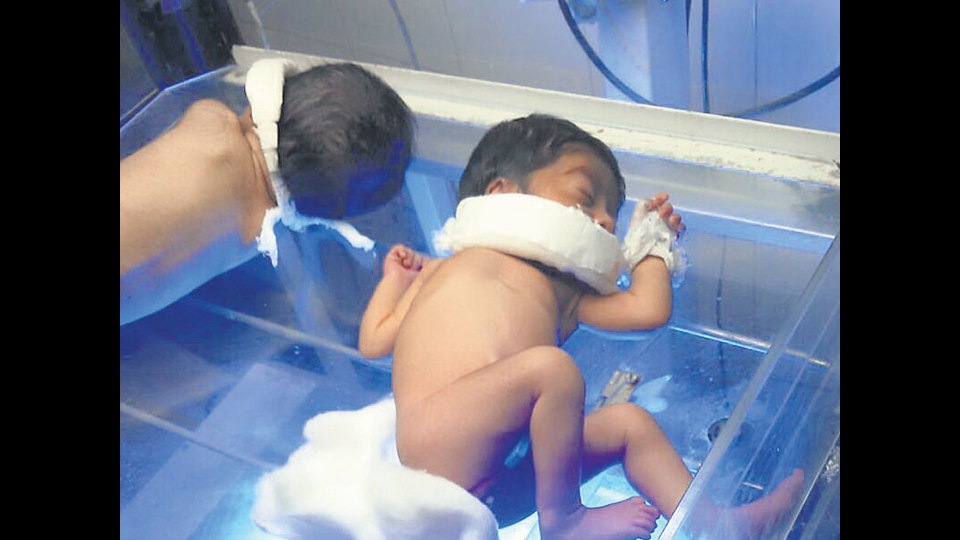
When the NFHS-4 findings were released in 2015-16, the births being delivered by C-section were 11.7 per cent, which has now risen to total 19.5 per cent (23.5 per cent in urban and 17.8 per cent in rural areas).
There has been a sharp 8.6 per cent rise (from 25.3 per cent to 33.9 per cent) in births by C-section in private health facilities in comparison to 3.1 per cent increase (from 8.6 to 11.7 per cent) in such deliveries in public health facilities of Haryana.
The NFHS 2019-21 (NFHS-5) is the fifth in the NFHS series that provides information on population, health, and nutrition for state. Due to the Covid-19 situation and the imposition of lockdown, NFHS-5 fieldwork for Haryana was conducted from January 12, 2020 to March 21, 2020 (prior to the lockdown) and from December 21, 2020 to April 30, 2021 during the post lockdown by Society for Promotion of Youth and Masses (SPYM).
The sample size of the information gathered was 18,229 households (21,909 women, and 3,224 men).
The maternal and child health indicators such as antenatal checkup, consumption of iron folic acid by pregnant women have improved in comparison to previous survey findings. For example, mothers who had at least four antenatal care visits rose from 45.1 per cent to 60.4 per cent and mothers who consumed iron folic acid for 180 days or more during pregnancy also increased from 14.3 per cent to 32 per cent.
The survey found 12 per cent rise in number of obese women (from 21 per cent in 2015-16 to 33.1 per cent now), and the men who are overweight are 28.3 per cent.
The percentage of spousal violence (physical or sexual violence) among women (18-49 years) has come down from 32 per cent in 2015-16 to 18.2 per cent. The women (15-24 years) who use hygienic methods of protection during their menstrual period has also improved from earlier 78.3 per cent to 93.2 per cent.
About 39 per cent women own a house or land either alone or jointly with others.
The quality of family planning services has registered improvement, while there has been a 6 per cent dip in female sterlisation even as male sterlisation was 0.9 per cent against 0.6 per cent five years back.


