
 E-Paper



PAU vegetable varieties identified for cultivation at national level
As many as three vegetable varieties of Punjab Agricultural University (PAU) have been identified for cultivation at the national level


As many as three vegetable varieties of Punjab Agricultural University (PAU) have been identified for cultivation at the national level.
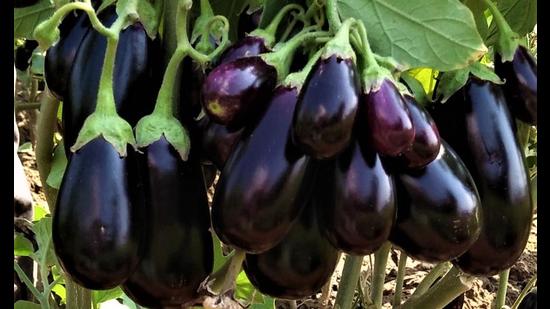
These include hybrid PBHL 56 of brinjal for cultivation in Zone IV (Punjab, Uttar Pradesh, Bihar, and Jharkhand) and Zone VI (Rajasthan, Gujarat, Haryana, and Delhi); variety Punjab Bharpoor of brinjal for Zone I (Jammu & Kashmir, Himachal Pradesh, and Uttarakhand), Zone III (Sikkim, Meghalaya, Manipur, Nagaland, Mizoram, Tripura, Arunachal Pradesh, Andaman, and Nicobar) and Zone VIII (Karnataka, Tamil Nadu, Kerala, and Pondicherry); and hybrid TH 1214 (PTH 2) of tomato for Zone IV (Punjab, Uttar Pradesh, Bihar, and Jharkhand).
TS Dhillon, head of the department of vegetable science, said PBHL 56 is a long-fruited hybrid of brinjal having purple-black fruits and gave an average yield of 274 q/acre.
“Punjab Bharpoor is a brinjal variety of small round group in which fruits bear in clusters. Its fruits are small-oblong, shining, deep purple with green calyx, having yield potential of 224 q/acre,” he added.
“TH 1214 (PTH 2) is a high yielding (270 q/acre) determinate hybrid of tomato which gives first picking in 114 days after transplanting. Its fruits are round, deep red, medium-sized, and firm. This hybrid is resistant to late blight as well as root-knot nematodes and suitable for processing,” he informed.
Dhillon further informed that the All India Coordinated Research Project (AICRP - Vegetable Crops) of the department of vegetable science has also been declared the best AICRP (VC) Centre for the year 2020.


