
 E-Paper



Post-Diwali, air quality of Haryana districts turns ‘poor to very poor’
For first time this season, air quality of five Haryana cities of Gurugram, Faridabad, Charkhi Dadri, Faridabad and Ballabhgarh in NCR dropped to ‘very poor’ category


The air quality of most Haryana cities, particularly those in the National Capital Region (NCR), deteriorated after Diwali night.
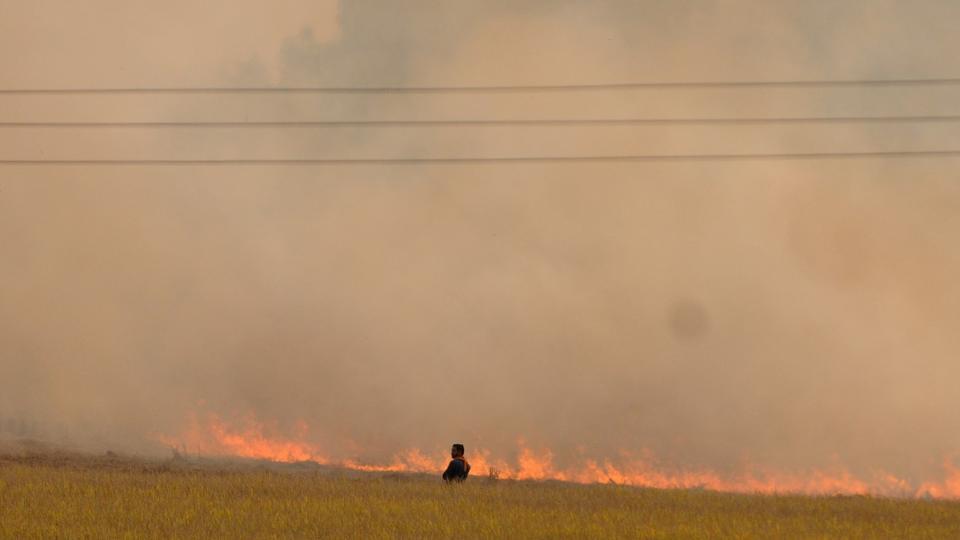
According to experts, the emission from firecrackers and an increase in the share of smoke from stubble burning cases reported during the Diwali holidays could be a key factor for the air quality worsening in Haryana cities.
No city has satisfactory AQI
The Central Pollution Control Board data shows that for the first time this season, the air quality of five Haryana cities of Gurugram, Faridabad, Charkhi Dadri, Faridabad and Ballabhgarh dropped to ‘very poor’ category, with the air quality index above 300 on Tuesday morning.
The air quality of 11 cities of the state, including Ambala, Karnal, Kurukshetra, Sonepat, Bahadrugarh, Jind, Bhiwani, Hisar, Fatehabad and Manesar, was categorised as ‘poor’.
Not a single city in the state is in the ‘satisfactory’ and ‘good’ category with the air quality of Panchkula, Narnaul, Panipat and Sirsa dipping to ‘moderate’.
Spike in farm fires to blame
State government officials monitoring the pollution are of the view that the sudden rise in the incidents of farm fires is also a key factor behind the deteriorating air quality in the region, especially in the industrial cities of the NCR.
Meanwhile, on Monday, 250 fresh cases of stubble burning were caught by the Haryana Space Applications Centre (HARSAC) raising the number of active farm fire locations in the state to 1,360 since September 15. This is the highest single-day count with a maximum of 77 new cases being reported in Kaithal district followed by 53 in Karnal, 33 in Fatehabad, 22 in Kurukshetra, 17 in Ambala, 16 in Jind and 13 in Yamunanagar.
“Since the sowing of wheat is at its peak, Haryana may witness more incidents of farm fires in the days to come as the rains delayed harvesting, shortening the window for sowing the next crop. Harvesting is still on in several districts, especially Fatehabad, Sirsa, Kaithal and Jind districts,” said an official from the state agriculture department, requesting anonymity.
Govt takes more initiatives
Also, the state government has taken new initiatives to put a check on the incidents of farm fires as panchayats or villages doing good work (zero burning) will be awarded. Even ₹1 lakh will be given to a village panchayat for shifting from the red zone to the green zone (zero burning) and ₹50,000 for shifting from yellow to green.
Director general of the Haryana agriculture department Hardeep Singh said, “Four officials from the state headquarters have been deputed in the districts where maximum cases of farm fires were reported. They will stay in the districts till the situation becomes under control”.
He said that the field staff deputed at the ground level will be punished for any negligence and will be awarded for proactive action.


