
 E-Paper



Power outages in Ludhiana render scorching summer hotter
Ludhiana residents suffer sleepless nights due to persisting heatwave, frequent power cuts, officials say subdued monsoon spell to blame

 Prefer HTon Google


Ludhiana A subdued monsoon has caused a heatwave to sweep across the district, with temperatures hovering around 40°C. Amid the sweltering temperatures, prolonged power outages across the industrial hub of the state over the last two days have added to residents’ woes.
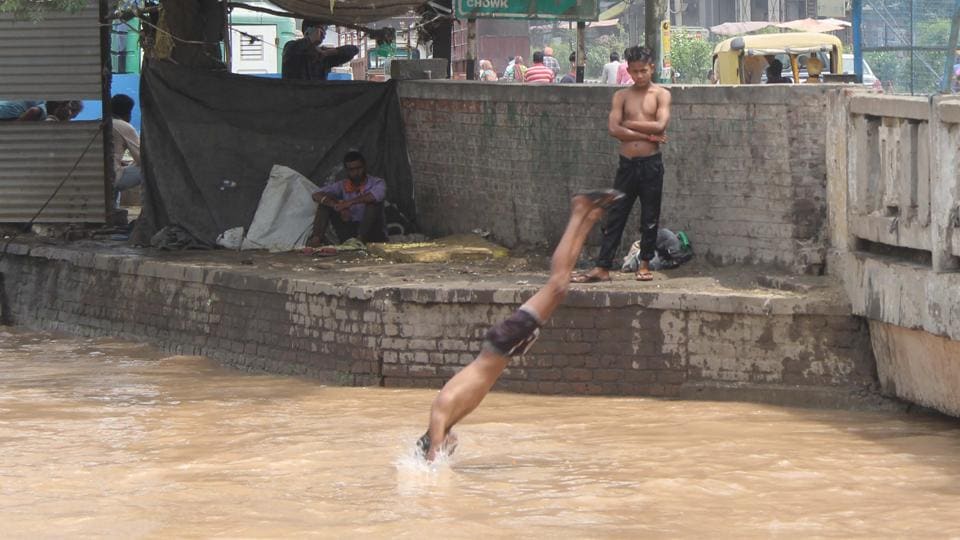
According to the India meteorological department (IMD), in the plains, heatwave is declared if maximum temperature is more than 40°C and at least 4.5°C above normal, or if it crosses 45°C. The city recorded a maximum temperature of 39.8°C, which was 4.3°C higher than the normal, while the minimum temperature was 29°C, 2.8°C higher than normal.
As the heat continued to bake the region, the power load on the grid soared, causing unscheduled power outages, which lasted for up to 14 hours on June 30 and July 1. In some places, faulty power cables were to blame for the power cuts. Even posh localities had to deal with blackouts. The whole city was plunged into darkness from 8.30pm to 9.30pm on June 30.
Officials of the Punjab State Power Corporation Limited (PSPCL) say a prolonged dry spell, caused due to a delayed monsoon, paddy transplantation and the failure of a unit in the Talwandi Sabo thermal power plant in Bathinda had amplified the problem.
Helpline numbers no help, say residents
Despite the power departments’ phone ringing off the hook as residents were hassled due to the unscheduled power cuts, there was no respite in sight. Instead, the PSPCL appealed government and public sector officers to turn off their air conditioners for the next three days.
A PSPCL spokesperson said, “We are facing trouble meeting the power demand, which is over 14,500 MW. The PSPCL has appealed to government departments, boards and corporations to use electricity judiciously by switching off lights, devices and high power-consuming appliances such as air conditioners for the next three days. Further, wherever possible, employees are advised to avoid using multiple AC units within the office, which will decrease the power load on the system as well as the electricity bill.”
Residents of Bhai Randhir Singh Nagar, one of the posh localities of the city, had no power for at least 14 hours. Avtar Singh, a local, said, “The first power cut took place around 8.30pm on Wednesday. The power supply was resumed after an hour but was again disrupted within five minutes. Numerous complaints and phone calls later, supply was resumed in one phase around 2am.”
Similarly, Rajguru Nagar, Threeke village, and Jagjit Nagar had to contend with a 16-hour power outage. Advocate Nalin Kaushik, who had registered 15 complaints, said, “They (power department officials) kept telling me that they would send over a team to check the issue, but nobody came. With the temperatures touching 45°C, it was impossible to sleep without a fan or air conditioner.”
Ansar Colony, behind Sector 32, Chandigarh Road, said they have been facing the issue for eight days. Kavita Rani, who lives in the colony, said. “Each night, the power supply is interrupted around 11.30pm and resumes after 5 hours.”
Those residing in New Nanda Colony, Kakowal, are not faring any better. Sunny Singh, a resident of Nanda Colony, said power supply to the area was disrupted around 2am. When they did not get relief from the helpline number, they approached the PSPCL office at Kakowal road, but no official was present there. Power was resumed in the area after 9 hours.”
Durgapuri of Haibowal Kalan had to suffer the double whammy of interrupted power and water supply. Rajesh Kumar, a resident of Durgapuri, said water supply was affected due to the electricity outage. “Power supply was disrupted around 1am and resumed around 3.30pm.”
Similar, outages were seen in Model Town, Civil Lines, Dugri, Pakhowal Road, Salem Tabri, Focal Point and Jamalpur areas.
Heatwave to continue till July 10
Punjab Agricultural University (PAU) department of climate change and agriculture meteorology officials say monsoon had arrived 16 days in advance on June 14, which had weakened the weather systems in the region. Head of the department Prabhjyot Kaur said, “Due to a break in the monsoon pattern, the heatwave will continue till July 10.”
Meanwhile, civil surgeon Dr Kiran Ahluwalia had sounded a heat wave alert across the district. Apart from advising people to protect themselves from the severe heat, the civil surgeon has asked all government hospitals and community health centres in the district, including dispensaries, to share details of heatstroke patients.
“Heatstroke is caused due to prolonged exposure or physical exertion in the heat. It can cause an altered mental state or behavioural changes, confusion, agitation, slurred speech, irritability, delirium, seizures and even coma, said Dr Rajesh Mahajan, professor of medicine at Dayanand Medical College and Hospital (DMC&H).
An untreated heatstroke can damage the brain, heart, kidneys and muscles. Delay in diagnosis and treatment can also result in serious health complications or death, said Dr Mahajan.
There has been a significant shift in weather cycles: Expert
Experts have expressed growing concern over the shifting weather patterns over the last few years. They say shifts that may appear minor now may eventually have a devastating impact.
The average maximum temperature in June was 36.2°C, nearly 2°C below normal, officials of the meteorological department said. However, at a mean of 25.4°C, the minimum temperature remained normal.
“The district received 84.8mm rainfall in June, which met the ideal quota for the month,” said Punjab Agricultural University (PAU) department of climate change and agriculture meteorology head Prabhjyot Kaur.
“It may look that all is well on paper, but there has been a significant shift in weather cycles. Even in May, the average maximum temperature had remained two degrees below normal. In both the months, we saw a sudden rise and dip in temperature. Though, the downpour received in June was as expected, but it was short and sharp, which is not beneficial for groundwater recharge,” said Kaur.
An erratic rainfall pattern has been observed over the past two decades, where the duration of monsoon has increased, but there has been inadequate rainfall in the region, she added.
Beat the heat
A heatstroke can be prevented by taking a few precautions:
* Avoid strenuous activity in hot weather. Schedule exercise or activities that require physical exertion early in the morning or in the evening when it is cooler.
* Drink plenty of fluids. Add salt or ORS to water or have lemonade to replenish salt balance in the body after sweating.
*Avoid using alcoholic or sugary drinks to rehydrate.
* Wear loose-fitting, light clothing to prevent sunburn


