
 E-Paper



Power, water supply to Jammu Rohingya shanties snapped
Over 25 dwellers affected, Bahu tehsildar takes action after a housing society welfare association complained regarding security issues and hooliganism in their area

 Prefer HTon Google


Acting upon a written complaint lodged by a housing society welfare association, the Jammu district administration has snapped water and electricity supply to around 25 to 30 “illegal” Rohingya immigrants living in over 10 shanties in Bahu area. The action was taken near Nideesh Enclave in Channi Rama area on the orders of the Bahu tehsildar.
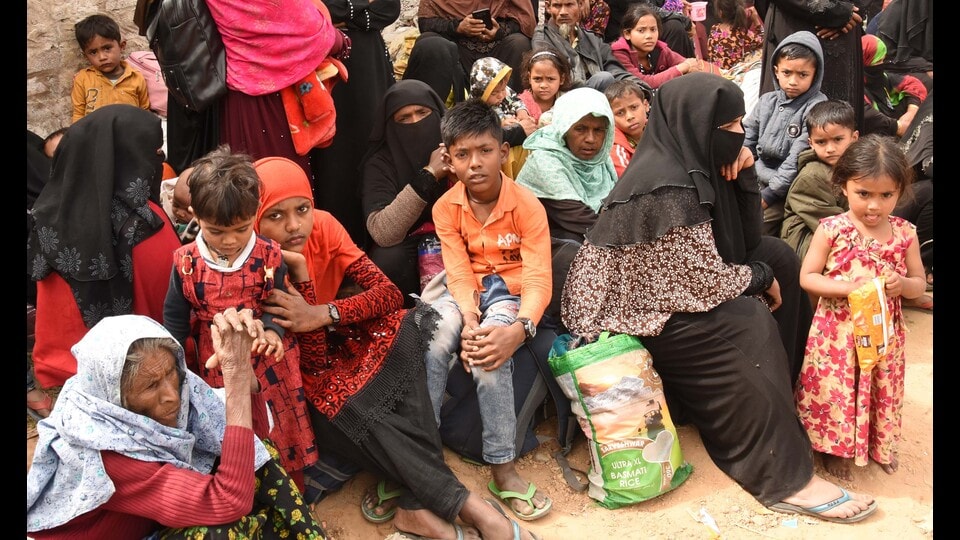
In an order issued by the tehsildar to officials concerned, it was mentioned that Rohingya immigrants had illegally occupied a plot and constructed shanties besides taking up an unauthorised scrap business. The letter also highlighted hygiene and safety concerns besides frequent loud quarrels and fights among them, disturbing peace in the locality.
However, few Rohingya women with veils around their faces showed UNHCR’s refugee cards issued to them in New Delhi. “We fled Myanmar and reached here in 2017. Initially, for a year we lived in Bhatindi and Malik Market areas where we didn’t pay any rent. Later, we shifted here to Channi Rama where we pay ₹2,000 a month as rent. However, some officials came here a few days ago and snapped our water and electricity connections,” said one of them. The woman also informed that the officials asked them to leave the area.
A similar punitive action was initiated against Rohingya in Channi Rama, Sunjuwan and Narwal Bala areas in December last year when the district administration had disconnected electricity and water connections of 14 plots where 409 Rohingyas lived. The administration had also asked plot owners to evict Rohingyas from their plots at the earliest.
However, PHE minister Javid Ahmed Rana had severely criticised the decision and had issued orders to restore water connections immediately.
While the lieutenant governor’s administration sees these illegal immigrants as a serious security threat in the border region of Jammu and Kashmir, Kashmir-based political parties call their issue a “human problem”.
The UT administration, on the instructions of the Union home ministry on March 6, 2021, had launched a verification drive for Rohingyas and sent 271 to the Hiranagar holding centre. Their number has now gone up to 283, including 60 children and 84 women, a jail official said. “Hiranagar sub-jail has been converted into a detention centre where families of Rohingyas have been kept together. At the time of labour pain to expecting women, we take them to the hospital for their deliveries. Doctors also visit the prison for their regular health checkups,” the official added.
A retired top prison official said, “Keeping them in the detention centre since March 2021 and feeding them doesn’t make any sense. The Centre should better take a decision on them.”
On April 6, 2022, the High Court of J&K and Ladakh had directed the home secretary to identify all illegal immigrants from Myanmar and Bangladesh in Jammu and Kashmir within six weeks. According to government data, 13,400 illegal immigrants from Myanmar and Bangladesh were living in various parts of the UT.


