E-Paper



Pre-poll BPL expansion turns into post-poll clean-up: 10L families in Haryana removed from BPL list: Saini to House
Between January 2024 and July 2025, Haryana added 8.7 lakh families to the BPL category, but removed 9.6 lakh, leading to a sharp fall in total BPL households from 52.3 lakh in March this year to 41.9 lakh by August 22CHANDIGARH

 Prefer HTon Google


Haryana’s “eyebrow raising” below poverty line (BPL) list, expanded generously by the Bharatiya Janata Party-led government before the October 2024 assembly elections, is now undergoing a course correction, it has emerged.
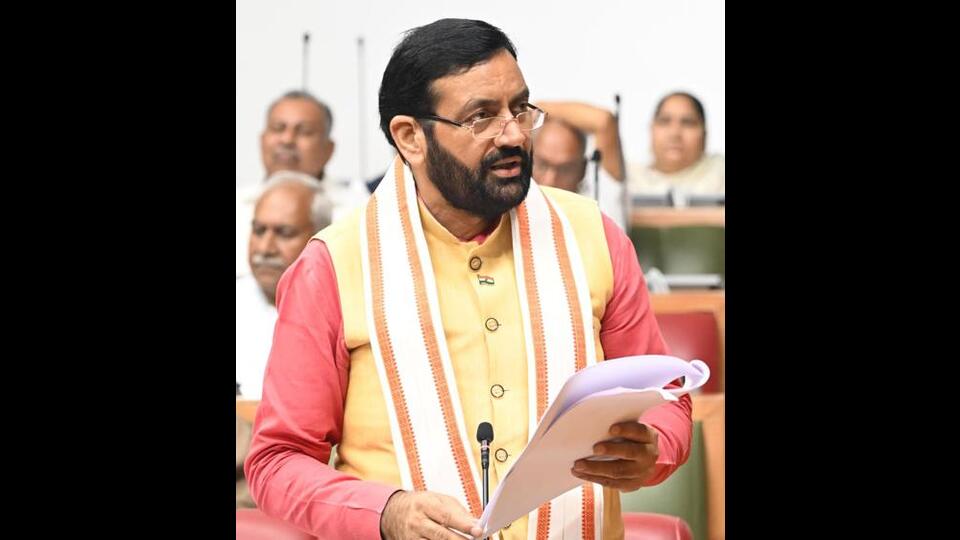
The Nayab Singh Saini-led BJP government on Tuesday admitted in the assembly during the ongoing monsoon session that till March 31, 2025 the total number of “families in the BPL” category was 52,37,671.
But after the “clean-up” exercise was started in April following doubts were raised in political circles over the sudden rise in the number of BPL families ahead of the assembly election, the government has removed 10,44,002 families from the BPL list in the last five months. Now, the total number of families in the BPL category as on August 22 was 41,93,669.
As per 2011 census, Haryana’s population was 2.54 crore. In the 2024 assembly elections, there were a little over 2 crore eligible voters in Haryana.
And as many as 42 lakh families still falling in the ambit of BPL category means that annual income of at least 50% population of Haryana is less than 1.80 lakh as families having income less than ₹1.80 lakh become eligible for BPL benefits.
The sharp fall in total BPL households from 52.3 lakh in March this year to 41.9 lakh by August 22 came to the fore in response to a question Congress MLA Shishpal Keharwala (Kalanwali segment) had asked. The law maker had sought details of the number of new BPL cards issued between January 1, 2024 and July 31, 2025 and the number of BPL cards discontinued during the same period. The MLA also wanted to know the total number of BPL cards in the State on March 31, 2025 and the number of BPL cards at present and the basis on which the BPL cards have been discontinued.
“8,73,507 families were added to, and 9,68,506 families were moved out of the BPL category during the period from January 1, 2024 to July 31, 2025. The total number of families in the BPL category as on 31 March 2025 was 52,37,671, and the total number of families in the BPL category as on August 22, 2025 is 41,93,669,” Saini informed House, adding that families having income more than ₹1.80 lakh become ineligible for BPL benefits as per government instructions.
The Congress MLA asked what action the government will take against the “bogus” BPL beneficiaries and wanted to know the basis on which nearly nine lakh families were included in the BPL category and over nine lakh removed after the assembly elections.
“This is a scam and it must be probed. How can lakhs of families be included and then removed from the BPL list?” Congress legislator Shishpal asked.
The issue of sudden increase in the BPL categories ahead of assembly elections was debated hotly during the budget session in March also. In the 90-member assembly, BJP has 48 MLAs, Congress 37, INLD two and three MLAs are Independent.
Responding to the accusations of the Congress MLA, Saini said that earlier Congress was raising hue and cry over rise in BPL list. “We conducted a survey, an exercise was started before deleting the names from BPL list, but now again they (Congress) have a problem with this exercise,” said Saini even as Congress demanded more clarity.
The chief minister further clarified that the income details for BPL cards are automatically linked with the portal and that if a family’s income is found to be higher than the eligibility limit, the card is automatically cancelled. “The objective of this system is to ensure transparency and guarantee that benefits reach only the genuinely eligible families,” Saini said.
BPL CARDS
Haryana has implemented the National Food Security Act, 2013 (NFSA) from August 20, 2013, categorising eligible households as Antyodaya Anna Yojana (AAY) and other priority households (OPH). Presently, AAY families are entitled to 35 kg foodgrains per family per month, while PH (BPL) families receive 5 kg per member per month. With effect from January 2023, the Union government has directed that foodgrains under NFSA and Pradhan Mantri Garib Kalyan Anna Yojana (PMGKAY) be distributed free of cost.
The state government informed that under PMGKAY, 66,250 MT of wheat is distributed monthly in Haryana. From October 2024 to April 2025, around 38,000 MT of bajra per month was distributed to newly eligible beneficiaries, with the State government bearing an expenditure of about ₹107 crore per month.
The government stated that during 2024–25 fiscal, 7 lakh MT wheat (NFSA), 3. 44 lakh MT bajra, 46,740 MT sugar and 98,454 kilolitres of mustard oil was distributed among the beneficiaries.
“As on date, 2,53,667 AAY and 39,40,002 OPH (BPL) ration cards are operational in the State, covering a total of 41,93,669 beneficiaries...Under the Antyodaya Aahar Yojana, 1 kg sugar is also provided monthly to all AAY and OPH (BPL) families. The State bears an annual subsidy burden of approximately ₹1,312 crore for mustard oil and ₹158 crore for sugar,” reads the written reply of the government.