
 E-Paper



Punjab: As power demand peaks, clamour for free power policy review grows
“The office timings should be changed from 7am to 2 pm and all commercial establishments, including malls, shops, should be closed by 7pm,” reads the AIPEF letter. Peak load restrictions should be imposed on industry, it added. “Power theft should be covered as an offence under the NSA. Free power as a state policy should be reviewed forthwith,” it said.

 Prefer HTon Google


The continuous spell of searing heat has pushed Punjab’s power demand to an all-time high prompting the All India Power Engineers Federation (AIPEF) to request Punjab chief minister Bhagwant Mann to take immediate measures to avoid power grid disturbance.
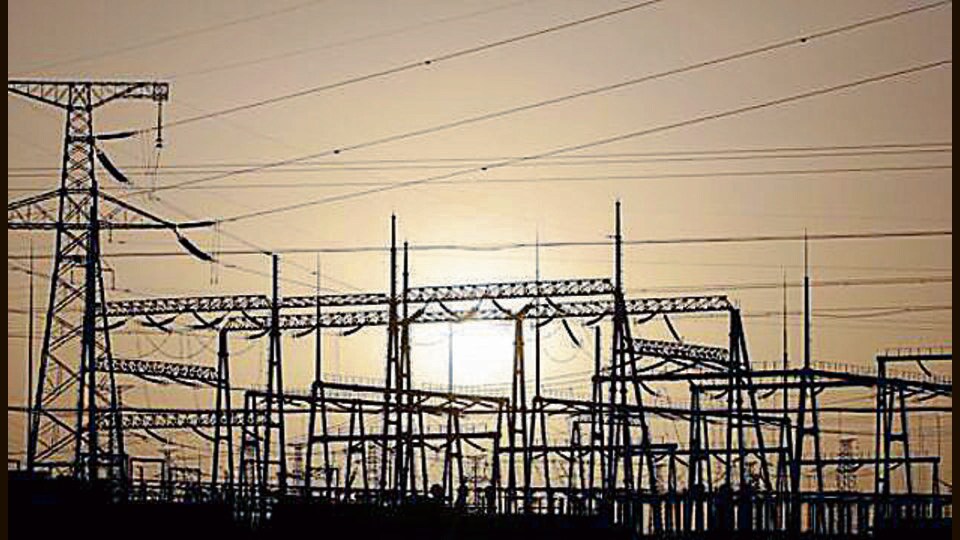
During the first 16 days of June, Punjab’s power demand increased by 43% compared to the corresponding period last year. The highest peak power demand in Punjab was recorded on June 14. As per the PSPCL data, peak power demand was 15,775 MW on June 14 this year, which was an all-time high, compared to 11,309 MW of same time last year.
The engineer’s body wrote to the CM to make changes in the office timings of government departments to offset the rising power demand.
“The office timings should be changed from 7am to 2 pm and all commercial establishments, including malls, shops, should be closed by 7pm,” reads the AIPEF letter. Peak load restrictions should be imposed on industry, it added. “Power theft should be covered as an offence under the NSA. Free power as a state policy should be reviewed forthwith,” it said.
In the letter to the CM, the AIPEF requested that the state should seek an additional 1,000 MW of power from the central pool given the unprecedented increase in power demand in the state.
“Paddy sowing in the remaining areas of Punjab should be shifted to June 25, and no one should be allowed to violate the date. Water guzzling varieties like PUSA 44 should be banned and encourage varieties like PR126, basmati, etc., which mature in 90 days,” said the AIPEF.
VK Gupta, spokesperson, AIPEF, said “The situation of power availability and supply thereof is becoming serious by the day. Neither the central government nor the state government initiated any steps to control the power demand. If the situation prolongs, there are fair chances of grid disturbance.”
Meanwhile, the power demand in Punjab has already shot up apparently owing to the searing heatwave conditions in the state. During the first 16 days of June, Punjab’s power demand increased by 43% compared to the corresponding period last year.
The data of Punjab Power Corporation Limited (PSPCL) revealed that the power consumption between June 1 and 16 was 4,148 million units. While last year the power consumption in the state stood at 2,900 million units. The PSPCL, however, has the capacity to manage nearly 16,000 MW peak power demand at a given time.
With additional agricultural load — expected to rise in the coming days due to paddy cultivation in Punjab — the current power situation might lead to an unmanageable power situation.
The PSPCL said that no scheduled power cut has been imposed in the state despite a 43% rise in power consumption. “There is no doubt that PSPCL is on the edge due to severe heatwave conditions coupled with ongoing paddy transplantation which has shot up the power consumption in the state by 43%. So far, we have been able to manage it,” said a top official of the PSPCL.
He said that neither the state government nor Union government was considering heatwave conditions as a natural calamity and taking measures accordingly. “The PSPCL is managing 43% rise in power consumption without any power cut. This has been possible only due to systematic planning and hard work of the officials,” he said.
Adding to the burden, the Punjab agriculture department advanced the paddy transplantation date from June 20 last year to June 15 this year despite prevailing heatwave conditions and the late arrival of monsoon.
Punjab as per the country nodal weather agency is 88% rain deficit in June.


