
 E-Paper



Punjab farm fires choke industrial towns of Ludhiana, Mandi Gobindgarh
Day after highest number of 3,634 paddy stubble burning incidents in state, Mandi Gobindgarh records season’s poorest AQI so far at 373 and Ludhiana 315 points


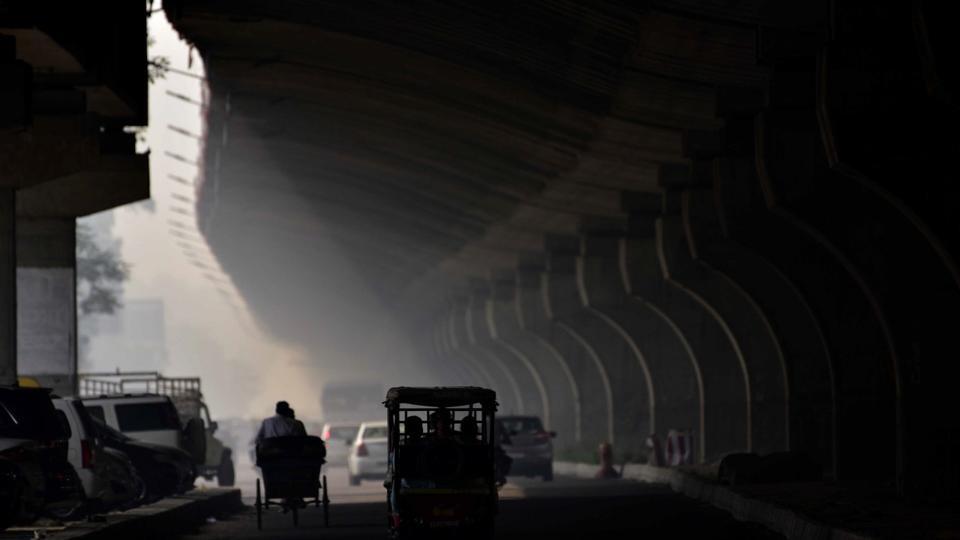
A day after Punjab reported the highest number of 3,634 farm fires this paddy harvest season, the air quality index (AQI) in the state’s industrial towns of Mandi Gobindgarh and Ludhiana dipped to the very poor category at 373 and 315 points, respectively.
Also read: Children choke on toxic air, risk serious illnesses
According to the Central Pollution Control Board’s National Air Quality Index monitoring website, the spike in the number of farm fires has directly impacted the air quality of towns in the state with the industrial towns seeing the most polluted day of the season so far.
Ludhiana-based Punjab Agricultural University’s meteorology department head Pavneet Kaur Kingra said, “Low wind velocity (less than 5kmph) and dip in temperature creates closed-room conditions, causing suspended particles to keep hanging in the air. The farm fires have compounded the problem and led to the rise in pollution level.”
An AQI between zero and 50 is considered good, 51 and 100 satisfactory, 101 and 200 moderate, 201 and 300 poor, 301 and 400 very poor, and 401 and 500 severe.
Prolonged exposure causes respiratory illnesses
Prolonged exposure to air in the very poor category causes respiratory illness.
Senior pulmonologist at Dayanand Medical College and Hospital (DMCH), Ludhiana, Dr Akashdeep Singh said, “Such weather conditions are very harmful for people with respiratory disease and cause allergies among all age groups, particularly among the elderly and children.”
He advised people to avoid venturing out and if required wear a mask to avoid respiratory problems.
From moderate to very poor category in a day
On November 2, Mandi Gobindgarh’s AQI was 102, while on Thursday it reached 373 points.
The condition in nearby Khanna town was relatively better with an AQI of 172 from 196 points on November 2 and 153 on November 1.
The AQI in Ludhiana has been deteriorating since Diwali on October 24. The city’s AQI turned from bad to worse and fell to very poor at 304 points on November 1 and 252 points on November 2.
On October 31 it was 221, while on October 30 it was 282. The share of particulate matter with diameter less than 2.5 micrometres (PM 2.5), which hit the 183-mark on Diwali, plunged to 302 points on October 25. On October 26, it was 291, 252 on October 27, 209 on October 28, and 172 on October 29.


