
 E-Paper



Punjab farm fires inch towards 6,000, 5-year decline reversed
In a reversal of the consistent year-on-year decline witnessed since 2020, the state has recorded 5,972 farm-fire incidents as of November 15

 Prefer HTon Google


Punjab’s stubble-burning count is nearing the 6,000 mark, surpassing last year’s entire tally by over 850 incidents, even as nearly 98.5% of the paddy harvesting has been completed.
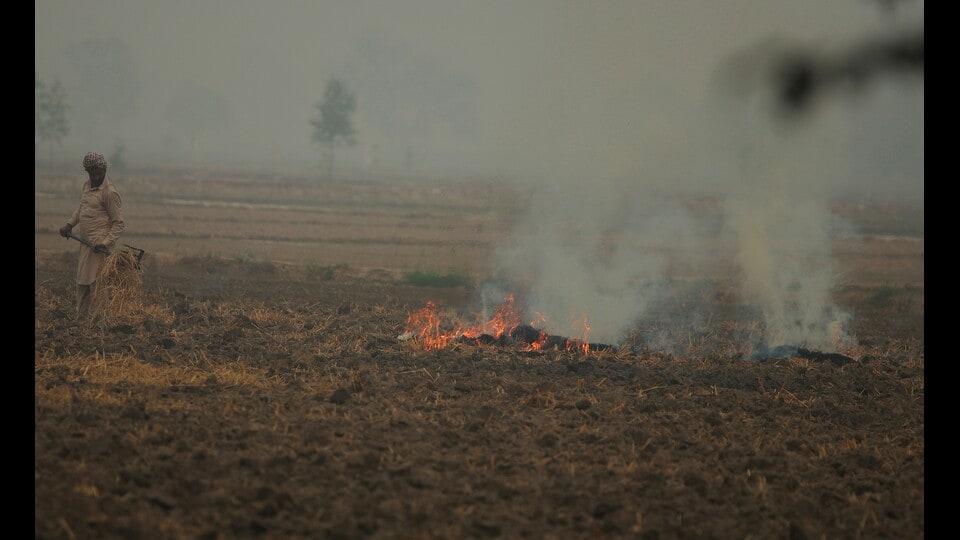
In a reversal of the consistent year-on-year decline witnessed since 2020, the state has recorded 5,972 farm-fire incidents as of November 15, against 5,114 during the entire 2025 season — an increase of 858 cases, or 16.8%.
Before this, the number of incidents had fallen from over 80,000 in 2020 to 65,404 in 2021, 45,323 in 2022, 28,117 in 2023 and 7,626 in 2024, dropping further to 5,114 in 2025.
The latest monitoring report of the Commission for Air Quality Management (CAQM) reveals that the Malwa belt and adjoining border districts continue to account for a substantial share of the incidents, with Ferozepur, Sangrur, Bathinda and Patiala among the major contributors.
Ferozepur worst-affected district
Ferozepur has emerged as the worst-affected district with 817 incidents, followed by Tarn Taran (700), Sangrur (689), Bathinda (528) and Patiala (396).
A district-wise comparison with last year’s tally shows that Ferozepur has recorded the sharpest increase, with 817 cases against 520 during the corresponding period in 2025, a rise of 297 incidents.
Barnala has witnessed an increase of 242 cases, from 100 to 342, while Bathinda’s count has increased by 194, from 334 to 528. Patiala has also recorded 167 more incidents, rising from 229 to 396.
Sangrur, despite being among the top contributors with 689 incidents, has marginally improved from 694 during the corresponding period last year. Tarn Taran, meanwhile, has reported 700 cases against 683 last year.
98% harvesting completed, but stubble burning far from over
Despite 98.5% of the harvesting being complete, farmers continue to burn paddy residue to clear their fields for the next crop.
Several videos circulating on social media from Patiala and Sangrur show farmers openly setting their fields on fire. Some have even justified the practice, saying burning is the most convenient way to clear the fields. However, no action has been taken by the police or district administrations against those openly burning stubble in the videos.
The practice is likely to continue for another week as farmers who cultivated late-maturing paddy varieties are expected to clear their fields in the coming days. Many are also still waiting to sell their produce in grain markets amid slow procurement and lifting, further delaying field clearance and wheat sowing.
The continuing farm fires are also a concern for air quality across north India. Delhi’s official AQI stood at 290 in the poor category on November 15, against 367 a day earlier. Although several factors contribute to the deterioration in air quality, continued stubble burning in Punjab adds to the regional pollution burden.
1,859 FIRs, 2,046 red entries
On the enforcement front, authorities have registered 1,859 FIRs under Section 223 (disobedience to order duly promulgated by public servant) of the Bharatiya Nyaya Sanhita, punishable with up to six months in jail, and made 2,046 red entries in farmers’ land records, preventing the farmer from selling or mortgaing the marked piece of land.
Of the 5,972 reported incidents, 5,616 sites have been inspected, with crop burning physically verified at 2,478 locations. Environmental compensation has been imposed in 2,219 cases, amounting to ₹1.1 crore, of which ₹40.55 lakh has been recovered. The report also records prosecution proceedings against 35 nodal and supervisory officers under Section 14 of the CAQM Act. No charge sheets or suspension orders have been issued against these officers so far.


