
 E-Paper



Punjab feels the squeeze, to discontinue kinnow from mid-day meal platter
As per officials of Punjab Agro export corporation (PAGREXCO), an organ of state government engaged in procurement and supply, about 1,000 tonne kinnow was bought from orchardists. With kinnow season reaching its fag-end, there are also complaints of supply of rotten fruits.

 Prefer HTon Google


After purchasing kinnow for an exorbitant ₹7 per piece to supply to 19 lakh students across government schools in the state, the Punjab Mid-day Meal Society (PMMS) has decided to discontinue the citrus fruit from the mid-day meal platter.
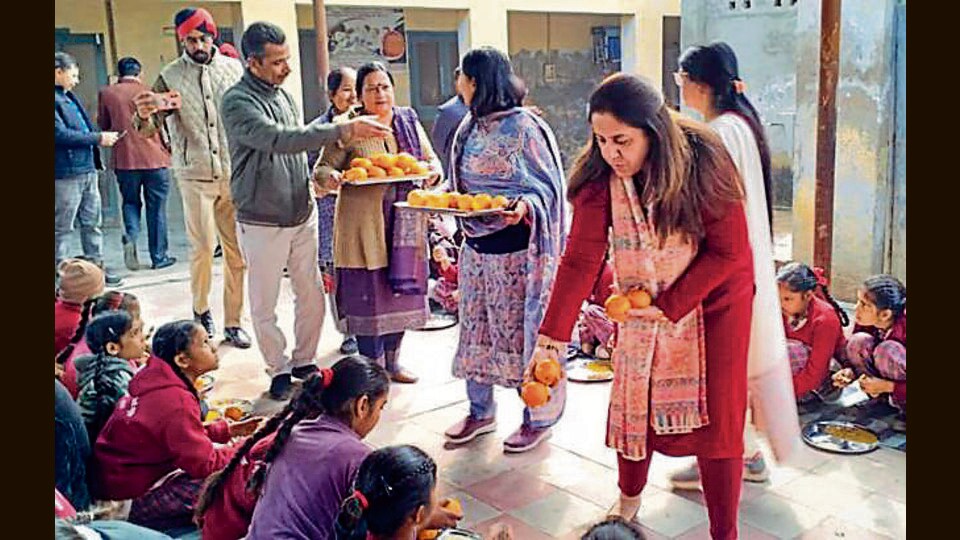
As per officials of Punjab Agro export corporation (PAGREXCO), an organ of state government engaged in procurement and supply, about 1,000 tonne kinnow was bought from orchardists.
With kinnow season reaching its fag-end, there are also complaints of supply of rotten fruits.
PPMS general manager Varinder Singh Brar said on Friday that the society would consider the purchase of kinnow from Abohar in Fazilka or any other fruit for bulk supply only if a state agency or orchardists ink a pact with the society to supply fruits at competitive prices.
“From next week, all government schools will revert to buying locally available fruits for students as we have stopped buying kinnows from March 7. We agreed to buy kinnow as a measure to assist farmers undergoing financial challenges due to the low rates being offered to them but it turned out to be economically unviable. The market was offering ₹7-10 per kg to kinnow growers but after a heavy transport cost, PMMS ended up paying ₹7 for a piece of the mandarin,” said Brar.
In January this year, Punjab introduced bananas in the mid-day meal scheme for nearly 19 lakh students studying in 19,120 government schools across the state.
Brar said it was the first time that a fruit was included in a mid-day meal in Punjab and banana was chosen based on nutrients and it was easy to source across the state.
PMMS was spending ₹5 per student for bananas supplied once a week but the decision to buy kinnow led to additional costs.
Why kinnow was selected
After three consecutive failed seasons of kinnow, fruit growers of Fazilka’s Abohar, the hub of kinnow cultivation in the country, witnessed the highest production in 2023-24.
There was resentment among farmers after they offered low rates for the crop. Last month, kinnow growers dumped huge amounts of fruits outside the Fazilka deputy commissioner’s office following which, the authorities decided to procure the fruit for mid-day meal.
Around mid-February, Punjab Agro export corporation (PAGREXCO), an organ of state government, was roped in to buy kinnow from farmers and transport it to 228 educational blocks across 23 districts.
PMMS GM said PAGREXCO bought kinnow for ₹4 per piece and an additional rupee per piece was incurred as transportation cost from Abohar to blocks.
“PMMS had to arrange its means to transport fruit crates from blocks to the schools that led to an average of ₹2 per piece of kinnow. The horticulture department wants us to buy litchi from Pathankot, ber from Mansa, pear from Tarn Taran and guavas grown in different districts for the mid-day meal. While we are eager to support farmers but PMMS is mandated to give nutrient and quality food that is economical,” added Brar.
Deputy director of the state horticulture department, Jagtar Singh said that in 2023-24, an estimated 13 lakh tonne kinnow was grown in Fazilka.
“Overproduction led to a glut-like situation and affected its quality which led to a dip in rates. Extended winter conditions reduced the demand for kinnow and farmers faced a financial crunch. Later, the government devised a formula to buy kinnow from farmers for mid-day meal,” said the official.
Singh said in the absence of a cold-store to handle the quantity of kinnow cultivated in Abohar, farmers have little option of marketing their produce.
“Kinnow is an annual crop and the region has no other agriculture or horticulture crops requiring a warehouse and there is no investment in cold storage,” he added.
Less than 1% of production bought by Punjab Agro
PAGREXCO assistant manager Gurpreet Singh said the agency procured about 1,000 tonnes of kinnow for the mid-day meal scheme.
“We procured about 10,000 tonnes kinnow for various purposes, including gin manufacturing, sale in the market and supply for schools. This time, there was a huge production but the quality of the fruit was not up-to-the-mark and it resulted in fewer buyers in the market. PAGREXCO started purchasing fruits at a notice of 2-3 days and we supplied kinnow to schools in three instalments,” he added.


