
 E-Paper



Punjab’s farm fire cases have seen a dip, state officials tell CAQM team
The figure stood at 5,041 between September 15 to November 6, 2024, while during the same period in 2023, 19,463 cases were logged.


Punjab has seen a considerable drop in stubble burning cases this year, state government officials told a team of the Centre’s commission for air quality management (CAQM), which is on a two-day visit to the state.
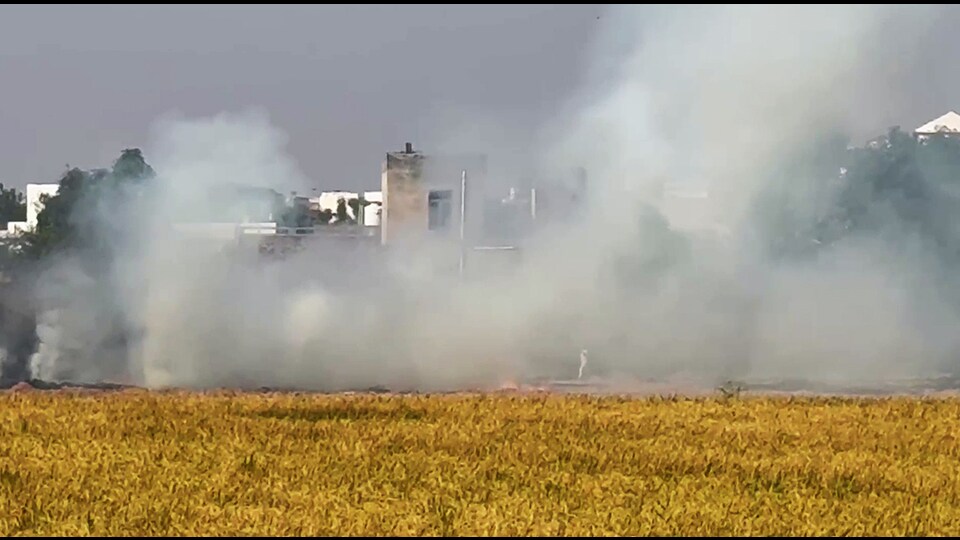
In a presentation made before the team on Friday, state officials revealed, “As of November 6, the state has recorded 3,284 cases of stubble burning.”
The figure stood at 5,041 between September 15 to November 6, 2024, while during the same period in 2023, 19,463 cases were logged.
Speaking about the punitive action taken against violators, state government officials said, “So far, an environmental compensation of ₹71.8 lakh has been imposed on 1,436 persons while red entries have been made in the revenue records of 1,328 farmers. Further, 1,092 criminal cases have been registered against farmers for burning paddy stubble.”
Team visits rural areas in Malwa belt
A senior official of the environment and science and technology department of the state, who was coordinating with the CAQM team, revealed, “We took the team to the rural areas in Malwa belt. Not a single case of stubble burning was found in all the six districts we visited. The ambient air was also found to be crystal clear with air quality index (AQI) in control.”
CAQM chairperson Rajesh Verma also acknowledged the improvement, stating, “The efforts made by the state government to control farm fires are commendable and the change is visible on ground.” He, however, cautioned the officials to continue staying alert, stating that there are still a few days left before harvesting comes to an end.
When asked for his comments on an National Green Tribunal (NGT) member’s statement last year about there being no scientific evidence to prove that the pollution is the National Capital Region (NCR) is linked to stubble burning in Punjab, Verma said CAQM cannot endorse (what) NGT (says).
The CAQM has been set up for air quality management in NCT and adjoining areas for better coordination, research, identification and resolution of problems surrounding the AQI. NGT, on the other hand, deals with effective and expeditious disposal of cases relating to environmental protection and conservation of forests and other natural resources including enforcement of any legal right relating to the environment and giving relief and compensation for damages.
In the meeting, the deputy commissioners of five districts – Sangrur, Tarn Taran, Ferozpur, Amritsar and Bathinda – were told to make special efforts to curb cases of paddy fires as these districts top the chart with - 557, 537, 325, 279 and 228 cases of stubble fires respectively, as of November 6.
The state has carried out a review of the machines that are being provided under crop residue management scheme since 2018-19. In all, 1.48 lakh machines have been supplied in the last seven years, out of which 40,000 machines have been found to be outdated or non-functional.
This season paddy was sown over 32.5 lakh hectares over which 210 million tonnes of paddy produce is expected along with 210 lakh tonnes of residue. Out of the total 115 lakh tonne, paddy straw is targeted to be managed through in-situ measures and 70 lakh tonne will be managed through ex-situ ways.


