
 E-Paper



Purohit gives unwilling Chandigarh MC one week to allot space for EV stations at parking lots
Resistant so far, the Chandigarh MC has now agreed to allot the space as directed by the administrator during a meeting at the UT Secretariat on Wednesday


Putting an end to the stand-off between the UT administration and municipal corporation over allocation of space for electric vehicle (EV) charging stations in 44 parking lots, UT administrator Banwarilal Purohit on Wednesday sternly directed the civic body to allot the space within a week.
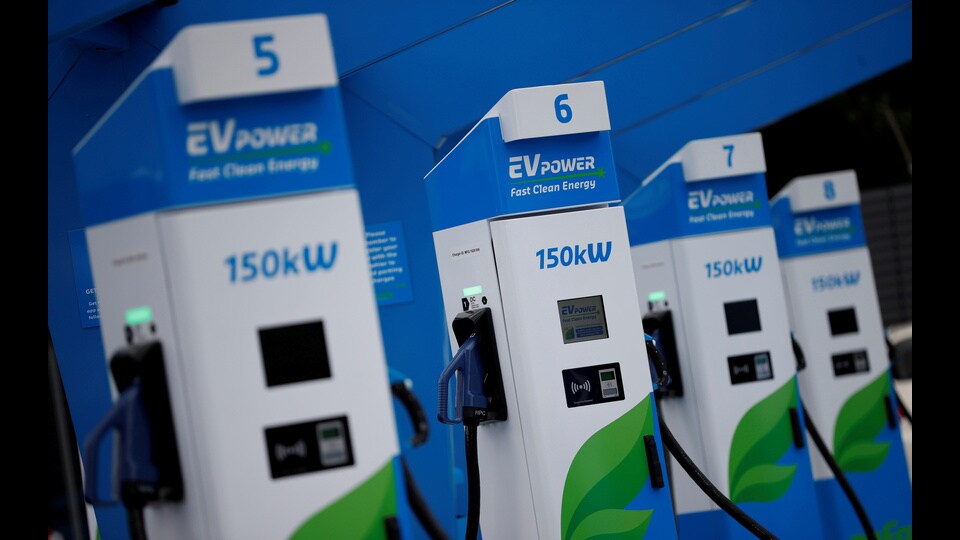
Resistant so far, the civic body has now agreed to allot the space as directed by the administrator during a meeting at the UT Secretariat on Wednesday.
UT has proposed to offer MC 50% revenue collected from the charging stations in exchange for the space that will allow visitors to charge their vehicle while it is parked.
Just two days ago, on October 23, MC had written to the administration, stating that the House had decided to constitute a committee to ascertain the feasibility of space allocation.
In a letter to UT’s local bodies department, MC commissioner Anindita Mitra had written, “The House has unanimously decided that a committee will be constituted, comprising three councillors (including area councillor), civic body officials from buildings and roads (B&R) department, CREST members and market welfare associations, to decide on the feasibility of locations for setting up EV charging stations.”
Now, city mayor Anup Gupta said, “I have learnt about the directions of the UT administrator and we are working on it. We are hopeful of allotting the space within a week.”
The city has 89 parking lots that are divided into two zones, of which UT plans to install EV charging stations at 44.
UT’s Chandigarh Renewable Energy and Science and Technology Promotion Society (CREST) had first requested MC to allow installation of EV charging stations and battery swapping stations at the parking lots in July this year.
But in the July 25 House meeting, the councillors had rejected the agenda, stating that instead of 50% revenue, CREST should have offered 100% revenue to MC, as it is their space and revenue loss will be faced if the space allotted for parking will be used for setting up charging stations.
“Also, UT had not sought recommendations from the House before drafting the EV policy,” the councillors and mayor had said.
The councillors had once again united against UT’s proposal during the House meeting on October 17.
The administration, meanwhile, after receiving no response from MC to its two notices in August and September, had, in the first week of October, gone ahead with installation of the EV charging stations at parking lots to strengthen public charging infrastructure in the city.
Having rolled out its Electric Vehicle Policy in September 2022 to dissuade people from buying vehicles that cause pollution, the administration has been under fire from various quarters for lack of public charging infrastructure, a key enabler for large-scale EV adoption. With no functional charging stations in the city, owners of over 7,000 EVs registered in the past five years are compelled to rely on home electricity before commencing their daily commute.
Despite this, UT is intent on discontinuing registration of non-electric vehicles once the target permitted in the EV Policy annually is achieved. This year, for non-electric two-wheelers, the target is 13,685, which is expected to be exhausted in a couple of days. In the case of four-wheelers, new registrations will not be done after their number reaches 17,000 that the Registering and Licensing Authority expects will happen by November.


