
 E-Paper



Rise in farm fires reduced sunshine to zero in Punjab: PAU report
Absence of sunshine is not just injurious to human health but also affects crop growth, cautions the two-week report by PAU


The sudden rise in stubble burning this kharif season reduced the sunshine hours to zero twice in the past two weeks, says a report by Punjab Agricultural University (PAU), Ludhiana.
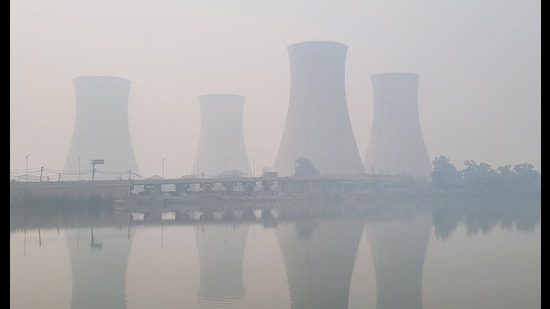
The smog formed due to burning of paddy stubble is not letting solar radiation reach earth’s surface, which is not just injurious to human health but also affects crop growth, cautions the report.
Sharing data, meteorological experts at the varsity said on October 23, 10 hours of sunshine was recorded, but a week later, it was down to zero twice — on October 31 and November 1.
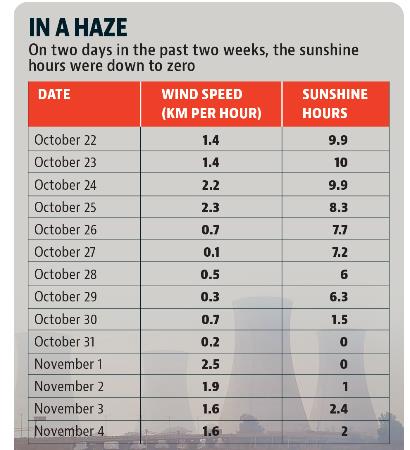
Explaining the phenomenon, Prabhjyot Kaur Sidhu, principal meteorologist, PAU, said the present situation occurred due to the still wind conditions prevailing in the region after October 22. “A wind speed of over 2 km per hour was recorded only thrice in the past two weeks — on October 24, 25 and November 1. It remained below 2 km per hour on the remaining nine days, even dropping below 1 km per hour as many as six times,” she added.
She said during still wind conditions, biomass pollutants, dust, vehicular pollution and pollution caused due to bursting of crackers were unable to disperse, leading to a hazy atmosphere that did not allow sun rays to reach earth’s surface.
“The present dusty condition is called photochemical smog, which is produced when ultraviolet rays from the sun react with nitrogen oxide in the atmosphere. It is visible as a brown haze and is most prominent in the morning and evening. It used to be witnessed especially in densely populated cities with high-emission levels, but nowadays it is being witnessed in villages of Malwa region as well,” Dr Sidhu said.
She added that Malwa region, which was witnessing a high number of farm fires, was also recording close to zero wind speed that was compounding the problem: “It creates a closed-room atmosphere, where nothing goes in or out.”


