
 E-Paper



Roundabout | Hymns in Blood at Chakri village on River Soan
In trying to deal with the trauma of Partition, the book provides a message of healing, which is as relevant today as it was 75 years ago, says translator Navdeep Suri

 Prefer HTon Google


The Soan, a small river flowing in the Pothohar region of Pakistan near Rawalpindi, is at the heart of legendary Punjabi writer Nanak Singh’s (1891-1971) novel as it flows past his village Chakri. It is this novel that is chosen by his translator grandson Navdeep Suri, and not without reason as India gears up to celebrate the 75th anniversary of its Independence.

The Soan, it is said, has been witness to the rise and fall of many civilisations and cultures. It is said to be the centre of the pre-historic Soanian culture, but we meet it in ‘Khoon de Sohile’ (Hymns in Blood) in the winter of that ill-fated year, 1947, when the river had to see the fall of the composite culture of India where Hindus, Sikhs and Muslims once lived in unity.
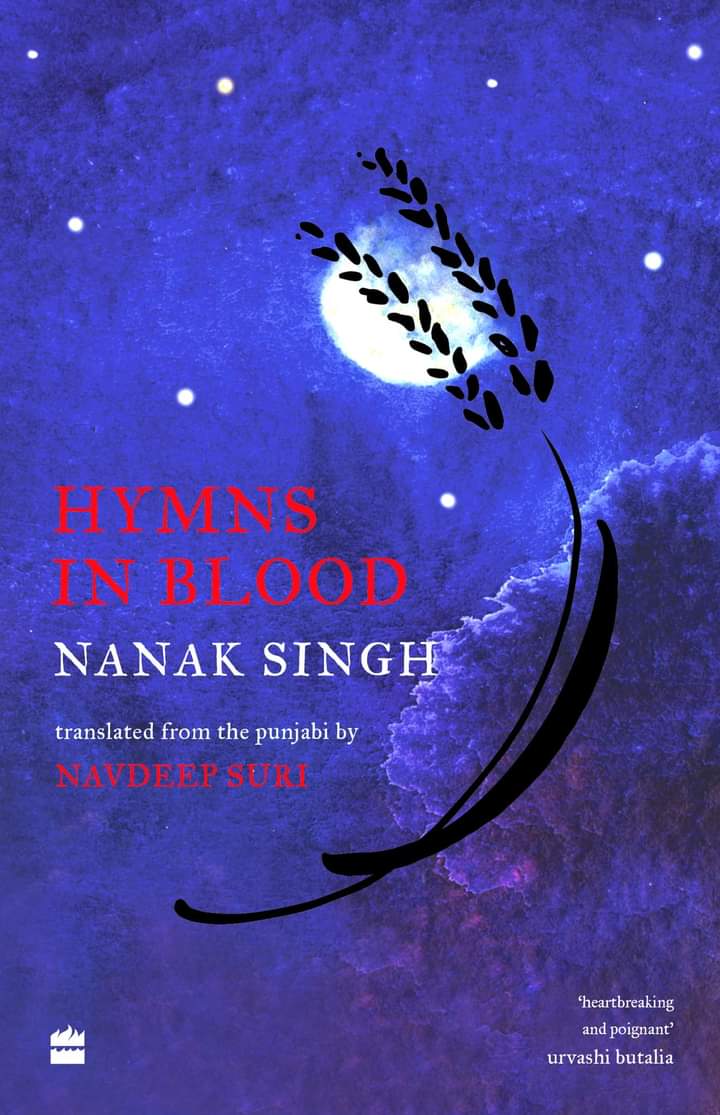
There is no such trace of fissures when the novel opens in the first month of the year with villagers getting ready to celebrate the agrarian festival of Lohri, which in the Punjab of those times was celebrated in togetherness by Hindus, Muslims and Sikhs. It is winter time and a young but fickle young man, Yusuf, is meeting his childhood playmate, Naseem, in the dark of the night. Although attached to one another, yet there has been no declaration of love or swearing of vows, but the tone is set with the sharing of a Banarsi langra mango, which the boy has brought all the way from Rawalpindi for a princely sum of seven annas stolen from his uncle’s pocket. When Naseem hears this she is furious and indignant, but nevertheless she sows the mango pit in her backyard and soon it is a sapling of undeclared but deeply rooted love for her.
But the winds that blow soon spell that there is no room for love in the season of hatred and violence that is to sweep through the ‘Land of Five Rivers’. The festival of Lohri with its bonfires is soon approaching and children are out collecting money for the savouries, going singing from one house to the other, but it is to be the last festival of togetherness in that village by the Soan. By monsoon, the village is ravaged and Naseem who had triumphed over the boys with her songs is the target of marauders who wish to see no cross-religion ties, and the ageing Baba Bhana, a wealthy businessman, who is the benefactor of her family loses his kith and kin, as does Naseem. The Muslims protecting the Hindus and Sikhs in the village gurdwara are killed and the village head Chaudhri Fazl Kareem, too, loses his life.
Naseem puts her lot with Baba Bhana, a grandfatherly figure to her, and like thousands of refugees on both sides walks with him to safety on the other side of the new border. It is her last glance at the river on the way and her heart sings out: “My Soan...my childhood companion...my childhood companion...my friend...my soan. Did you pass through our Chakri before coming to this place? Did you touch the soil of the village on your way?” And the two move on in times when questions seem to have no answer.
The legend of Nanak Singh
Nanak Singh as a writer was a rare phenomenon. With a formal education till just Class 4, he went onto write some 59 books, including 38 novels, and an array of plays, short stories, poems, essays and even a set of translations. Hailed as the ‘Father of the Punjabi Novel’ for his pioneering work, he was able to put his finger on the pulse of Punjab and excelled in the art of storytelling. He received the Sahitya Akademi award in 1962 for his novel ‘Ik Mian Do Talwaran’. His famous novel ‘Pavitra Paapi’ (The Watchmaker) was made into a memorable Hindi film in 1968, starring Balraj Sahni, Tanuja and Parikshit Sahni. Interestingly, his novel ‘Chitta Lahu’ was translated into the Russian by Natasha Tolstoy.
In the foreword to this novel, the novelist says: “This novel was written in those desperate times when our country seemed to be playing a game of blood and fire, when the Muslim League had become a pawn on the English chessboard, when the League’s actions had forced the non-Muslim communities of the Frontier Province and the adjacent district of Rawalpindi to flee their ancestral lands, and when this pestilence of ethnic cleansing was also spreading into Eastern Punjab”.
He adds that a novel cannot claim to be a strictly historical narrative, nor is a novelist expected to weave all relevant historical incidents into his story. However, what Nanak Singh achieved through his novels was telling moving stories of the characters born of the Punjabi soil and much of his work remains relevant till date.
Grandson for a translator
It fell upon former diplomat Suri to translate the writings of his grandfather, which he has accomplished with rare finesse. Son of Nanak Singh’s second son Kulwant Singh and a masters in economics from Guru Nanak Dev University, Amritsar, he began with the most cherished novel ‘Pavitra Paapi’ translated as ‘The Watchman’ in 2009, and since then in the phase when translation has come of age in India, he has translated three novels including the present one and ‘Adh Khidya Phul’ (The Watchmaker). In 2019, he published his grandfather’s lost poem ‘Khooni Vaisakhi’ to mark 100 years of the Jallianwala Bagh massacre at Amritsar. He says, “My mother Attarjit Kaur, a teacher of Punjabi language and literature, was an ardent fan of her father-in-law. She inspired me to take over the task of translating his works into English”.
He says that after the warm response to ‘Khooni Vaisakhi’, he was musing on which book of his bauji should he work on next. The choice finally fell on his two Partition novels ‘Khoon de Sohile’ and ‘Agg di Khed’, the second one being a sequel to the first. While the first one is out , the second one is in progress. Suri adds, “The bonds between the different communities of Punjab were real and the raw courage of the Muslim protagonists while trying to save their Hindu and Sikh neighbours is palpable”. What this novel succeeds in doing is giving the message of togetherness against othering and hatred, which is indeed relevant to our times.


