
 E-Paper



Soon, 44 community centres in Chandigarh to have organic compost machines
Chandigarh MC commissioner Anindita Mitra said the tenders for setting up the machines have already been floated and the work will begin soon after allotment to a private firm


In a sustainable and efficient solution for processing wet waste, the municipal corporation (MC) will soon set up fully automatic organic waste composting machines in 44 community centres across the city at an estimated cost of ₹1.7 crore.
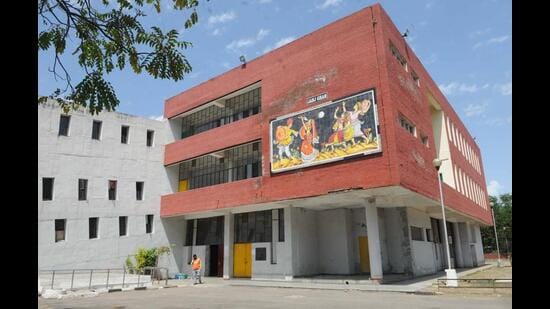
Each machine, having the capacity for processing 50 kg of organic waste per day, will process the waste by aerobic microbial culture. MC commissioner Anindita Mitra said the tenders for setting up the machines have already been floated and the work will begin soon after allotment to a private firm.
“A large number of events, including marriages, are organised in the community centres where huge quantities of wet and floral waste are generated. It is suggested by the Union government that bulk waste generators should process their waste to reduce the burden on the waste management plant of the city. These machines provide an eco-friendly way to manage organic waste and reduce the environmental impact of sending it to landfills. The transportation of waste from community centres to Dadumajra landfill will be cut too,” said the MC commissioner.
“Installing such composting machines enables wet and floral waste to transform into nutrient-rich compost that can be used to fertilise plants and gardens. The one cycle of the machine will be completed in 24 hours and the final product, that is compost, can be used immediately”, Mitra said, adding that the waste processing process will be done by the machines in an odor-controlled manner and the compost generated quality will be as per fertiliser control standards.
Suggested by the Union ministry of housing and urban affairs (MoHUA) under Swachh Survekshan 2023, the project was approved in the general house meeting last year. As per the Centre, any community hall, restaurant and hotel, with a holding capacity of more than 200, comes under the bulk waste generator category and every bulk waste generator should process its waste.
In a bid to decentralise solid waste processing of bulk waste generators of four societies, including Pushpak Society, Progressive Society, BSNL Society and Kendriya Vihar Society, the MC had also set up the city’s first decentralised waste processing plant at Sehaj Safai Kendra, Sector 49.
The societies produce over 984 kg (around 1 metric tonne) of wet waste daily. Besides this, the ward also generates 496 kg of dry waste. Though the decentralised waste processing plant is processing the wet waste, all dry waste is processed at MC’s central processing plant at Dadumajra. In all, Chandigarh generates 550 MT of waste daily, of which around 200 MT is dry and 350 MT is wet.


