
 E-Paper



The hum of jungle flowers
These are low shrubs that give off a distinctive odour, which is not sweet like “motia” but tends to a bitterish feel; The odour is quite unlike anything one would have sampled in city gardens. Their spread is as prolific as lantana and lends the jungle a pleasing appearance of white flower heads bobbing endlessly in the wind


Poetically, when we conjure up flowers in never-ending rows, the Wordsworth verses come instantly to mind, celebrating infinite daffodils along the margin of a bay. The tulip gardens of Srinagar are as if nature’s wonders have sprung out from a paint box. The Valley of Flowers in Uttarakhand is a veritable paradise for those seeking the visual pleasures of diverse and countless alpine flowers. Closer home to the tricity and nestling in the Shivalik foothills, a similar spectacle of flower upon flower can be savoured along the water courses, slopes and hillocks. It stretches for hundreds of yards in a simple blend of green leaves and white flowers.
These are low shrubs that give off a distinctive odour, which is not sweet like “motia” but tends to a bitterish feel. The odour is quite unlike anything one would have sampled in city gardens. Their spread is as prolific as lantana and lends the jungle a pleasing appearance of white flower heads bobbing endlessly in the wind. The shrubs are attended by a tremendous hum whose constancy astounds the ear and attracts attention to their humble flowers. It is the buzz of thousands upon thousands of pollinator hoverflies flitting among the shrubs as they find this plant suitable for their life cycles.
I collected a sample from the Siswan jungles and handed them for identification to emeritus professor of botany and former botany HoD at Panjab University, SP Khullar. “This shrub is botanically known as justicia adhatoda or commonly in English as the Malabar nut. It is a native species. It has wide application in indigenous medicinal systems which use derivatives secured from its leaves etc. Due to this reason, it has come under threat as it is simply removed from the wilderness by medicine companies. It would be better that companies promote its cultivation for medicinal derivatives rather than freely robbing the wilderness,” Khullar told the writer.
Interestingly, I have not seen the goats and cattle roaming the Shivalik jungles ever foraging on this shrub. The answer lies in the shrub’s name. Adathoda means “untouched by goats” in Tamil. Livestock does not eat this plant due to its bitter taste.
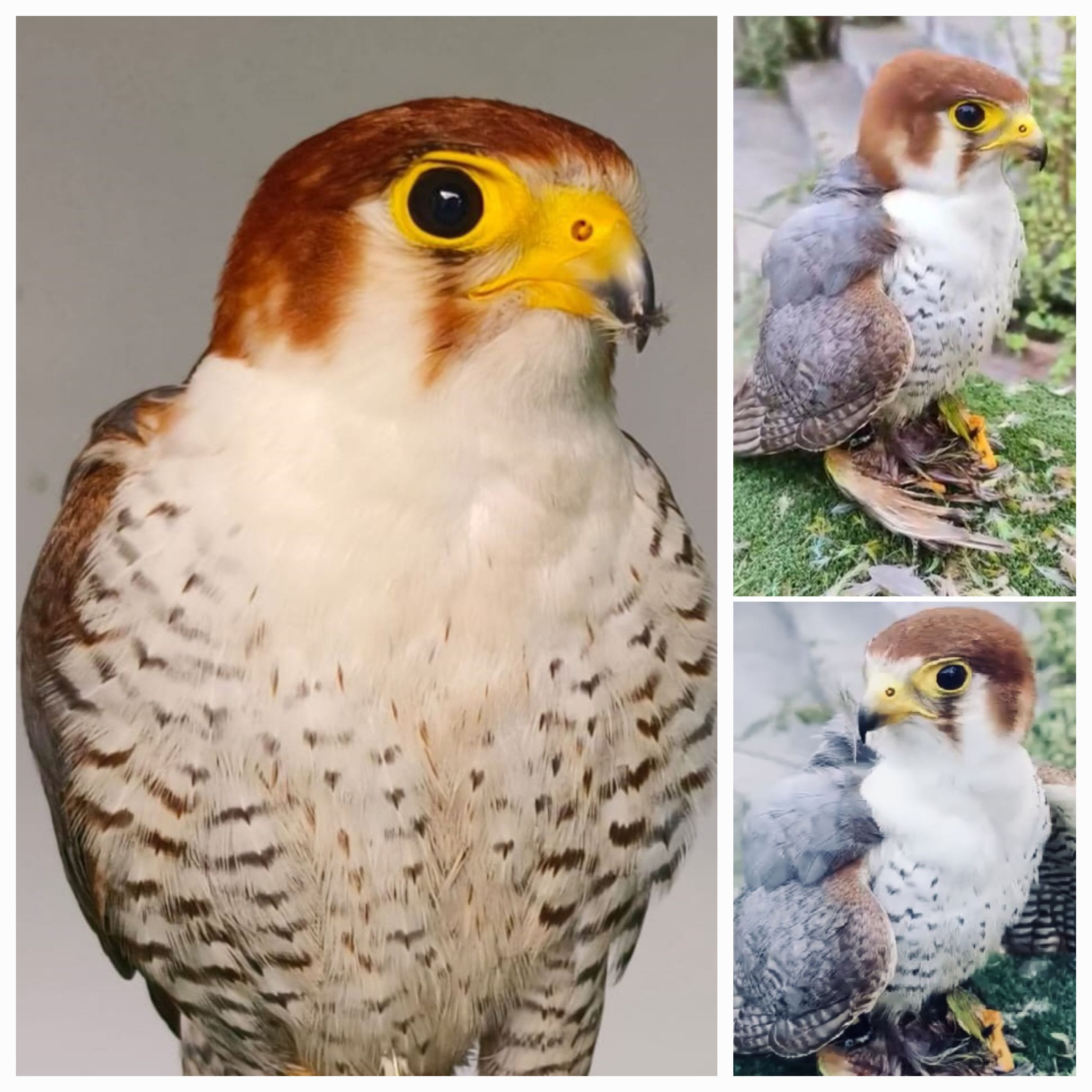
Red in head, brute in tooth
As sizes go, the red-headed merlin or falcon is no bigger than a dove or a pigeon. But it makes up admirably by packing pluck and persistence when it takes to the wing and goes hunting in the restless and deathless air. This falcon species is not easily found in zoos. An opportunity to secure an upfront look at the gorgeous hunter came recently when a male was found on the ground having suffered pesticide poisoning in Dasada, Gujarat. It was handed over to Sarfrazuddin Malik, scion of a family of erstwhiles jagirdars and the last of the great falconers. Malik has employed the skills he learnt in the 1960s and ‘70s from Bhavnagar’s royal falconers and at the Ahmedabad zoo to rehabilitate a diverse range of ailing / wounded raptor species.
“I treated the falcon with a drip and clean meat till it was able to hunt on its own. It was then released,” Malik told the writer.
Malik had a nest of these falcons in his garden some years back and he witnessed the fearless male take on an Egyptian vulture, which was many times bigger. After a series of persistent attacks by this spitfire of a falcon, the mighty vulture fled! “When hunting small birds in the air, the falcon uses the tomial tooth (an adaptation of the hooked beak) to bite into the neck vertebrae, sever the spinal cord and kill it in the air itself. That way the prey cannot escape while the falcon is bringing it down. Neither do the wildly flapping wings of the quarry damage the falcon,” explained Malik.
vjswild2@gmail.com


