
 E-Paper



Treatment for rare disease: 19 patients in Punjab left high & dry as central funding stops
Haryana and Himachal Pradesh governments continue to support children suffering from Hypogammaglobulinemia through state government schemes, but Punjab isn’t doing so


Nineteen-year-old Harjashan Singh of Kapurthala suffers from a rare congenital disease that prevents his body from producing antibodies, making him highly prone to infections such as pneumonia, meningitis etc. To develop immunity against these diseases and avoid other complications, he has to get an extensive treatment, which includes injections costing upto ₹30,000 or more, every month.
Until early this year, the cost of the treatment was reimbursed by the Punjab government under the National Health Mission (NHM)’s flagship scheme Rashtriya Bal Swasthya Karyakram (RBSK). In 2016, Punjab had become the first state to include Hypogammaglobulinemia, the condition that Harjashan suffers from, in the list of diseases for which free-of-cost treatment is provided under RBSK scheme.
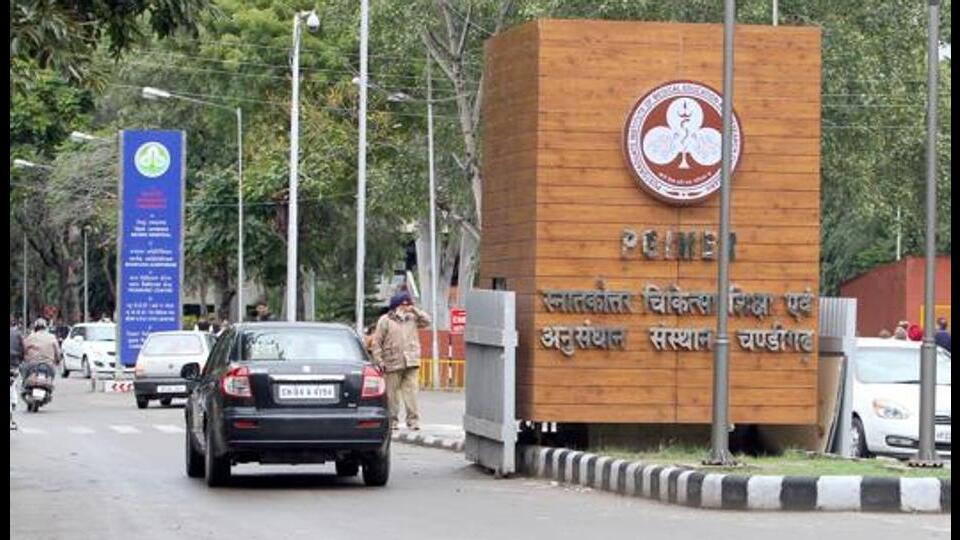
But in March 2021, the Centre launched the National Policy for Rare Diseases (NPRD), under which financial support of up to ₹50 lakh is provided to patients of rare diseases, undergoing treatment at any of the Centres of Excellence. Post Graduate Institute of Medical Education and Research (PGIMER), Chandigarh, is one of the centres that offers treatment for this rare disease. But once this policy was introduced, the Centre stopped funding the RBSK scheme, leaving patients like Harjashan high and dry.
“Once we stopped getting financial support from the government, it became very difficult to pay the bills,” says Harjashan’s father Parminder Singh.
“As we struggled to arrange for funds, the injections got delayed and my son caught an infection that affected his brain. He is now bedridden and had to spend a few days in the intensive-care unit (ICU). Now, doctors have advised an injection that costs ₹40,000 every week to save his life,” said the distraught father, who had to leave his job to tend to his son and make multiple rounds of hospitals for the treatment. The family sustains on the meagre living Harjashan’s mother earns by stitching clothes.
In all, there are 19 patients in Punjab suffering from Hypogammaglobulinemia. Ravinderpal Singh, a resident of Shahkot (Jalandhar), has two sons -- Bhavnoor Singh, 10, and Navraj Singh, 8 – who suffer from the disease. “I have to arrange almost ₹60,000 for two injections for my children every month. Without government support, it is a struggle,” says Ravinderpal. With an increase in child’s age, the doses also increase, resulting in additional expenses for injections.
How delay on PGIMER’s end is part of the problem
Under the NPRD scheme, the central government will not fund the patients or state governments but will directly transfer the funds to centres of excellence. “PGIMER has so far not implemented the scheme and is still in the process of creating a registry of patients, due to which the central government is not providing the funds,” says Abhinav Trikha, mission director, NHM, Punjab.
After the Punjab government stopped funding, PGIMER doctors reached out to the state government in June this year, saying the patients may die if immediate support is not provided to them. They also pointed out that Haryana and Himachal Pradesh governments continued to support such children, through state government schemes, but Punjab did not do so.
At present, around 500 children suffering from Hypogammaglobulinemia (across the country) are getting regular treatment from PGIMER.
Notably, PGIMER is still providing treatment to all patients but Punjab-based patients are not getting reimbursements of treatment cost.
PGIMER has not yet responded to the delay in implementation of the scheme.
Capt Gaurav Preet Singh Brar, a social activist, who has taken up the issue with the state government, says, “Till the central government’s scheme comes into force, the state government should bear the treatment expenses of these 19 children.”


