
 E-Paper



UK soldier under Punjab Police lens was declared PO in 2011 UAPA case
As per the police dossier, accessed by HT, Jagjeet Singh and his associates were planning to target heads of religious sects to vitiate communal harmony in the state by recruiting youth from Punjab

 Prefer HTon Google


The British Army soldier Jagjeet Singh, who was allegedly the mastermind behind the two grenade attacks on police installations in Punjab, was declared a proclaimed offender (PO) in a 2011 Unlawful Activities (Prevention) Act case registered at police station Maqsudan in Jalandhar, police officials said.
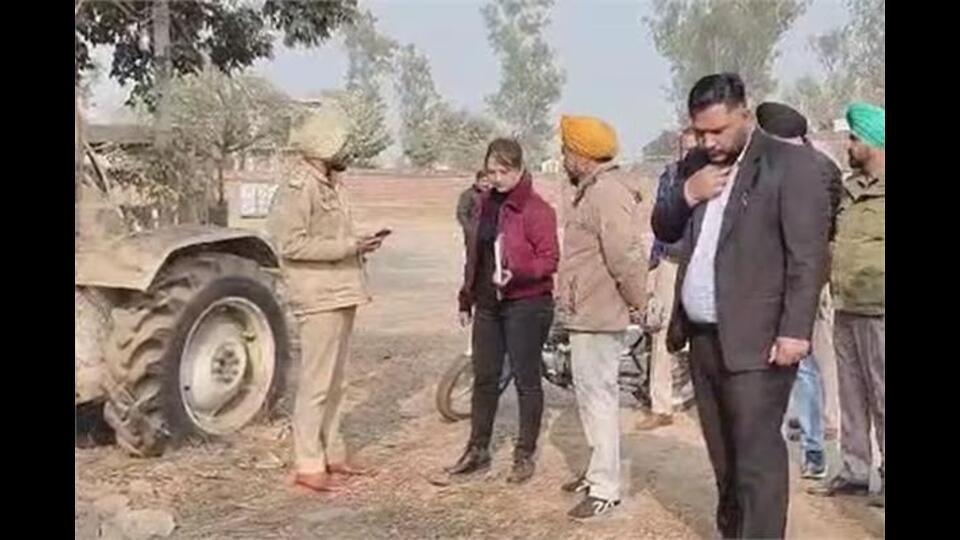
As per the police dossier, accessed by HT, Jagjeet Singh and his associates were planning to target heads of religious sects to vitiate communal harmony in the state by recruiting youth from Punjab in lieu of money and migration abroad. A case under UAPA was lodged, and Jagjeet was declared PO in the case.
His name again cropped up in November 2021 when two hand grenades and two pistols were recovered from an accused, namely Ranjit Singh of Sohal village in Tarn Taran. In this regard, a case under the Arms Act, Explosive Substances (Amendment) Act 2001 was registered at PS SSOC, Amritsar.
As per the dossier, Jagjeet moved to Britain in 2010 on a student visa and has been involved in efforts to revive militancy in Punjab ever since he landed abroad.
A native of Mianpur in Tarn Taran, the 37-year-old was using the pseudonym ‘Fateh Singh Baaghi’ to conceal his real identity, using which he took responsibility for the two grenade attacks on police stations on December 18 this year.
“He (Jagjeet) is an associate of Pakistan-based Khalistan Zindabad Force (KZF) head Ranjeet Singh Neeta and is a self-proclaimed head of ‘surveillance and reconnaissance unit’ under KZF,” police dossier further revealed.
Police said the accused planned a series of attacks on police establishments using hand grenades and improvised explosive devices (IEDs) in October and November. Besides this, his aides carried out two attacks at the houses of leaders of Hindu groups in Ludhiana using petrol bombs. Thereafter in December 2024, a grenade was lobbed at the Asron police post under Police Station Kathgarh in Shaheed Bhagat Singh (SBS) Nagar.
“After the attacks, Neeta and ‘Fateh Singh Baaghi’ claimed responsibility in the social media posts,” said a police official, privy to the probe, pleading anonymity.
The dossier further reveals that Jagjeet moved to the UK in 2010 on a student visa, and after completing his studies, he reportedly joined the British Army as a soldier in 2013.
Police, however, said it’s yet to be ascertained if Jagjeet is still serving in the British army or not.
Several of Jagjeet’s relatives, including his grandfather, father and brother, have served in the Indian Army.
“After moving to the UK, Jagjeet developed links with banned terrorist groups, namely Babbar Khalsa International (BKI) and Khalistan Zindabad Force (KZF). He had formed a radical group namely Akaljot Khalistan Force (AKF) and was trying to revive terrorist activities in Punjab by recruiting new members in his group,” the Police probe in the cases has revealed till now.
Police officials claim that Jagjit was the ‘main handler’ of three youths who hurled a grenade at Bakshiwala police post under the jurisdiction of Kalanaur police station in Gurdaspur on December 18. All three were killed in an encounter in Pillibhit by a joint team of UP and Punjab police.
“He provided target and allured the trio to hurl grenade at police installations,” said a senior officer involved in the probe.
Punjab Police claim that Jagjit is not only well connected with KZF head Neeta but also with UK BKI terrorist Paramjit Singh Pamma.


