
 E-Paper



Unseasonal rain, hail hit Punjab’s wheat crop; farmers fear loss
Flattened crops reported in Sangrur and Barnala districts; weather office predicts intermittent storms until April 9.


Unseasonal rainfall and scattered hailstorms across Punjab have sparked concern among farmers as the wheat crop enters its final stage of maturity. Growers in Sangrur and Barnala fear the sudden weather shift will cause crop loss and degraded grain quality.
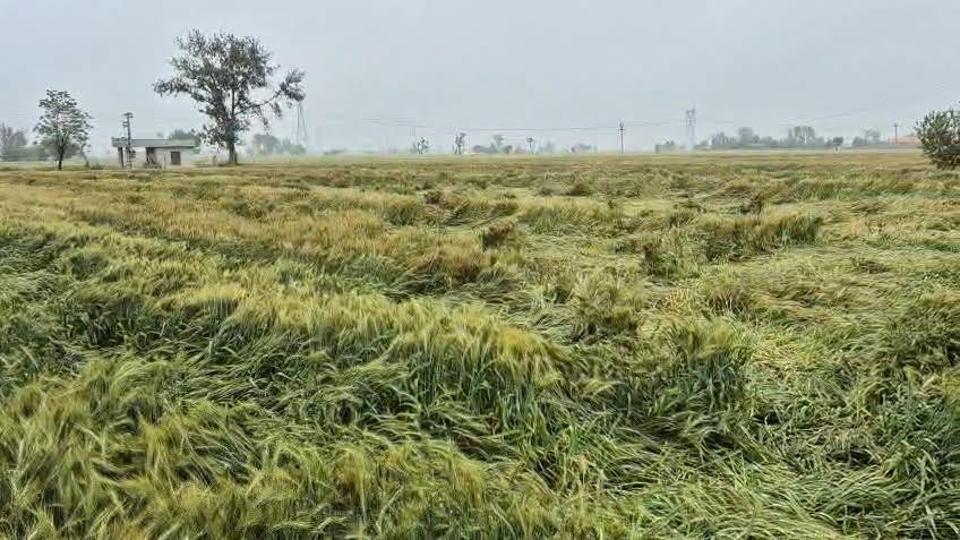
Devinder Singh, a farmer from Duggan village in Sangrur who manages 15 acres, said on Wednesday that 15% of his crop has been flattened. “The fallen crops are now mixed with soil, which will inevitably cause damage,” he said. Darshan Singh, a farmer from Barnala, described the situation as “deeply distressing,” urging the state government to provide immediate compensation to protect rural livelihoods.
Gurjit Singh Brar, director of agriculture and farmers’ welfare, said that rain has caused lodging—the flattening of standing crops—in patches across the state. While hailstorms were recorded in Muktsar, Malout, and Bathinda, no other districts have reported hail damage thus far. Brar said while a bumper crop is still expected this year, it remains contingent on the weather stabilising.
However, the outlook remains bleak. Surender Paul, director of the meteorological department, said that conditions will remain unsettled for the next eight days. “Intermittent thunderstorm activity is expected across the region. Specifically, from April 3-4 and April 7-9, parts of Punjab and Haryana are likely to experience rain,” Paul said, adding that northwestern and southeastern Punjab are most at risk.
He advised farmers to remain cautious and plan harvests accordingly.
The weather remains a concern even as government procurement of wheat officially began in the state on April 1.


