
 E-Paper



Whitefly pest infestation: After experimenting with moong, Punjab restricts legume cultivation in cotton belt
A year after encouraging farmers to cultivate summer moong (green gram), the Punjab government has restricted cultivation of the legume in eight cotton-growing districts from this kharif season due to the established threat of the deadly whitefly attack on the white gold.


BATHINDA
A year after encouraging farmers to cultivate summer moong (green gram), the Punjab government has restricted cultivation of the legume in eight cotton-growing districts from this kharif season due to the established threat of the deadly whitefly attack on the white gold.
Field agriculture teams submitted reports of the adverse impact of a sudden push to legume in the last ‘rabi zaid’ (third crop sown between rabi and kharif seasons) in the semi-arid districts of Punjab.
Bathinda chief agriculture officer Dilbag Singh said following a decision by the higher authorities, districts of the cotton belt will not get any supply of subsidised moong seeds and farmers are being told not to sow the legume to protect the cotton crop.
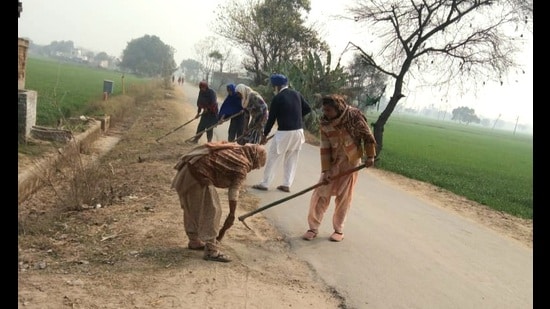
“Our extension teams have started an awareness campaign against sowing the legume. We have started clearing weeds, a natural host of whitefly, from near the fields ahead of sowing from April 15,” he added.
Officials familiar with the development said after the worst whitefly attack, an expert committee of Punjab Agricultural University (PAU) in 2016 had strongly recommended against moong cultivation in south Malwa. It was followed until in 2022-23 kharif period, chief minister Bhagwant Mann announced the assured purchase of the summer moong on the minimum support price (MSP) by the Punjab government as a part of the crop diversification plan.
Attracted by the lucrative promise, moong cultivation touched an eight-year high of 96,000 acres (38,900 hectares) in 2022, an increase of around 42,000 acres (16,196 hectares) from the previous season and more than 44,000 acre was covered under the legume in the cotton belt.
But when the standing cotton came under the whitefly attack, experts blamed moong cultivation as a key factor behind crop failure last year.
According to the Punjab Mandi Board data, from October 1, 2022to February 5, a total of 6.77 lakh quintal of cotton was sold in various mandis against the production of 29 lakh quintal in 2021-22.
In 2020-21, Punjab recorded a record production of 49 lakh quintals and in the next two kharif seasons, a traditional crop of south Malwa failed due to the pest attacks, unfavourable conditions and erratic irrigation support.
Head of Sirsa-based Central Institute of Cotton Research (CICR) SK Verma said cultivation of the short-term legume is a threat to the cotton crop due to the deadly whitefly pest attack. “Like various weeds, moong and seasonal horticulture crops are hosts of whitefly and farmers should avoid cultivating the legume around cotton fields. We have been issuing guidelines against it to the cotton-growing states of Rajasthan, Haryana and Punjab. Last season, a devastating impact of pest infestation was seen in Punjab and the push of legume cultivation was the key reason behind the crop failure,” added Verma.
Ahead of cotton sowing from next month, the state agriculture authorities see a little scope of increase in the area under the crop in the forthcoming season.
A progressive cotton grower from Bathinda’s Bajak village Baldev Singh said failed crop for two consecutive seasons has shaken confidence of farmers. “Geographical conditions of the region are such that farmers have little choice than cultivating cotton. The government should formulate a policy to encourage farmers to go again for the cotton crop,” he said.
Chief agriculture officer of Mansa, a leading cotton-growing district, Satpal Singh said rampant use of unapproved cotton seeds by farmers was another factor responsible for the failed crop last season. “As recommended, cotton sowing period is April 15-May 15. Our teams have started advising farmers to buy recommended varieties to overcome last year’s problem of stunted growth and dismal yield,” he said.
Punjab agriculture department’s deputy director, cotton, Jagir Singh said following the field inputs, it would be an achievement if the state touches last season’s provisional figure of 2.47 lakh hectares or about 6 lakh acres under cotton.
“We were planning to add one lakh hectares to the acreage of the previous year but it is unlikely. During a meeting with farmers at the PAU, the CM had announced a 33% subsidy on cotton seeds to incentivise farmers to only buy approved seeds. The state agriculture department has ample stock of seeds to cover more than 3.5 lakh hectares,” said the official.


