
 E-Paper



Wildbuzz | Cute phantom of the night
The density of the species’ occurrence increases only well east of the city, extending through the Terai foothills to the north-east and then to south-east Asian countries

 Prefer HTon Google


The abundance of trees in the northern sectors of Chandigarh lend to the sprawling bungalows a forest rest house vista. The spacious parks redolent with flowering bushes and trees offer a habitat to birds, especially the owls / owlets which are left undisturbed at night, save the titillating indulgences of “lovebirds” on the benches below.
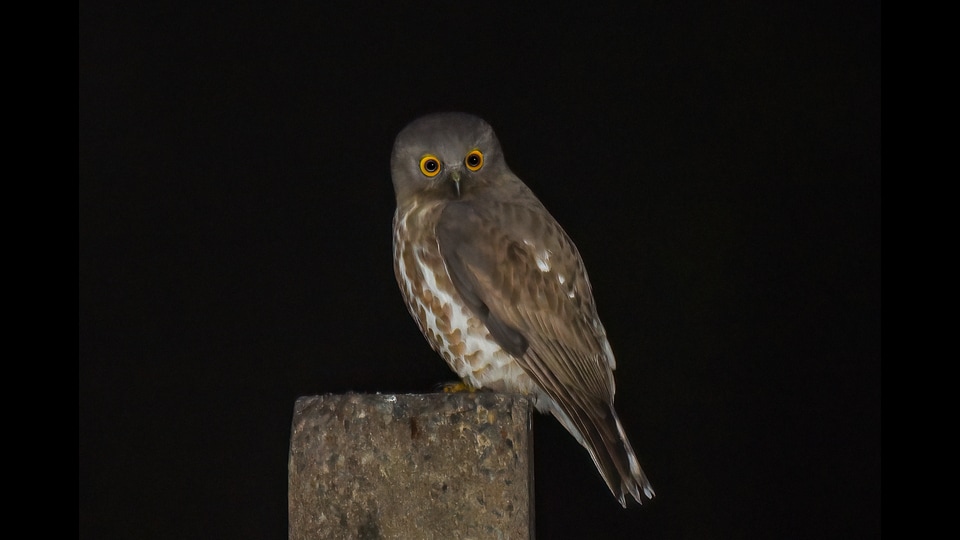
A remarkable record of a rare species for Chandigarh, the brown hawk-owl also known quaintly as the brown boobook, surfaced on Thursday. It was spotted during the early night for a fleeting minute in the residential area of Sector 18-B behind the Tagore Theatre and in proximity to the New Public School.
It is commonly known as a hawk owl because it lacks the typical facial disc of owls, has a barred tail, a hawk-like profile with slim body and long tail to a narrow head. It doesn’t display the ‘’ear tufts’’, characteristic of owl species. The flight is typically one of rapid wing beats wherein it glides and then sweeps upwards swiftly to alight on a branch in hawk-like fashion. It lets out soft, musical hoots, feeds on large insects, frogs, lizards, small birds and bats, mice etc, and often found not too far from water bodies.
The traditional distribution range of the species was shown as east of Uttarakhand with reference to the Tricity. However, it was discovered in Chandigarh at the Punjab University’s Dr PN Mehra Botanical Gardens in 2014; since then photographic records of a few specimens have come in from Shanti Kunj gardens, Leisure Valley, Nagar Van, Sukhna lake, MCM DAV College for Women - Sector 36, and a recording of its nocturnal hoots from Post Graduate Government College for Girls, Sector 11.
The density of the species’ occurrence increases only well east of the city, extending through the Terai foothills to the north-east and then to south-east Asian countries.
In recent years, as shown by the authoritative assessment of brown boobook records compiled by Mohali-based professor Gurpartap Singh, there are a handful of sightings reported from Jammu & Kashmir, Himachal Pradesh, Haryana and Delhi. Professor Singh also takes on record the one from Nangal Wildlife Sanctuary, Punjab, of November 26, 2024, courtesy Paramnoor Singh Antaal.
Having meticulously thumbed through the annals of ornithological literature, professor Singh came up with a gem. “There is an old record of January 16, 1892, that is, a brown boobook skin collected by FS Wright from Jalalpur, presently in the collection of the Cornell University Museum of Vertebrates (CUMV) in the US. The district is not confirmed but is presumed to be Hoshiarpur,” professor Singh told this writer.
Stories jotted on sands of time
The rivulets that drain from the Shivalik foothills to replenish the plains and water bodies of the tricity’s hinterland seem ash-dry in deepening winter. But the large animals that dwell in the tangled and extremely-thick “sarkanda” grasses that flank the dry rivulets, know a trick or two about secretive water.
The rivulets are laden with trails of wild animals that traverse the courses when our part of the blue planet turns its face away from the sun god. These dry courses are literally “jungle books”, as a curious mind and a sharp eye can glean much from their silvery pages of sand embellished with stones of infinite shapes, hues, and chiselled and holed by the assertions of water in monsoons gone by. Like our cosmic origins, I do not know where and when these aggregations of star dust began. I, thus, prefer to label stones “as those eggs of time”.
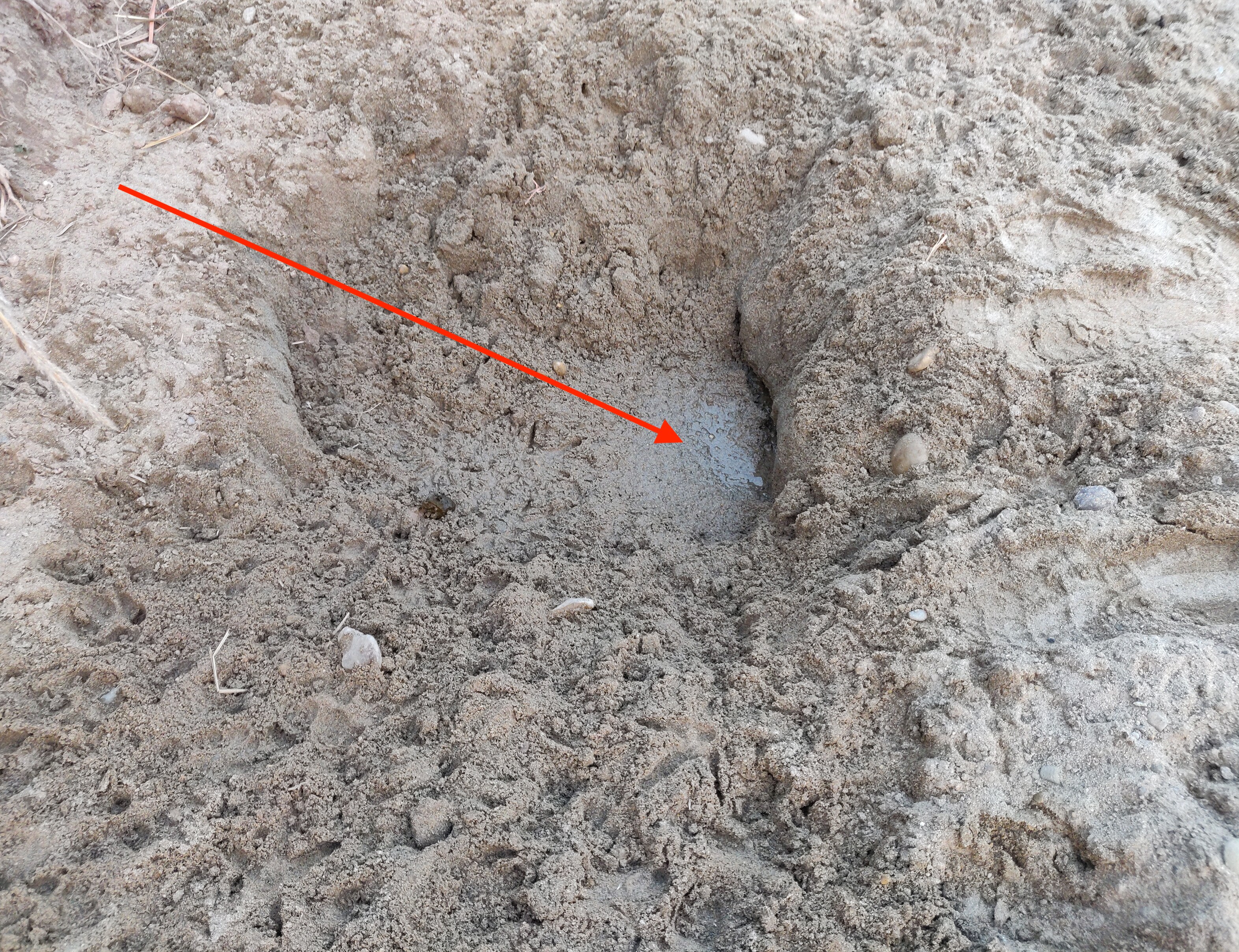
On Wednesday, I took a ramble up the Jainti Mata rivulet (behind the PGIMER) that feeds the check-dam of the same name. Here I stumbled upon a fascinating aspect of animal ecology. Wild boars had dug pits with their daunting, curving tushes a mere two feet in the sand to bare rich water resources “hibernating” below.
Some of the boars were huge fellas, their hoof marks almost the size of a small buffalo’s imprints. Old, loner big boars are irascible and intrepid, and even leopards are quite wary of insulting them. They can use their tushes to dig for roots and tubers but equally to launch a bullish charge and disembowel a human perceived as a threat or an annoyance to “his majesty’s domain”!
Similar to the boar’s search for water, the sambars had cleaved into the sands with their powerful legs and sharp hooves. Other small species take advantage of the boar/sambar water “dug outs”.
These improvised water holes upstream of the open water in the dams obviates the need for wild creatures to venture afar from their diurnal hiding spots. The banks of the dam are hazardous because here lurk the non-jungle threats: stray dog packs and humans.


