
 E-Paper



Wildbuzz: In peril, Siswan treasure
Fish poachers pay no heed to the avian life and disturb rare species foraging on the banks such as the greater sand plover; the male sambar, when cornered, can merely wave its antler stack in the air or attempt to deliver a clumsy kick with its hind legs to the very agile hounds


The Punjab forests and wildlife preservation department’s lack of on-ground supervision at the Siswan Community Reserve has led to a complexity of threats to the wild flora and fauna.
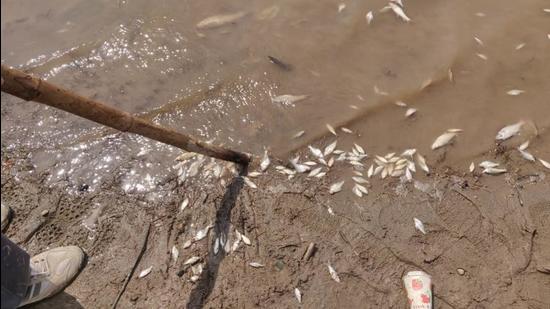
Taking advantage of easy access to Siswan Dam’s far end, fish poachers from the main highway to Baddi intrude in broad daylight and cast nets for small fish or minnows. Such wanton poaching takes away the small fish that are the staple diet for kingfishers, cormorants and wetland birds, including a diverse range of migratory species in passage.
Fish poachers pay no heed to the avian life and disturb rare species foraging on the banks such as the greater sand plover. Their desire for fish, even the small ones, is compulsive as they fry and relish these as snacks with the night-time hooch or cheap liquor.
Since there is no regular patrolling by forest guards, village dogs have created mayhem by massacring thirsty sambar fawns. Well-heeled tipplers drive their vehicles right down to the dam’s far end (where the rivulets enter from the foothills) and indulge in booze binges, evidenced by the upmarket alcohol bottles found littered in the water and on the bank. Ironically, the department has facilitated access by vehicles to the pondage area from the dam’s far side but has done little to ensure that patrolling or supervision insulates wildlife from poaching and disturbance.
Interestingly, the Wildlife Institute of India, Dehradun, submitted a detailed management plan for Siswan in 2017 after it was commissioned by the department.
When this writer brought the dismal scenario to the notice of Punjab chief wildlife warden RK Mishra, he assured that a plan for Siswan’s supervision and protection will soon be drawn up by the divisional forest officer concerned. “I fully agree that this precious biodiversity reserve needs to be safeguarded from the threats you have brought to my notice,” Mishra told this writer.
Good old blood and guts
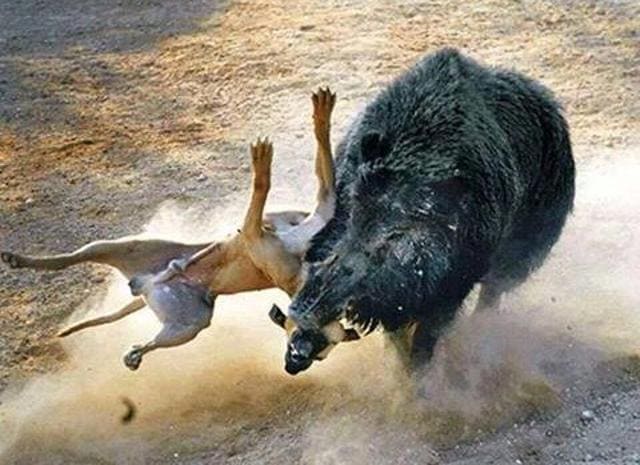
The hapless Sambar fawn is the fall guy for the unnatural predation by village dog packs at drying water holes and dams in the Shivalik foothills. In my rambles deep into the Shivaliks over the last two decades, I observed that the other two principal mammals, wild boar and barking deer, have gone virtually unscathed. As compared to sambars, the barking deer is too nimble, clandestine and smart a target for dog packs. The boar, on the other hand, is a formidable, well-armed opponent as compared to a sambar. The male sambar, when cornered, can merely wave its antler stack in the air or attempt to deliver a clumsy kick with its hind legs to the very agile hounds.
Boars frequent water holes mostly at night when lurking dog packs are less active due to fear of leopards and are usually encountered in sounders, making them a difficult piece of meat. But the crucial factor is the boar’s defence system anchored by lethal, upward curving tusks and a thick, bristling hide. The boar’s stout neck is armour plated with hide and bristles and dogs find it difficult to lock their canine teeth and secure a killing grip.
Leave aside the fate of less formidable village dog or mongrel hunting packs, pugnacious boars are known to have ripped apart and killed robust, trained hunting dogs such as bull terriers, pointers and bullies with their tusks. Boars bite hard into the soft flanks of dogs with their formidable dentition and cannot be shaken off easily. Even tigers and leopards have on occasion backed off from an old, irascible tusked boar unwilling to retreat but very willing to plunge into a headlong bloody battle.
A wounded boar can run and dodge for several kilometres, greatly testing the pursuing dogs. Boars easily take refuge in thorny lantana but the invasive weed lacerates the softer skin of the pursuing dog and stymies the chase. The long legs and big, flapping ears of the sambar allow dogs to easily grip and bite the tendons to retard the deer’s getaway speed but boar legs and ears are shorter and prove evasive for snapping dog jaws.
vjswild1@gmail.com


