
 E-Paper



Wildbuzz: Is Sukhna beautiful to a bird’s eye
Till the last winter, that undisturbed stretch of water hosted a set of anchored bamboo platforms and an engineered island to serve as a bird basking venue


Migratory waterfowl have been descending upon Sukhna Lake since October, but have skirted their favoured haunt, the erstwhile rowing canal. Till the last winter, that undisturbed stretch of water hosted a set of anchored bamboo platforms and an engineered island to serve as a bird basking venue. Visitors and schoolchildren would enjoy educational and recreational views (via free facility of spotting scopes and binoculars) of colourful, charismatic avians such as ruddy shelducks (the chakwa-chakwi ducks of folklore) or the highest-flying avians, the bar-headed geese.
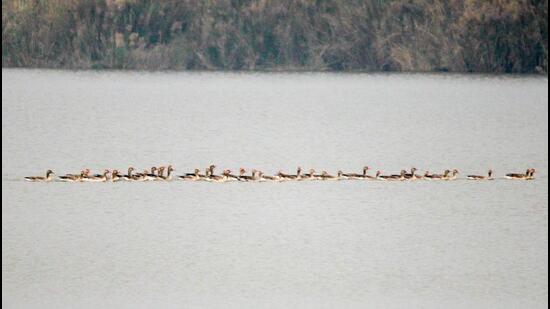
The migration season is well underway this winter, but the forest and wildlife department has not made the necessary advance preparations in terms of setting up venues for basking and resting. The absence of basking platforms has resulted in charismatic shelducks dispersing along the far shores and virtually out of view of the general public. The department’s strategic plan to lower water levels in the erstwhile rowing canal by constructing a sluice gate at its mouth and erect a series of silt islands in the middle for the birds is yet to take off from the files.
To add to the inhospitable scenario, proliferation of lotus weed has blanketed out a substantive part of the canal. The lake -- deep and brimming with an abundance of rainwater -- is anyway a dampener for migratory waterfowl as it does not offer natural basking sites like silted isles, mudflats and exposed shores as also aqua foods typical to shallow and marshy wetlands.
Annual bird counts by the Chandigarh Bird Club to commemorate the birth anniversary (November 12) of the ‘Birdman of India’, Dr Salim Ali, have thrown up declining numbers of migratory avians. Though flights of migratory birds are arriving this winter, not all avians are staying put as they are using the lake as a transit camp. Others are dispersing to remote areas and backwaters of the lake.
The above conditions disincentivise a prolonged winter sojourn for larger numbers and diversities of migratory waterfowl, waders and shorebirds. When brought to his notice, chief wildlife warden Debendra Dalai voiced due concern. “Clearance of weeds and provision of basking platforms would be taken up on a war footing by the department at the bird-viewing spots. We still have about four months of the migration season,” Dalai told this writer.
Thorny path to rose eyes
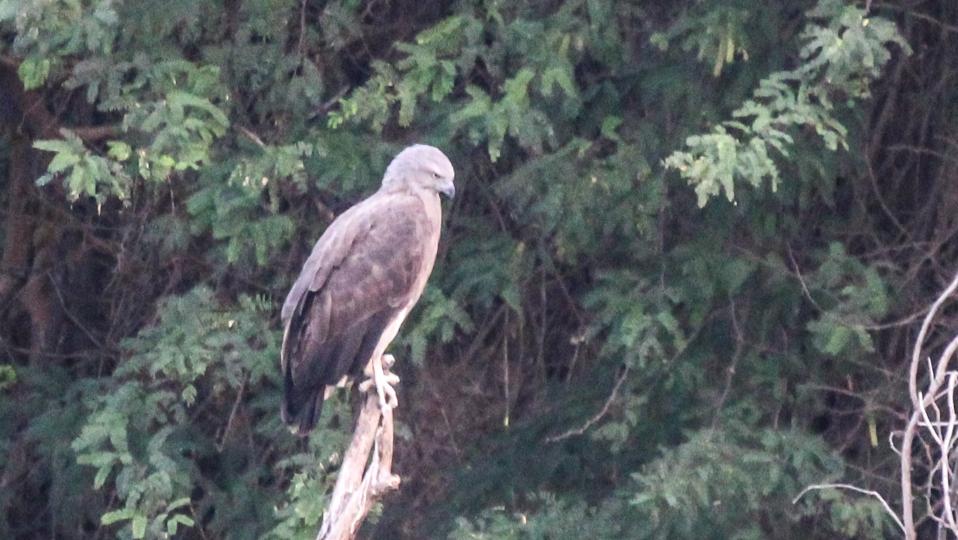
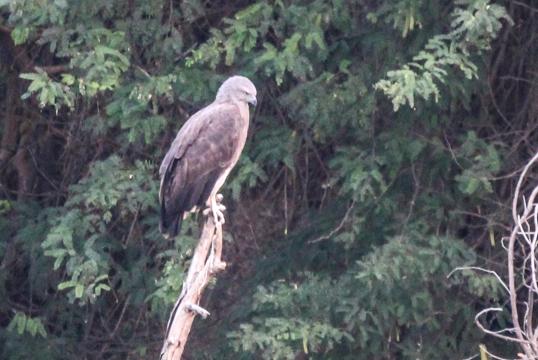
To observe migratory birds up and close or basking pythons and Russell’s vipers, one has to negotiate the marshes that lie between Sukhna Lake’s nature trail and the main body of the wetland. However, due to heavy rains, the marshes are tricky and at some points, virtually impossible to ply. On Friday, I was on a determined ramble to verify the migratory bird diversity and decided to scour the lake edges by traversing the northern shores broken by marshes, barriers of stacks of thorny fallen trees, creeks with an odd fallen tree serving as a slippery bridge, and inscrutable ‘sarkanda’ grasses. Fortune favoured my adventurous foray as an uncommon raptor and a near-threatened species, the lesser Fish eagle, virtually fell into my lap.
Black kites had hounded the eagle and it scurried desperately in the air to alight on a branch of a tree hanging over the water. Under that very tree, I was by chance situated. The eagle was distracted, with eyes on the hovering, vicious kites, and at other times focussed on the flip-flop of fish below, its staple prey. I went unnoticed, less than 15 feet below. I had binoculars and relished the eagle’s delicate, light-lemon eyes contrasted with a formidable, cruel beak. And its amazing feet, so well adapted to grabbing fish.
If one did not hazard the marshes, the only way to view the eagle or take its photographs was long distance: from hundreds of yards across the erstwhile rowing canal. But all that thorn and marsh faced was well worth one deep look into those tremulous irises carrying the tint of pale yellow rose.
vjswild1@gmail.com


