
 E-Paper



Wildbuzz | Kaun si qatil, chitti roohan de
Birds breed in cremation ground trees and new lives flower even as the logs below greedily hiss and crackle, flames devour spent flesh, and rage at those hard bones that stubbornly stage their last stand against the inevitability of ashes.


Paradoxes of existence, complexities of interaction, parallel value systems and a conflict of interests can bedevil spaces shared by humanity with wild creatures.
Cremation grounds are appointed with towering trees which support avian life and attendant biodiversity even as resident wild creatures witness the repetition of grieving human rituals.
Birds breed in cremation ground trees and new lives flower even as the logs below greedily hiss and crackle, flames devour spent flesh, and rage at those hard bones that stubbornly stage their last stand against the inevitability of ashes. We have glimpsed peacock and crows foraging in the remains of a pyre in late evening or at dawn when all is morosely quiet and lukewarm in the rows of ash beds.
At the cremation ground of village Shankarpura in Punjab’s Batala tehsil, this accommodation of death and birth spanning many years suffered a breakdown. A looming Philkhan tree sporting a fast-growing, widening canopy and situated in the ground’s centre had been occupied by Paddy egrets and Little cormorants. Over time, the canopy grew crowded with bird apartments and cast a shadow on the pyre spots below. That had genuine implications for mourners. Ten days back, Shankarpura bore three deaths in a day leading to a surge of mourners. That became the catalyst for a breakdown of human-bird coexistence.
“The birds’ poop and overpowering stink caused severe discomfort to mourners and their relatives who had come from far and near. It affected the village’s reputation as mourners had to stand under the tree with poop falling on them. The demand from villagers to prune the tree gathered pace after those three back-to-back cremations. So, the village’s gurdwara committee took the decision to prune and put an end to the birds’ occupation,” Sawinder Singh, husband of Shankarpura’s sarpanch, Davinder Kaur, told this writer.
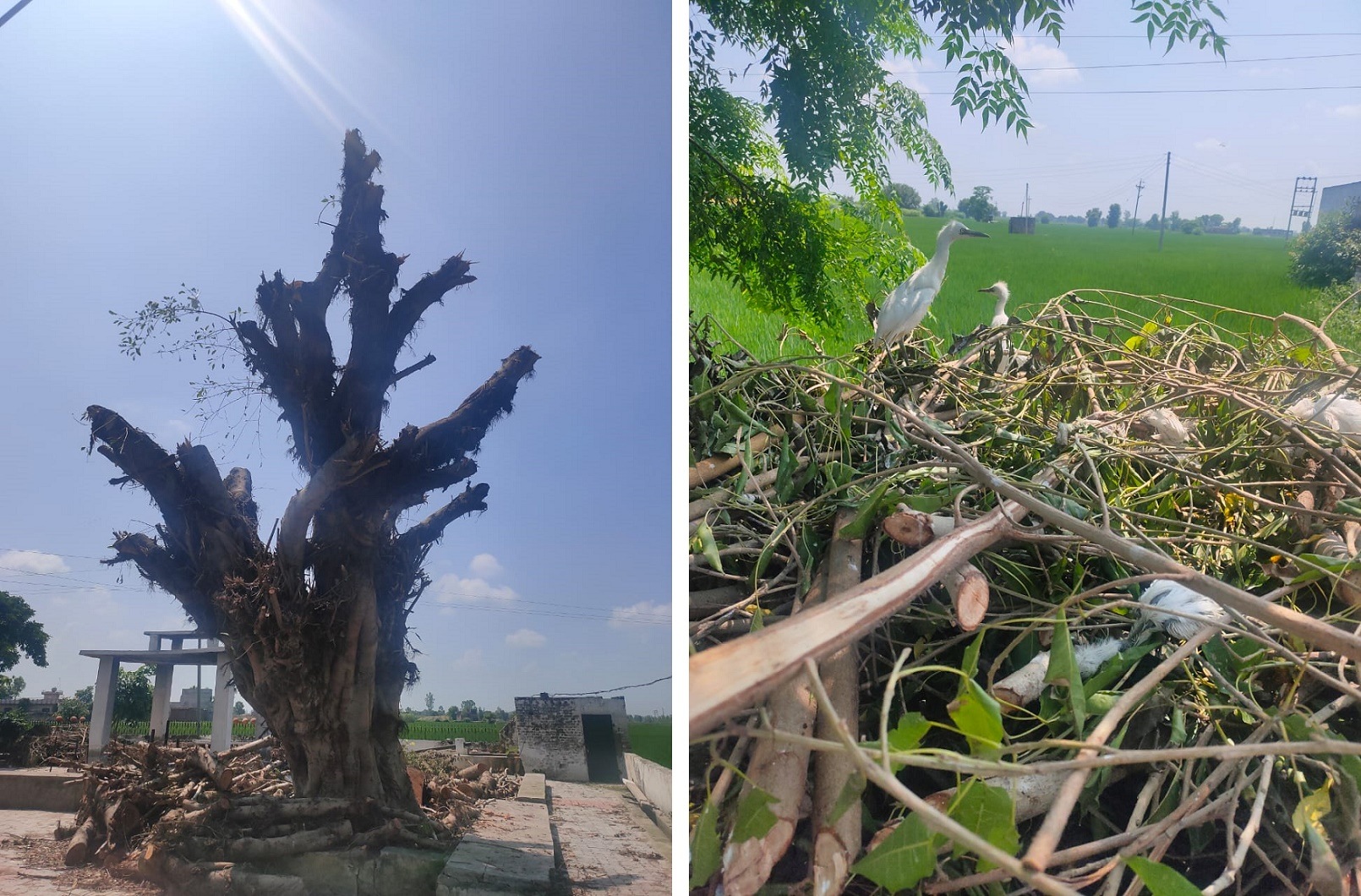
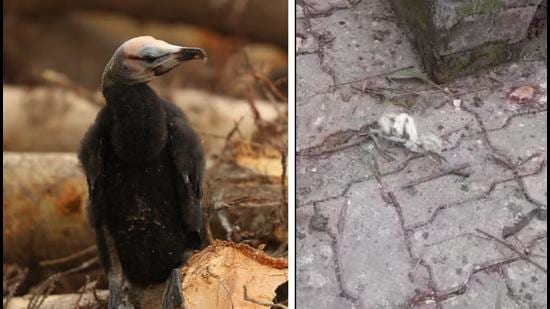
The effect on the other side, the birth givers, was catastrophic. “An estimated 100 egrets and eight cormorants lost their homes after the drastic pruning. Chicks and eggs were destroyed. A squirrel pup lay dead. Fortunately, the cremation ground is surrounded by paddy fields where some homeless chicks secured refuge from dogs. The villagers should have waited for the breeding season to end before hacking,” Amit Sharma, an environmentalist and banker posted at Shankarpura told this writer after having witnessed the pruning.
Bird carcasses, egg shells, struggling chicks, logs and feathers drifting in the wind like ashes bore grim testimony to the apocalypse. The biodiversity scene was now more in harmony with simmering pyres. Tearless egrets perched on piles of logs looked down at their smothered dead chicks and wasted eggs. The tree’s amputated limbs had come to signify a short-lived transition from ‘womb to tomb’ for the avian progeny. The spectacle was reminiscent of shanties razed by bulldozers, with melancholic children retrieving toys and ragged text books from home’s rubble.
Wise to prevalent social, religious and cultural values, Sharma reached out to the tree hackers in a creative manner. He chose not to hector them with ‘save our planet’ sermons. “I addressed them in their cultural idiom. I said, you people believe the departed human spirit is associated with shades of white --- the ‘chitti rooh’. These white egrets are actually the ‘rooh’ of your elders who have departed from this world and have taken the form of birds. They make homes on trees of the cremation ground as they do not want to leave your company. You can daily seek the blessings of your departed elders by tolerating these birds instead of driving them away. This had a positive effect and they expressed remorse at the destruction of nests, saying they were ignorant and had not realised pruning would have such consequences for breeding birds. I fervently hope they will not hack nesting trees again,” said Sharma.
The writer can reached at vjswild1@gmail.com


