
 E-Paper



Wildbuzz: Let mum love, once again
The mother must leave the offspring unattended at times as she needs to hunt, eat and replenish herself before she can expend the extra energies required of mothering and let kittens/cubs feed on her milk, the nectar of creation.


The advance of agriculture into natural habitats has forced wild species to adapt to the altered landscapes as best as they can. The wild cats, such as the leopards of Maharashtra’s sugarcane belts and tigers of the Terai, lay their cubs sometimes in tall, extensive crops. The smaller cats, such as the jungle cat, too, take recourse to hiding away their vulnerable kittens in fields.

The mother must leave the offspring unattended at times as she needs to hunt, eat and replenish herself before she can expend the extra energies required of mothering and let kittens/cubs feed on her milk, the nectar of creation. It is in those times that the offspring are vulnerable to predators or sometimes humans who kill the kittens/cubs out of fear and ignorance. Often, farmers, while cutting the crops or working on fields stumble upon the solitary kittens/cubs.
Not all humans are predisposed to wanton killing of creatures and such rural folk prefer to restore the offspring to cat mums. But that is not an easy task. It is here that several NGOs working on wildlife rescue and rehabilitation have rendered a yeoman’s service in reuniting traumatised offspring with a mum pining silently. A set of workable field protocols has ensured a high success rate.
A heartening tale of human empathy for separated wild families comes our way from Abhoypur village in Dibrugarh (Assam). Villagers found three jungle cat kittens in paddy fields. They immediately alerted Jeypore forest officials, who contacted the Wildlife Trust of India (WTI). Having saved more than 42,000 animal lives since its inception in 1998, the WTI’s experienced field vet, Dr Jugal, guided the officials. The kittens were left where they were found and the spot freed of human presence.
As night seeped into daylight, a touching scene unfolded in the camera trap footage. Jungle mum arrived, looked around warily, gathered her young ones with a quiet reassurance and ferried them in her gentle jaws to a secluded spot in the jungle.
No one could spot junglee mum’s tears because the stoic lady had none.
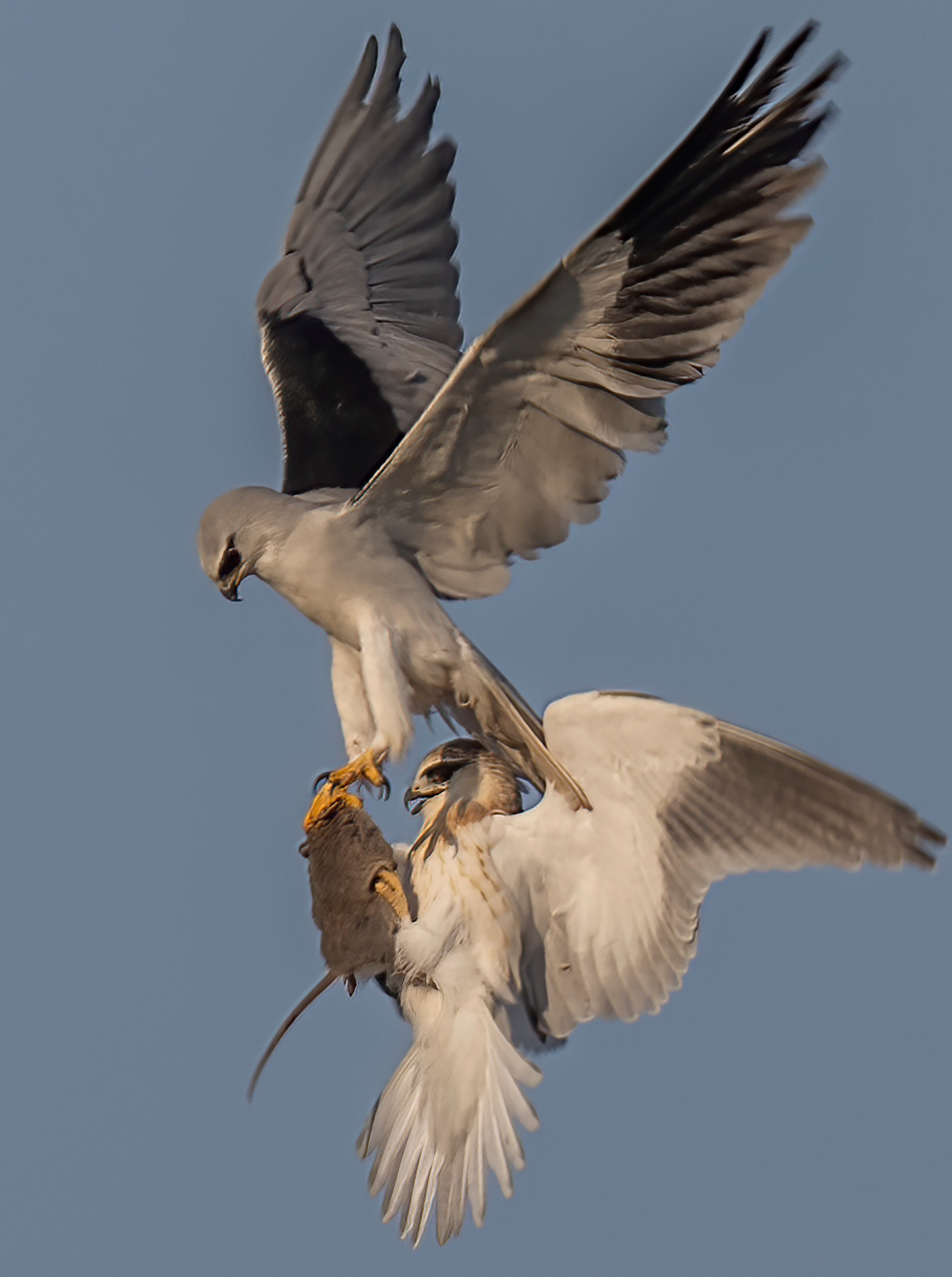
Hoverers battle in blue skies
If one has observed the elegantly-feathered Pied kingfisher hover over Sukhna lake and enjoyed the spectacle thoroughly, then repair to the countryside of the Shivalik foothills and look up another hoverer. A bird exquisite in its colours: eyes blood red and wings of white, ashy grey and black in flight a buoyant sailing one, like a white boat on the blue seas, and often flying in wide circles as the bird scans the ground for prey such as large insects/field rodents. The black-shouldered kite is a dainty little raptor, sometimes overlooked in deference to the mightier vultures, hawks and falcons.
It may hunt by adopting a permanent perch on a tree/agrarian pillar and stoop down on a miserable rodent or hover in the air by holding itself up against the wind before dropping on the prey and whisking it away in the claws.
A once-in-a-lifetime photo came the way of a very keen and diligent birder, Dr Manish Goyal of the City Lifeline Hospital, Pathankot. He captured two kites in mid-air battling over a rodent one of them had caught near the Thapkor jungles.
vjswild2@gmail.com


