
 E-Paper



Wildbuzz: Suffering of Ganesha
Deployed for tourism, religious and cultural events, elephant feet suffer silently with toenails uprooted and cuticles damaged


Captive elephants are made to walk for years on end, doggedly trudging across the asphalt and concrete in cities. The smouldering surfaces are a far cry from the natural turfs that their feet evolved for. Deployed for tourism, religious and cultural events, elephant feet suffer silently with toenails uprooted and cuticles damaged.
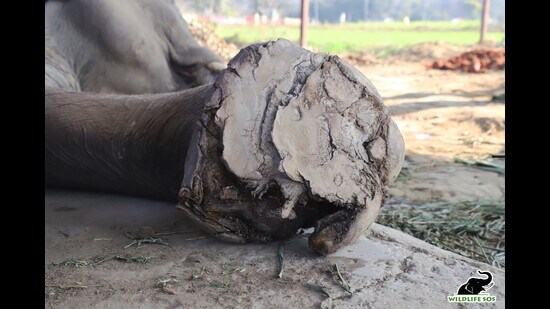
The predicament came to fore via the recent case of Moti, a 35-year-old elephant, who died after battling multiple ailments arising from captivity in towns along the Shivalik foothills.
Besides compromised kidney and liver functions due to prolonged malnutrition, Moti’s right forelimb had been fractured for months, but he had not received treatment. His left forepad had been torn asunder due to unending exposure to the harsh urban surface. The left footpad had separated from the foot base exposing raw tissue and afflicting acute pain to the elephant at each step that he took at the prodding and jabbing of his callous mahout.
Ultimately, Moti could not even stand. The Army’s Bengal Sappers Regiment was dispatched by the Chief of Army Staff to assist non-governmental organisation (NGO) Wildlife SOS’ veterinary team in a vain effort to “engineer” Moti back on his feet. Moti died, but his horrific predicament drew resonance. “Millions sent Moti prayers and healing wishes from across the world. Moti’s soul (finally) found peace and an escape from a life in captivity. Even in death, Moti inspires us and will be remembered as a fighter, who never gave up,” Kartick Satyanarayan, Wildlife SOS CEO and co-founder told this writer.
At the root of Moti’s death was the lack of timely veterinary care. The Wildlife (Protection) Act, 1972, mandates chief wildlife wardens to conduct bi-annual inspections of captive elephants to ensure the heritage animal and endangered species is well provided for by mahouts, including the mahouts’ capacity to provide veterinary care. However, enforcement of this requirement is lax by the authorities. Surveillance of captive elephants by wildlife departments is further weakened by the fact that some mahouts do not possess legal documents for ownership of elephants. They tend to evade scrutiny by not subjecting their long-suffering “serfs” to the required biannual appraisal and review by the authorities.
Foul owl on lockdown prowl
The terribly disturbing chaotic and suffocating Covid-induced lockdowns of 2020-’21 profoundly impacted social life, none the least, the artistic community. Artists faced a sudden curtailment of their freedoms, avenues for the standard, offline exposition of their creative energies, and a virtual end to the collection of new materials and ideas for expression.
The flip side of curfew was that there was enhanced privacy time for development of creative ideas. Locked up artists were literally forced to ramble into experimentation and explore deeper, mentally, for new ideas.
A coffee table book, Indian Art during the lockdown, curating the Covid-era creativities of 50 artists from Chandigarh and Delhi was authored by Manoj K Tripathy. That book found public expression through an exhibition, Different Perspectives, staged under the aegis of the Chandigarh Lalit Kala Akademi at the Government Museum and Art Gallery, Chandigarh, from February 16-23.
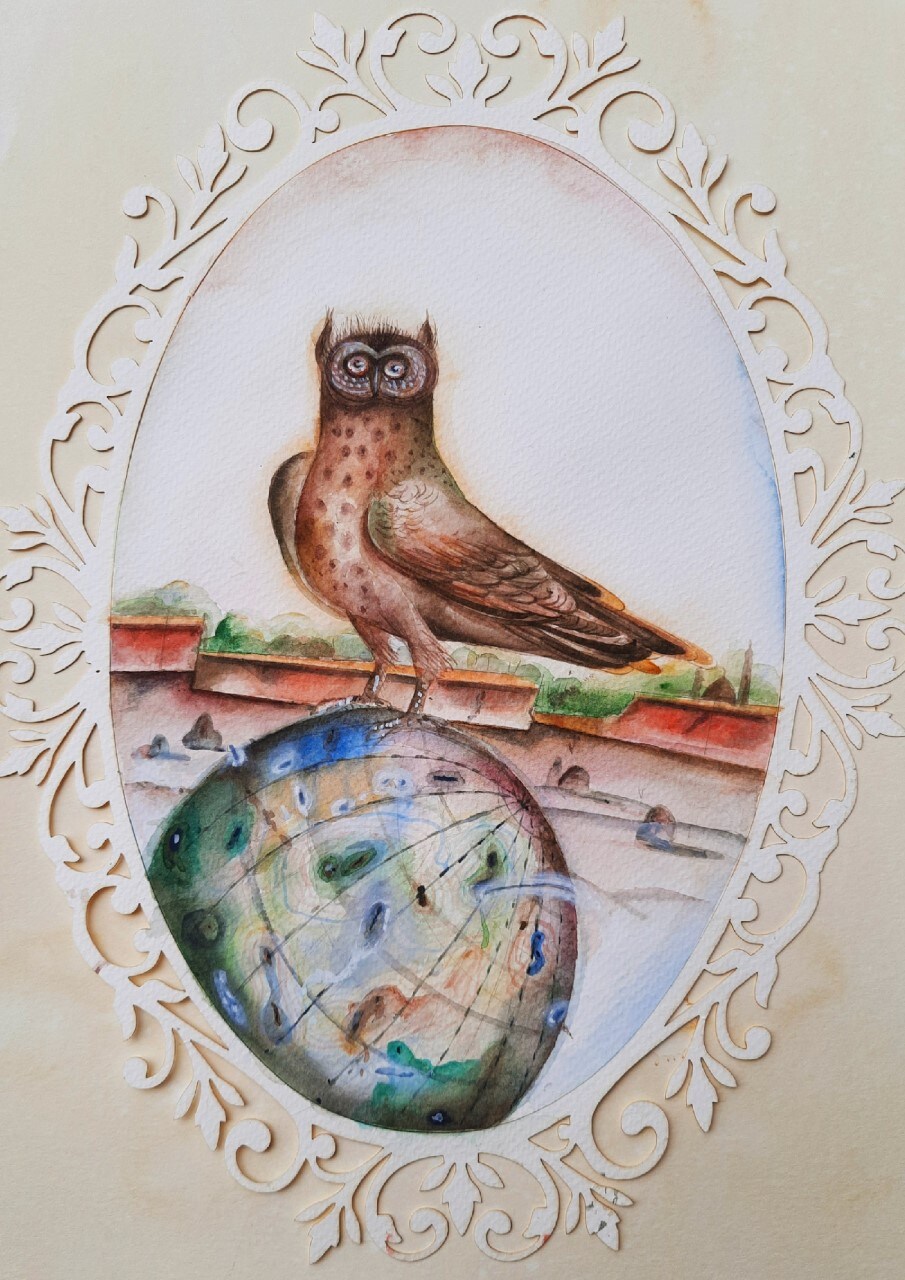
Just as bird photographers battled Covid confinement by indulging in balcony birding, some artists turned to the natural world to articulate the spirit of their muse. A sigh of disquiet in the soul over the way Covid was handled ran as a subtle, subterranean theme. A young Chhattisgarh-born artist settled in Delhi, Sheikh Hifzul Kabir, deployed owls as the central symbols to vividly suggest and embed deeply the themes of his Covid art. In one of his two owl watercolours on display in Chandigarh, titled, Regal Silencez, Hifzul curiously depicts an owl perched on top of a globe wracked by the multiple upheavals of surreal, unending lockdowns.
“That owl, ruling the roost of the globe, symbolises politicians who inflicted suffering across the world on people through warped decision-making. Their decisions imposed on people had no understanding of the ground realities. In line with the meaning of the idiom, ‘ulloo banaanaa’, I aesthetically employ the owl to symbolise how politicians duped and made fools of people during lockdowns. However, it is not that I want to depict owls in a negative light by using these birds to suggest political perfidies. I have grown up with the nature-loving tribals of Chhattisgarh. Numerous other owl artworks by me depict the innocence of this bird wronged by traditions, superstitions and barbaric ritual practices,” Hifzul told this writer.
vjswild1@gmail.com


