E-Paper



'For green bonus compensation, Uttarakhand should request UNEP': Niti Aayog VC
Uttarakhand government has been seeking Green Bonus as compensation for the conservation of its forests by not expanding the industrial development.

 Prefer HTon Google


Rajeev Kumar, vice-chairman of NITI Aayog, on Friday, said that for the green bonus, Uttarakhand should request the United Nations Environment Programme (UNEP) under the carbon credit compensation system.
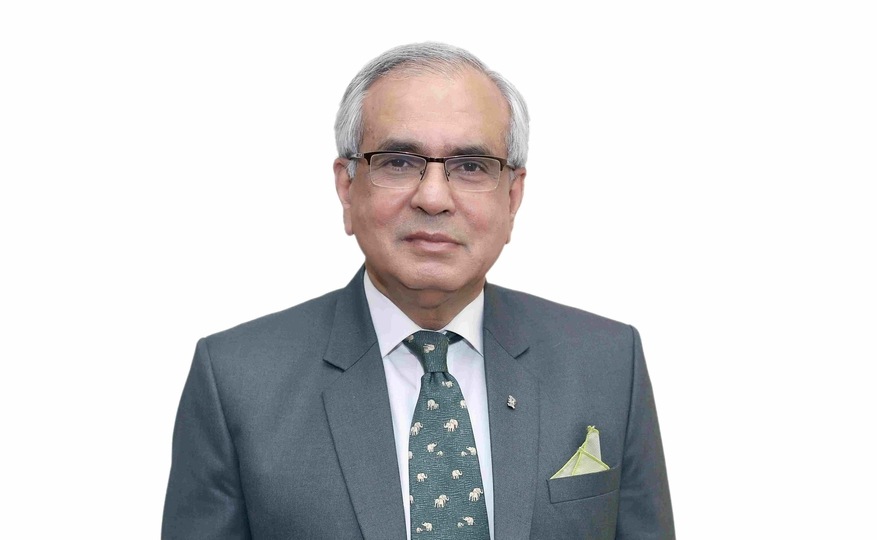
Kumar said this while attending a function organised by the Himalayan Environmental Studies and Conservation Organization (HESCO), a Dehradun-based NGO involved in the development of environmentally sustainable technologies. He also inaugurated a water mill built by the NGO in Dehradun on its premises
Carbon credits are part of national and international attempts to mitigate the growth in concentrations of greenhouse gases. According to experts, carbon credit means any tradable certificate or permit representing the right to emit one tonne of carbon dioxide or the equivalent amount of different greenhouse gas. One carbon credit equals one tonne of carbon dioxide, or carbon dioxide equivalent gases.
Uttarakhand government has been seeking Green Bonus as compensation for the conservation of its forests by not expanding the industrial development by chopping forests.
Kumar also laid stress on focusing equally on ecology and economy, saying that they go side by side. He said without ecology, the economy cannot go a long way.
Anil Joshi, 'founder of HESCO, said in his presentation that the slogan of 'Atma nirbhar Bharat' or 'self-reliant India' matches with their core philosophy that local needs of people should be met locally. “Prosperity of Bharat cannot be ensured without taking villages and their local economy into account,” he said.
Talking about the importance of water mills in local Himalayan ecology, Joshi said it is one of the most easily accessible traditional forms of hydropower, which was earlier used for grinding wheat.
“Now with advances in technology, watermills can be developed to generate power for villages in the upper reaches of the Himalayas. One watermill has the capacity of generating two to five kilowatts of power. We should have a Himalayan network of all the streams which can be tapped to generate power,” he said Joshi.
The United Nations Environment Programme (UNEP) is the leading global environmental authority that sets the global environmental agenda, promotes the coherent implementation of the environmental dimension of sustainable development within the United Nations system, and serves as an authoritative advocate for the global environment, according to the UNEP website.