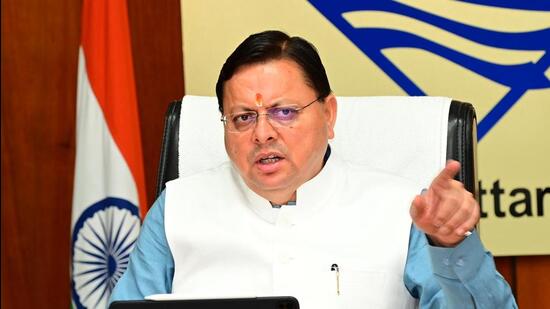
Uttarakhand chief minister Pushkar Singh Dhami on Monday directed the formation of a high-level committee to streamline crowd management and strengthen the safety infrastructure at prominent religious sites in the state.
The development comes in the aftermath of the Mansa Devi stampede in which eight people were killed. 30 others were also injured in the stampede on a narrow stairway leading to a temple in Haridwar on Sunday morning.
The decision was taken during a high-level review meeting at the secretariat where the CM instructed officials to ensure safety of devotees visiting shrines like Mansa Devi and Chandi Devi temples in Haridwar, Purnagiri Dham in Tanakpur, Kainchi Dham in Nainital, Jageshwar temple in Almora, and Neelkanth Mahadev temple in Pauri, among others.
Also Read: Haridwar stampede: 8 dead, 30 injured in stampede at Mansa Devi temple
Dhami directed officials to prepare a comprehensive action plan to manage crowds, particularly during peak pilgrimage seasons.
“Proper crowd management, mandatory registration of devotees, widening of approach paths and stairways, removal of encroachments, and availability of basic facilities must be ensured at all major shrines,” the chief minister said.
{{/usCountry}}“Proper crowd management, mandatory registration of devotees, widening of approach paths and stairways, removal of encroachments, and availability of basic facilities must be ensured at all major shrines,” the chief minister said.
{{/usCountry}}Dhami directed that a committee be constituted in this regard headed by commissioners of both Garhwal and Kumaon divisions.
“The panel will also include the district magistrates and senior superintendents of police (SSPs) of respective districts, vice chairpersons of the local development authorities, and representatives from executing agencies involved in shrine infrastructure development”, he said.
The CM called for systematic planning to improve the overall experience for pilgrims. He instructed officials to focus on the phased regulation of crowd movement and enforce mandatory registration protocols to manage daily inflow.
“The aim is to increase the carrying capacity of temple complexes while maintaining safety and ease for visitors,” Dhami added.