
Sign in

High-level committee for crowd management at Uttarakhand shrines: CM Dhami

At least eight people, including a 12-year-old boy, were killed and 30 others injured in a stampede on a narrow stairway leading to a temple in Haridwar on Sunday morning

Published on: Jul 28, 2025, 16:28:16 IST
Share
Share via
  • facebook
  • twitter
  • linkedin
  • whatsapp
Copy link
  • copy link

Uttarakhand chief minister Pushkar Singh Dhami on Monday directed the formation of a high-level committee to streamline crowd management and strengthen the safety infrastructure at prominent religious sites in the state.
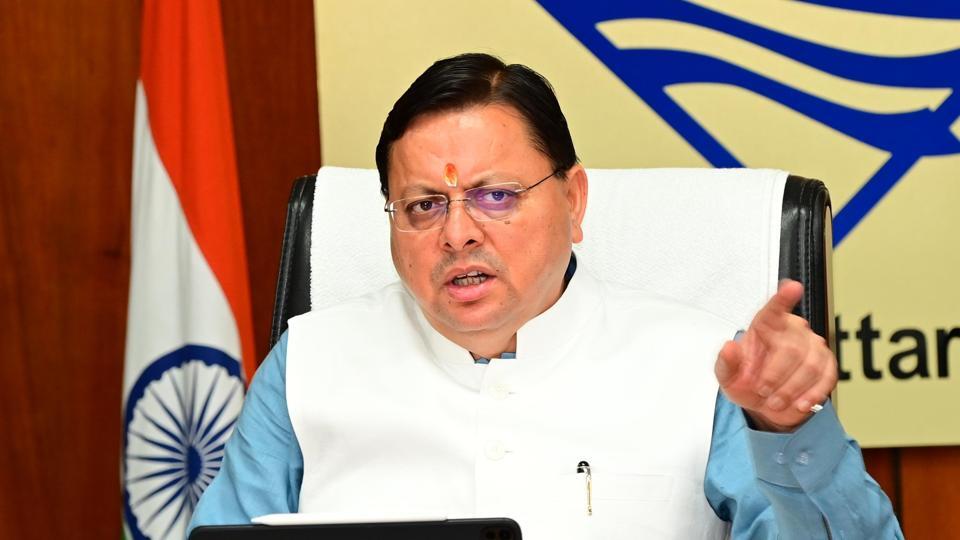
Dhami directed officials to prepare a comprehensive action plan to manage crowds, particularly during peak pilgrimage seasons. (HT sourced photo)

The development comes in the aftermath of the Mansa Devi stampede in which eight people were killed. 30 others were also injured in the stampede on a narrow stairway leading to a temple in Haridwar on Sunday morning.

The decision was taken during a high-level review meeting at the secretariat where the CM instructed officials to ensure safety of devotees visiting shrines like Mansa Devi and Chandi Devi temples in Haridwar, Purnagiri Dham in Tanakpur, Kainchi Dham in Nainital, Jageshwar temple in Almora, and Neelkanth Mahadev temple in Pauri, among others.

Also Read: Haridwar stampede: 8 dead, 30 injured in stampede at Mansa Devi temple

Dhami directed officials to prepare a comprehensive action plan to manage crowds, particularly during peak pilgrimage seasons.

“Proper crowd management, mandatory registration of devotees, widening of approach paths and stairways, removal of encroachments, and availability of basic facilities must be ensured at all major shrines,” the chief minister said.

Dhami directed that a committee be constituted in this regard headed by commissioners of both Garhwal and Kumaon divisions.

“The panel will also include the district magistrates and senior superintendents of police (SSPs) of respective districts, vice chairpersons of the local development authorities, and representatives from executing agencies involved in shrine infrastructure development”, he said.

The CM called for systematic planning to improve the overall experience for pilgrims. He instructed officials to focus on the phased regulation of crowd movement and enforce mandatory registration protocols to manage daily inflow.

“The aim is to increase the carrying capacity of temple complexes while maintaining safety and ease for visitors,” Dhami added.
  • Neeraj Santoshi
    ABOUT THE AUTHOR
    Neeraj Santoshi

    Neeraj Santoshi is the Chief of Bureau for Hindustan Times in Uttarakhand, where he leads the state reporting team while covering government, politics, environment, wildlife, Uttarakhand High Court, and issues shaping the Himalayan region. With more than two decades in journalism across conflict zones, he has covered politically sensitive regions and environmentally fragile landscapes, and focused on stories that combine public interest with in-depth storytelling. An alumnus of Pune University with a Master’s in Communication Studies, he has reported extensively from Jammu & Kashmir (2003-2010), Madhya Pradesh (2010 to 2018 ) and Uttarakhand (Since 2018), covering subjects ranging from insurgency, elections and governance to wildlife conservation, mining, climate change, agriculture, human rights and social justice. He has covered politics and legislative assemblies of both Jammu & Kashmir and Madhya Pradesh over more than a decade. Before taking over as Chief of Bureau in Uttarakhand, he served as Special Correspondent with Hindustan Times in Madhya Pradesh and earlier reported for both Hindustan Times and The Indian Express in Jammu & Kashmir, where he covered state politics, environment and insurgency-related developments. Over the years, his stories have focused on environmental degradation, wildlife, illegal mining, governance and the changing social fabric of Himalayan states and Central India. He is particularly interested in long-form explanatory journalism, and stories that explore the intersection of ecology, conservation, governance and society. Outside the newsroom, Neeraj enjoys reading widely on neuroscience, consciousness studies, Artificial Intelligence and quantum physics, with a special interest in Kashmiri Tantric Shaivist traditions. He is also passionate about wildlife, mountaineering and the Himalayas, interests that continue to inform his reporting and deepen his understanding of the region he covers.Read More