E-Paper



NTCA seeks status report on opening part of Rajaji Tiger Reserve for tourists
NTCA sought the report after Gaurav Kumar Bansal, a wildlife activist and advocate in Supreme Court, sent a legal notice to the NTCA member secretary on September 6, alleging that “allowing tourism in such a critical tiger habitat” was illegal

 Prefer HTon Google


National Tiger Conservation Authority (NTCA) has written to the Uttarakhand forest department seeking a factual status report on opening a part of the Rajaji Tiger Reserve (RTR) for tourists.
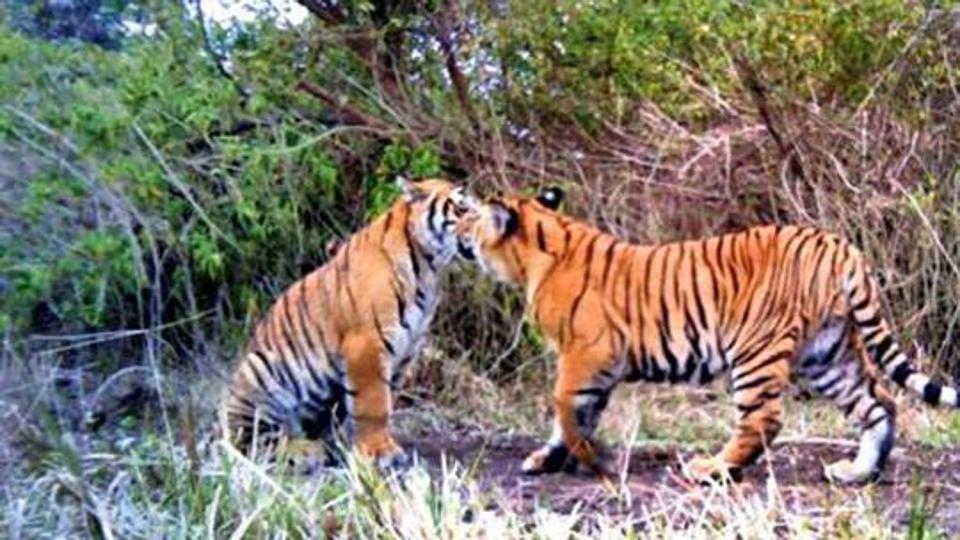
NTCA sought the report after Gaurav Kumar Bansal, a wildlife activist and advocate in Supreme Court, sent a legal notice to the NTCA member secretary on September 6, alleging that “allowing tourism in such a critical tiger habitat for a whole year in Rajaji Tiger Reserve and that too without following the scientific and objective criteria as well as without consulting the expert committee is nothing but illegal” .
Bansal said that the chief wildlife warden of Uttarakhand, in his letter dated September 3, asked the director of Rajaji Tiger Reserve to open up the area from Satyanarayan to Kansro, a critical tiger habitat in Rajaji Tiger Reserve for the whole year.
Rajaji Tiger Reserve is usually open till June 15 after which it is closed for the monsoon season. It reopens on November 15 every year.
Bansal, in his legal notice, also pointed out that the chief wildlife warden, Uttarakhand, also asked the director of Rajaji Tiger Reserve to open the area from Motichur to Rajaji Rani via the Micro Tower tourism zone from October 1, 2021 instead of November 15, 2021.
Bansal said opening these areas is a violation of various provisions of the Wildlife (Protection) Act 1972. “The said unsustainable use of Rajaji Tiger Reserve landscape is not only capable of damaging the whole ecology of the tiger reserve but it can also cause harm to the pristine biological diversity of the Park. So I sent a legal notice to NTCA so that they take cognisance of this matter and initiate action in accordance with law and more specifically as per the provisions of Wildlife (Protection) Act 1972,” he said.
When contacted, JS Suhag, the chief wildlife warden of Uttarakhand, said he will look into the matter and then send a detailed factual report to NTCA.
Rajaji National Park, spread over 820 sqkm in three districts of Uttarakhand, namely Haridwar, Dehradun and Pauri Garhwal, came into existence in 1983, when three wildlife sanctuaries in the area--Chilla, Motichur and Rajaji sanctuaries--were merged into one. The park is named after C Rajagopalachari (Rajaji), a prominent leader of the freedom struggle and the second and last governor general of independent India. In April 2015, Rajaji was declared a tiger reserve, becoming the second tiger reserve in the state after Corbett Tiger Reserve
The park is famous as an elephant habitat and also harbours the mountain goat, goral and other wild animals. The reserve is home to more than 50 species of mammals including tiger, leopard, Himalayan black bear, sloth bear, jackal , hyena, spotted deer, sambhar, barking deer, nilgai, monkeys and over 300 species of birds.