E-Paper



Uttarakhand HC directs govt to blacklist horse operators indulging in cruelty
The Uttarakhand high court has also directed the state government not to deploy horses and mules on Char Dham routes between sunset and sunrise

 Prefer HTon Google


The Uttarakhand high court has directed the state government to frame a policy to blacklist horse and mule operators who are found subjecting their equines to cruelty and maltreatment, allow only registered equines and handlers, implement a Stampede Prevention Mechanism and not deploy equines on Char Dham routes between sunset and sunrise.
The HC order stated, “We are of the view that mere fining of the handlers, or filing cases against them for inflicting cruelty to the animals, is not sufficient to rein in and discipline the erring handlers/ owners of equines… The only effective way, in which cruelty to the equines can be curbed, is by blacklisting such handlers/ owners, who are found to be subjecting their equines to cruelty and maltreatment... We, therefore, direct the state to formulate a scheme/ rules in this regard, and to implement the same strictly as, it is only the fear of being debarred from carrying on their business, that will drive the erring handlers/ owners of equines, to fall in line”.
The division bench comprising chief justice Vipin Sanghi and justice Rakesh Thapliyal gave these directions after hearing two public interest litigations (PILs) filed by animal rights activist Gauri Maulekhi and social activist Ajay Gautam on Thursday. The copy of the order was made available on Friday evening.
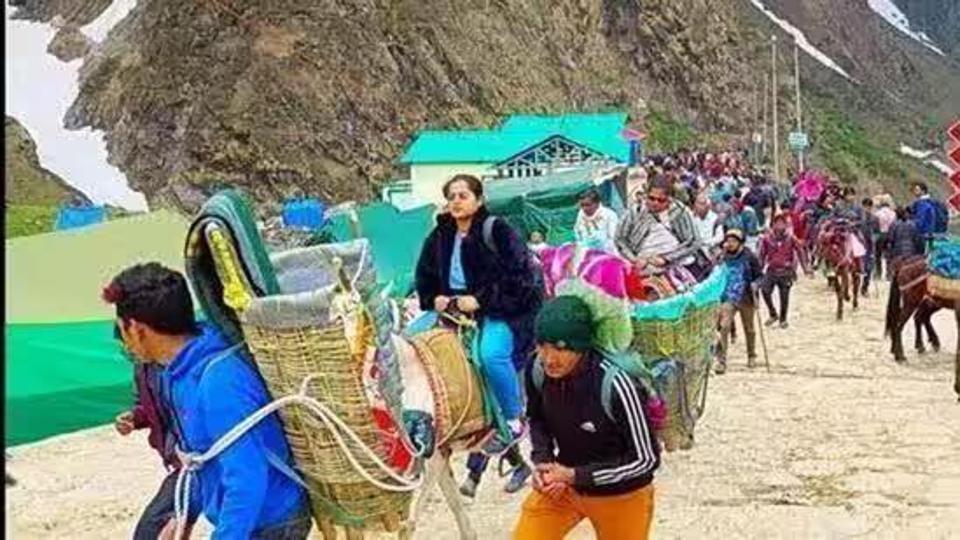
Both the PILs highlighted the pathetic condition of the horses and mules operating on the Char Dham routes, the cruelty being meted out to them by their handlers and a large number of unregistered horses and mule operators plying on the Char Dham routes.
The court sought their suggestions and issued a slew of directions. Secretary animal husbandry BVRC Purushottam, who was present in the court, informed HC that in comparison to the last year, the situation has seen a significant improvement. This year, in the first 95 days till July 28, 114 equines have died on the Kedarnath route, while last year the figure for the same period was 214.
On this, the HC said, “Though the number of deaths.. may have declined… same still appears to be significant. We, therefore, direct the state to collect and collate the data, with regard to equines deaths on the pilgrimage routes …and to analyse the reasons for such deaths.
The affidavit submitted by the state government said Uttarakhand Animal Welfare Board has recommended a maximum carrying capacity for Kedarnath at 3,800 equines. Purushottam apprised HC that considering the heavy influx of pilgrims (11,71,747 pilgrims visited Kedarnath in the first 98 days of the Char Yatra this year, compared to 9,85,763 pilgrims in 2022), over 5,000 equines have been permitted due to the heavy rush, and demand for equines on the Kedarnath Trek.
After Maulekhi pointed out that the actual numbers are far in excess of even the 5,000 mark, as a large number of unregistered handlers are also deploying their equines for the yatra illegally, HC directed the state government to ensure only registered equines and handlers are allowed on the yatra route.
The HC directed the district magistrate, Rudraprayag, and the other district magistrates concerned, to ensure that equines are not deployed on the Yatra Treks of Kedarnath, Yamunotri and Hemkund Sahib, between sunset and sunrise, so that they can be rested before they are again deployed to render service on the next day.
On the plea of petitioners that the load-carrying capacity of the small, medium and large equines should be determined, and enforced on the pilgrimage treks, Purushottam agreed to this suggestion and told the court that it will be put into action, without any delay.
The petitioners also suggested that equines should be made to ply only for one trip per day on any pilgrim trek, which was agreed upon by the state government
The court also stated that equines, according to petitioners, should be unsaddled each day, and their physical fitness should be checked after unsaddling, to ensure whether they have suffered wounds. The court added, “This exercise should be conducted in respect of the equines deployed on all the pilgrimage routes”.
On Maulekhi’s suggestion that the equines should be put to Endurance Test once in a season to check for cardiac malfunction, HC said, “State should have a system of screening the equines… by competent veterinary doctors and veterinarians, and if the experts feel –any particular equine, or equines, should be subjected to such Endurance Test… before the equine is permitted to be deployed on the pilgrimage routes”.
After Maulekhi pointed out that the Insurance Scheme in respect of equines is being exploited by the handlers as equines, which suffer injury, or become disabled, or are malnourished, are subjected to further cruelty to ensure that they die, and their insurance claims mature, the HC directed the state government to look into the policy, with regard to grant of insurance so as to exclude “the possibility of claims, which arise from deaths of equines caused due to excessive deployment, ill-treatment, malnutrition and neglect of equines”.
On Maulekhi’s suggestion the state should implement a Stampede Prevention Mechanism at regular intervals on the pilgrimage routes, HC said, it “is absolutely necessary, and should be implemented along the pilgrimage routes, to prevent any accident involving large number of people. We, therefore, direct the state to examine the said aspect, and come up with a solution before the next date” (of hearing scheduled on September 20).