E-Paper



Uttarakhand HC issues directions to halt muck dumping near Chamoli temple
The PIL alleged illegal and unscientific dumping of muck, debris, construction and demolition wastes in and around Haat village and the failure of authorities concerned in protecting and conserving the ancient Lakshmi-Narayan Temple, built during 8-9th century AD by Adi Shankaracharya

 Prefer HTon Google


The Uttarakhand high court has issued directions to halt dumping of muck in the vicinity of 8-9th century old Laxmi Narayan temple cluster built on the Alaknanda River in Chamoli district’s Haat village by Vishnugad Pipalkoti Hydro Electric Project authorities.
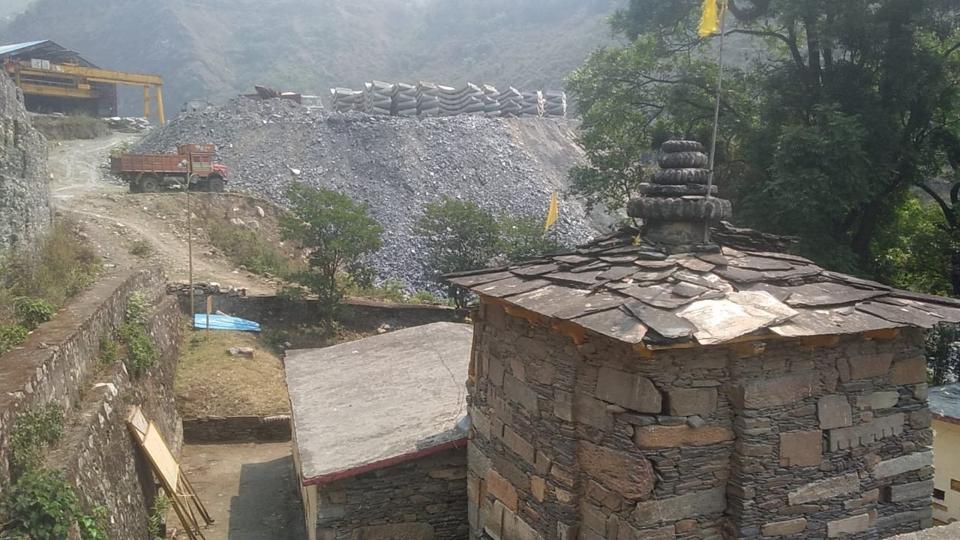
The directions were issued by the division bench chief justice Vipin Sanghi and justice Ramesh Chandra Khulbe while hearing a public interest litigation (PIL) on Wednesday filed by Haat Gram Sabha through its Pradhan. The next hearing in the matter has been fixed for December 6, 2022.
The PIL alleged illegal and unscientific dumping of muck, debris, construction and demolition wastes in and around Haat village and the failure of authorities concerned in protecting and conserving the ancient Lakshmi-Narayan Temple, built during 8-9th century AD by Adi Shankaracharya.
Akash Vashishtha, counsel of the petitioner, said the court also issued notices to the Union ministry of culture, Archaeological Survey of India (ASI), ministry of environment and forests, the Uttarakhand government, State Pollution Control Board and Uttarakhand directorate of culture, seeking their responses within four weeks.
Vashishtha said the HC, while expressing shock at the photographs of debris dumping, reprimanded the state authorities, and observed that acquisition of the land for a particular project didn’t mean that they can dump the muck anywhere, and damage the heritage and ecology of an area.
“I apprised the court that a heritage temple over 1,000-year-old was being converted into a muck dumping site by Vishnugad Pipalkoti Hydro Electric Project authorities, in complete disregard to the ASI recommendations. Haat, in which the cluster of these temples is situated, is witnessing perpetual dumping of construction and demolition waste materials. The ASI report recommends that not only the muck dumping should stop and be shifted to another area but the site also needs to be protected”, he said.
Haat gram pradhan Rajendra Hatwal was present during the hearing along with other villagers.
The Vishnugad Pipalkoti Hydro Electric Project is located on river Alaknanda, a big tributary of river Ganga, in Chamoli. The project envisages construction of a diversion dam as high as 65 m across the river for power generation. The reservoir will have a gross storage capacity of 3.63 million cubic metre, out of which 2.47 million cubic metre will be live storage. The project is expected to be commissioned by March 2025.
The PIL stated that last year taking cognisance of the cultural importance of the village and ancient temple structures, the Indian National Trust for Art and Cultural Heritage (INTACH) also recommended restoring the entire village in its letter to the World Bank and THDC India Ltd.
“Due to the high significance attached to the ancient temple site and Haat village, we urge THDC to recognise the ancient temples and remains as assets of national importance, and the funding agency – World Bank – to restore the impacted sites and also conserve the historic village in entirety as part of the project, to encourage the World Bank mandate of sustainable livelihood,” the latter stated.