
 E-Paper



19 out of 37 sewage treatment plants in Delhi not up to standard: DPCC report
Over half of Delhi's sewage treatment plants fail to meet pollution standards, with alarming levels of faecal coliform and suspended solids, report shows.

 Prefer HTon Google


Over half, or 19, of Delhi’s 37 sewage treatment plants (STPs) do not meet the standards prescribed by the Central Pollution Control Board (CPCB), according to the latest data shared by the Delhi Pollution Control Committee (DPCC).
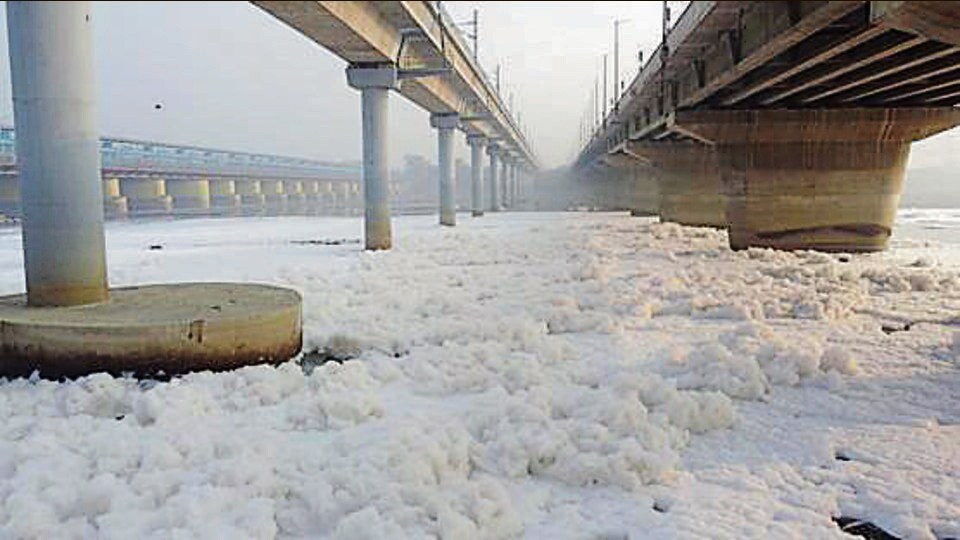
The report, dated November 5, is part of the monthly assessment report for October, and reveals that a large chunk of STPs are yet to meet the prescribed norms set for parameters such as faecal coliform, biological oxygen demand (BOD) and total suspended solids (TSS), among others.
“Nineteen STPs are not complying with the prescribed standards, while the remaining 18 are,” said the report. DPCC collects and analyses samples for STPs once every month.
The Delhi government did not comment on the findings of the report.
Over 10 times faecal coliform
While CPCB prescribes faecal coliform rate to be at 230 most probable number (MPN)/100 m/l or less, the levels were found to be over 10 times this limit, even post-treatment. The highest value – 2,500 units – was recorded at the Yamuna pillar STP, followed by 2,300 at Okhla STP, the report said.
Three times total suspended solids
Meanwhile, total suspended solids (TSS) – which should be 10 mg/l or less – were found to be up to three times the permissible limits at multiple STPs. This included a value of 34 mg/l at the Pappankalan (old) STP, followed by 33 mg/l at Nilothi, readings collected at the outlet of the STPs showed.
Three times BOD levels
Similarly, the BOD levels – the amount of oxygen required by aquatic life to survive – were two to three times permissible limits. The highest reading of 32 mg/l was recorded at Ghitorni, followed by 20 mg/l at Nilothi. The standard for BOD is also 10 mg/l.
STP network small and outdated
Last month, a report submitted by the Delhi Jal Board (DJB) in the National Green Tribunal (NGT) had said that 67% of its STPs had been upgraded with parameters prescribed by CPCB while the remaining plants are expected to be upgraded by December 2025.
DJB was responding to the green court’s directions issued on September 4 when it criticised the water utility for failing to comply with its 2015 order calling for the operationalisation of 32 STPs on Delhi’s major and minor drains to trap local sewage.
NGT had observed that DJB has built only 17 STPs over the past nine years, and noted that these plants are yet to be completed on the remaining 15 drains, which contribute to the high pollution levels in Delhi’s drain network and eventually in the Yamuna. It had sought a response from DJB on the status of Delhi’s STPs and trapping of sewage.
The parameters require STPs to have the values of both BOD and TSS below 10mg/l post treatment.
“The technology of the old plants is being upgraded to achieve the 10:10 parameters. Till date, plants with a capacity of 479 MGD have been upgraded on 10:10 parameters and the rest are also being upgraded on 10:10 parameters which are likely to be achieved by December 2025 in a phased manner,” DJB had said in its submission. However, the report did not mention what was being done to ensure faecal coliform was brought within permissible limits.
Delhi is estimated to generate 792 MGD of sewage each day, with only 615 MGD being treated.
Bhim Singh Rawat, a Yamuna activist and member of the South Asia Network on Dams, Rivers and People (SANDRP), said that the water utility has missed multiple deadlines to increase and upgrade Delhi’s STP network. “This is the reason DJB has been rapped by both the Delhi high court and NGT in the past. Yet we don’t seem to see the urgency to take corrective action,” he said.


