E-Paper



Alternative waste disposal plan key to clear landfills: CSE
While MCD is currently undertaking a biomining project to clear the landfill sites and 5.5 million tons legacy waste has been removed from the landfill sites, the three sites hold around 280 lakh tons of waste accumulated over the last four decades

 Prefer HTon Google


New Delhi: Even as the landfill sites of the Delhi are at the centre of the ongoing tussle between AAP and BJP, the Centre for Science and Environment on Thursday organized national symposium and released reports legacy waste management and dumpsite remediation chalking out ideal practices for flattening of the dumpsites across the country.
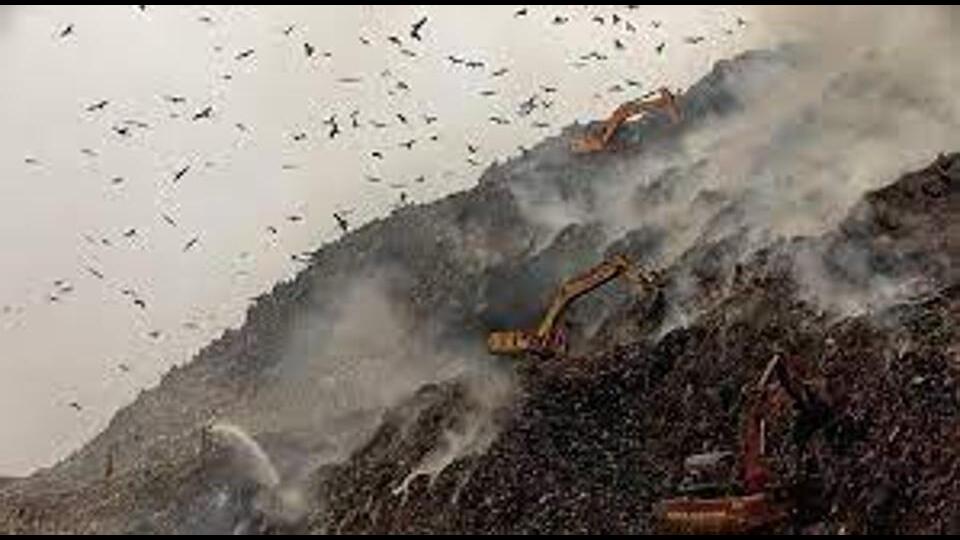
The report titled ‘Legacy waste management and dumpsite remediation to support SBM2.0’ also compares the composition of legacy waste in different dumpsites across the country. Delhi’s landfills for instance have 72% fine fractions of soil/sand like material, 23% stones, 4% scrap polymeric and combustible material with 1% miscellaneous fraction. In comparison, the Mumbai landfill has just 45% fine fraction while Ahmedabad has 44% fine fractions. The combustible fraction and stone fractions are higher at the two landfills.
“The fractions tell us where we went wrong in beginning. One of the largest fractions is stones which highlights the need to tackle C&D waste processing problem. Most important is fine fraction which is mineralized bio-degradable organic waste. Our ability to do away with this large fraction has to deal with removing wet waste from the stream completely,” Narain said. Delhi which sends almost half of its waste to landfill sites, has been ranked 23rd out 33 states and union territories with 10 states like Orissa, Rajasthan, Assam and Haryana having more percentage of waste being landfilled. Out of the total 11,120 tons of waste generated by the city, the corporation dumps 5100-5600 tonnes in the three landfill sites
CSE director Sunita Narain, while releasing the report, said the Swachh Bharat Mission 2.0 is a game changer in terms of focus on segregation but there are some missing pieces. “We still have a tipping fee for taking garbage to landfill which creates incentive for people to bring large amounts of waste to landfill as payment is based on weight. If we could have landfill tax instead of tipping fee-creating the opposite to charge to bring waste to landfill,” she said. Narain added that kabadiwalas and recyclers need to be at the central in the master plan not situated far away in corner of the city.
The toolkit also lists out model steps for carrying out remediation of dumpsites but Delhi’s example is cited in example which can lead to “systemic failure of remediation work.” “It is practically impossible to remediate a legacy waste dumpsite if the city keeps adding fresh waste to the site. Cases like Ghazipur, when a dumpsite receives more fresh waste every day than the quantity of legacy waste it treats, lead to systemic failure of the remediation work,” the report states.
Atin Biswas, a waste management expert and program director of municipal solid waste sector in Centre for Science and Environment, said that it is also imperative to prevent fresh waste from reaching existing dumpsites to ensure the reclaimed lands are never lost again. “SBM 2.0 Mission mandate for every Indian city is to stop as much as 80 per cent of its waste from reaching a dumpsite by the end of 2026. Unless the underlying problem of culture of dumping fresh waste is removed, the biomining project will continue to face trouble. Even if you remove entire mountain of waste, they will be standing before a fresh waste mountain. Unless we remove food waste from this cycle which is 60% of net quantity no significant progress can be made,” he added.
Richa Singh, deputy programme manager at CSE said: “It is important to note that legacy waste dumpsite remediation projects in India concern themselves not only with legacy waste dumpsites, but also with any unscientifically managed dumpsite that is relatively young.” Roopa Mishra, joint secretary, Union Ministry of Housing and Urban Affairs (MoHUA) said that every Central government program and policy was aimed towards a singular aim: “making Indian cities garbage-free”. “As part of this objective, the ministry has initiated a number of projects and schemes to encourage city administrations, one of which is a star rating and certification for garbage-free cities,” she added.
While MCD is currently undertaking a biomining project to clear the landfill sites and 5.5 million tons legacy waste has been removed from the landfill sites, the three sites hold around 280 lakh tons of waste accumulated over the last four decades. Launched in 1984, the Ghazipur landfill is the biggest garbage dump in the city and it holds more than 140 lakh tons of waste. The Bhalswa and Okhla landfills were started in 1994. All three sites have exhausted their capacity but the garbage continues to be dumped due to lack of new site being allocated to MCD, officials have said. HT had recently highlighted that due to continued dumping of fresh waste and current pace Delhi’s biomining project may take up to 197 years to complete.