
 E-Paper



CAQM orders study to redo Delhi-NCR emission mapping
The exercise will map emissions at a high resolution of 500 x 500 metre grids to cover major polluting sectors, with 2026 as the base year.

 Prefer HTon Google


A consortium of four institutions led by the Automotive Research Association of India (ARAI) Pune, with partners from Indian Institute of Technology, Delhi, The Energy and Resources Institute (TERI), and the Indian Institute of Tropical Meteorology in Pune (IITM), will develop a new emission inventory and source apportionment study for Delhi-National Capital Region, the Commission for Air Quality Management (CAQM) has said. The exercise will map emissions at a high resolution of 500 x 500 metre grids to cover major polluting sectors, with 2026 as the base year.
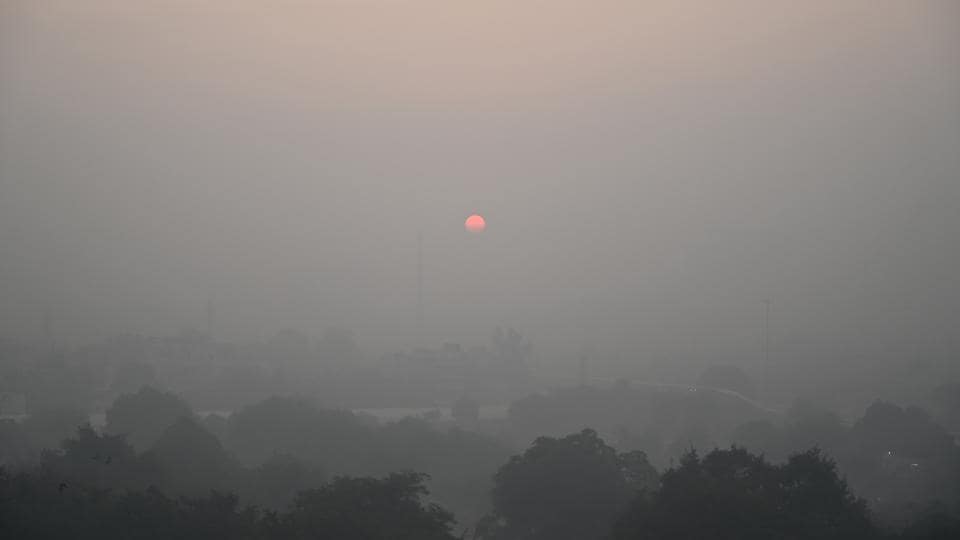
The plan, outlined in a report uploaded on the CAQM’s website, comes soon after the Supreme Court pulled up the statutory body for failing to clearly identify the causes of air pollution in Delhi-National Capital Region and their relative contribution. On January 6, the top court termed this a “complete failure of duty” and directed the CAQM to complete a source-identification and apportionment exercise within two weeks and place the findings in the public domain.
In its report, the CAQM said the new emission inventory will be integrated with the Air Quality Early Warning System (EWS) and the Decision Support System (DSS) to improve air quality forecasting and help design more effective mitigation strategies. While several source apportionment studies have been conducted by different agencies over the years, the CAQM said the methodologies all varied.
“The Commission noted differences in existing approaches for emission inventory and source apportionment. It was further recognised that a unified, data-driven approach is essential to reduce emission uncertainty for developing effective air quality management in Delhi NCR,” the CAQM said. It added that a steering committee of experts was constituted and a framework for emission inventory and source apportionment for Delhi-NCR was developed in April last year.
According to the report, titled “Identification of the causes for worsening AQI in Delhi-NCR,” the updated inventory will rely on recent activity data, improved methodologies and account for ongoing policy measures.
“The updated inventory will incorporate recent activity data, improved methodologies, and ongoing policy measures to provide a more accurate assessment of emissions. The emissions will be used for predictive modelling... to further strengthen source apportionment and improve real-time assessment of pollution sources,” it said.
Summarising past source apportionment studies conducted between 2015 and 2025, the CAQM noted clear seasonal variations. In winter, secondary particulate matter, formed from gaseous emissions from transport, industries and biomass burning, contributed the most at 27%. This was followed by transport at 23%, biomass burning at 20%, dust at 15%, industry at 9% and other sources at 6%. In summer, dust emerged as the largest contributor at 27%, followed by transport at 19%, secondary particulate matter at 17%, industry at 14%, biomass burning at 12% and other sources at 11%.
The report also flagged weaknesses in the vehicle pollution control regime, stating the current pollution under control (PUC) system does not monitor particulate matter (PM) from the tailpipe, so it is not a true representative of emissions.
“Many vehicles run without PUCC and are not maintained properly, emitting higher amounts of pollutants than the norms,” it said, underlining the impact of poor vehicle maintenance on emissions.
For the industrial sector, the CAQM said enforcement remains a challenge due to the presence of a large number of small and unorganised units operating in unauthorised or peripheral areas. “Industrial pollution is also exacerbated by the illegal burning of non-hazardous industrial waste, such as plastic and rubber, along with fugitive emissions,” the report observed.
Construction and demolition activities were identified as another major concern, with large quantities of waste being generated daily and often dumped illegally near roads and open areas, adding significantly to particulate matter pollution.
“Other sources” also continue to pose difficulties because of their dispersed nature and dependence on enforcement, the CAQM said.
“The use of Diesel Generator sets increased substantially across the NCR due to unreliable grid electricity. Operations at regional airports also contribute to the pollution burden, primarily through the release of gaseous pollutants during flight activities. Hotels and restaurants are identified as consistent area sources due to their continued reliance on solid fuels and a widespread lack of adequate emission control systems,” the report said, inviting public suggestions till February 10.


Stay updated with all top Cities including, Bengaluru, Delhi, Mumbai and more across India. Stay informed on the latest happenings in World News along with Delhi Election 2025 and Delhi Election Result 2025 Live, New Delhi Election Result Live, Kalkaji Election Result Live at Hindustan Times.


