E-Paper



CAQM’s new policy to lead Delhi’s fight against pollution, provide clear targets
A comparison of what was till now the most comprehensive efforts, however, suggests that long-term approaches have hitherto led to little gains, but experts and officials who worked on the new plan believe it could lead to better outcomes, especially since forecasting is now a crucial aspect and pasts data and insights are being incorporated.

 Prefer HTon Google


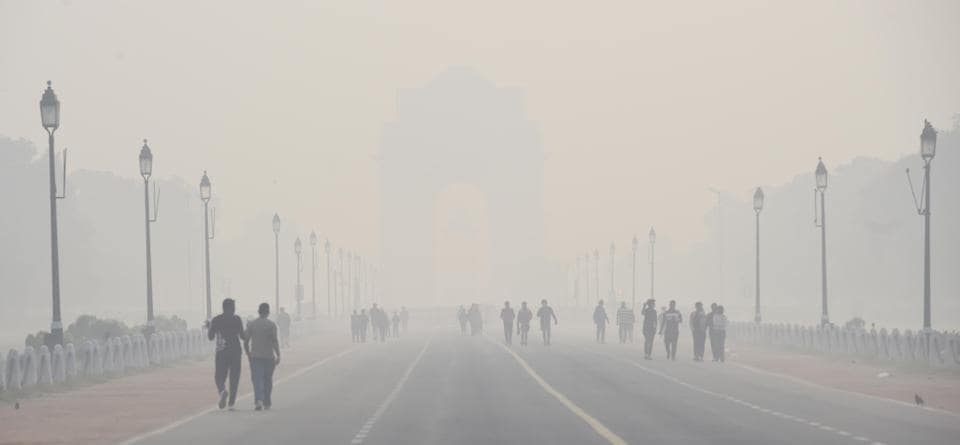
The comprehensive policy for air pollution in the National Capital Region (NCR), announced by the Commission for Air Quality Management (CAQM) recently, is now the latest blueprint for a long-term solution to the annual bad air crisis that grips the region every winter, with officials and experts describing it as an upgrade to the previous efforts.
A comparison of what was till now the most comprehensive efforts, however, suggests that long-term approaches have hitherto led to little gains, but experts and officials who worked on the new plan believe it could lead to better outcomes, especially since forecasting is now a crucial aspect and pasts data and insights are being incorporated.
Anumita Roychowdhury, executive director, research and advocacy at the Centre for Science and Environment (CSE) and one of the expert members who framed the new comprehensive policy, said the aim is to now find permanent solutions by bringing about infrastructural and sectoral changes.
It also considers learnings from the past few years, while incorporating new technologies, which were missing when the past measures were introduced.
“Forecasting for example has become a key aspect under this new policy. We have also analysed data over the last few years and taken into consideration learnings from recent years and the new challenges. A lot of sectors undertook change during CAP (comprehensive action plan), but this comprehensive policy is the next step now to improve these sectors further and these are permanent solutions now that can lead to considerable reduction in long-term pollution targets,” she said.
“The policy has been framed as a permanent and long-term solution to the air pollution problem and focuses on an air-shed approach. This has taken into consideration suggestions made both by public and experts and the best solutions were chosen for each sector,” said a union environment ministry official, asking not to be named.
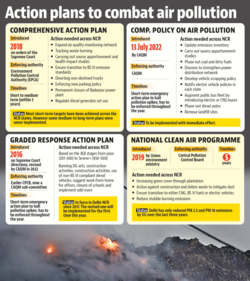
Prior to the CAQM plan, there were two long-term strategies: the Comprehensive Action Plan (CAP) and the National Clean Air Programme (NCAP). While the CAP focussed on identifying, planning and implementing sector-specific measures to reduce air pollution over the long term, the NCAP approached the problem by setting a target to reduce the annual PM 2.5 concentration by 20-30%.
The official quoted above added that while NCAP was for 132 cities across the country that did not attain safe air levels, the new CAQM policy is just for Delhi-NCR with Punjab and Haryana included for the stubble burning problem, which will aide measures already being undertaken by NCAP cities in this region.
Out of the three action plans, CAP became virtually infructuous after the SC-appointed Environment Pollution (Prevention and Control) Authority, which was asked to oversee it, was dissolved.
Large parts of CAP, however, have already been implemented, such as installation of vapour-recovery systems at fuelling outlets, ensuring a transition to BS VI fuel, diverting truck traffic from Delhi by construction of the eastern and western peripheral highway. But some other measures, like introducing a Bus Rapid Transit System (BRTS) or a Light Rail Transit System (LRTS) for high frequency routes did not come to being.
Unlike these two plans, NCAP, which was introduced in 2019 by the Union ministry of environment, forest and climate change focuses on cities across the country and for NCR, targets reducing annual pollution levels by 20-30% by the year 2024, taking 2017 as the baseline.
But a recent analysis found that those targets are far from being met. Advocacy groups Respirer Living Sciences and Carbon Copy, using the ‘NCAP tracker’ -- which compiles Central Pollution Control Data (CPCB) from its continuous ambient air quality monitoring stations -- found that over the last three years, Delhi’s PM 2.5 levels have dropped only by 5 percent, while PM10 levels have dropped by 4.6 percent.
Ronak Sutaria, CEO of Respirer Living Sciences, who was involved in the analysis, said the comprehensive policy has now set clear targets which can allow NCR states and cities achieve their NCAP targets. “NCAP is more for India as a whole, whereas the policy that has been implemented is for NCR and therefore a targeted approach has been put into place. This can ensure NCR cities act on specific areas meant for this region alone, which can over time show results in terms of pollution reduction,” he said.
Aarti Khosla, director of Climate Trends, an environmental organisation, said she also feels the new policy should aid NCAP targets instead of confusing states. “While the timelines may not match for certain sectors, the goal is clear. NCAP targets were more general as they were for cities across the country, whereas the policy is for only NCR and looks at very pointed actions across the region,” she said.
The areas targeted in the new comprehensive policy includes updating the emissions inventory and carrying out new source apportionment studies for NCR, phasing out coal and dirty fuels -- a process which has already begun as per a June 3, 2022 order, developing a new scrapping policy for vehicles, developing infrastructure for electric vehicles, upgrading the bus fleet and in-situ utilisation of stubble.