
 E-Paper



Delhi budget: ₹9,000 crore for expanding water supply infra, new STPs
Gupta said her government has set an ambitious target of reducing non-revenue water (NRW)—losses due to leakages and theft—from 45% to 15%

 Prefer HTon Google


The Delhi government has set aside ₹9,000 crore in the budget for the water and sanitation sector to plug leaks, expand treatment capacity and narrow a daily supply gap that still leaves the Capital short by 250 MGD (million gallons per day) of drinking water.
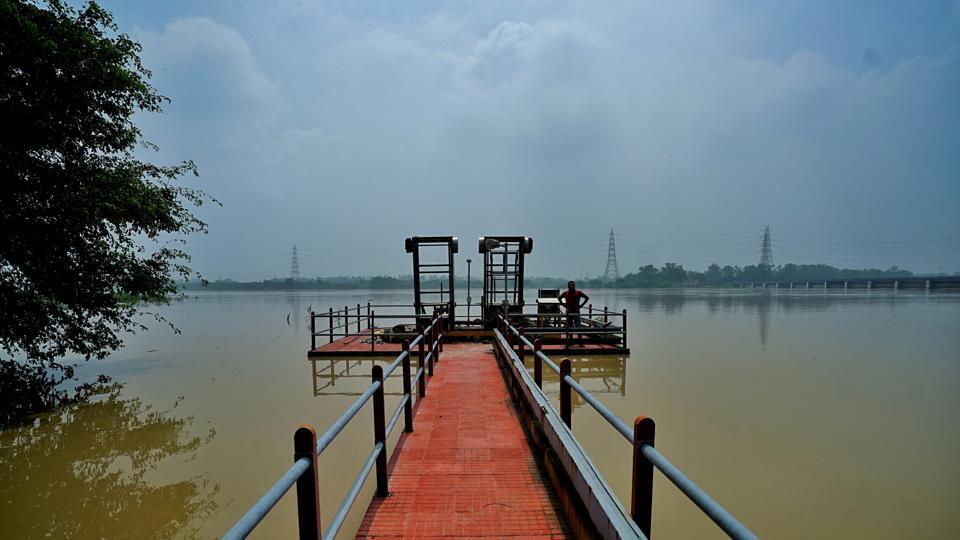
Presenting the budget in the Delhi assembly on Tuesday, chief minister Rekha Gupta, who also holds the finance portfolio, said the allocation of ₹9,000 crore – about 8.68% of the total expenditure – was meant to operationalise new water treatment plants, expand supply networks and replace ageing transmission lines.
Of this, around ₹1,500 crore will go towards constructing sewage treatment plants (STPs) with a combined capacity of 480MGD, with central assistance under the National Mission for Clean Ganga (NMCG).
Gupta said her government has set an ambitious target of reducing non-revenue water (NRW)—losses due to leakages and theft—from 45% to 15%. Two major infrastructure upgrade projects in the catchment areas of the Wazirabad and Chandrawal water treatment plants, covering around 19 assembly constituencies, are also planned.
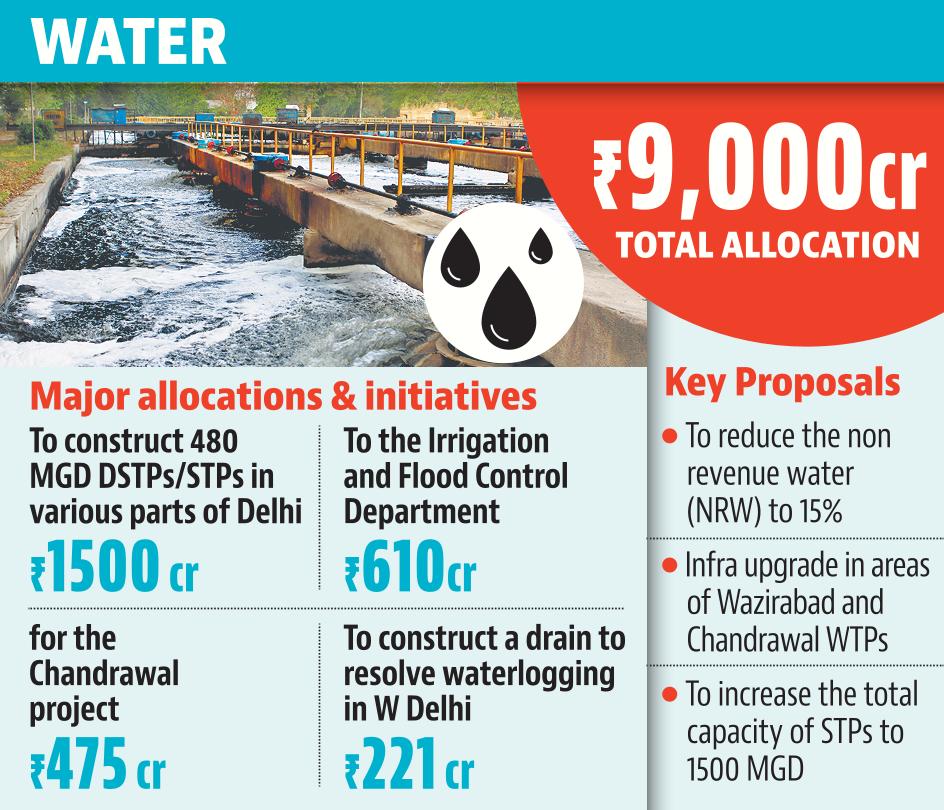
To address pollution in the Yamuna, Gupta said Delhi’s installed STP capacity has increased from 707MGD to 814MGD, with a target of reaching 1,500 MGD. “The approval of 35 decentralised STPs and the proposal for 10 new STPs demonstrate our unwavering commitment to eradicating this problem from its very roots,” she said.
The allocation for the sector remains unchanged from the previous fiscal’s budget estimate of ₹9,000 crore.
Delhi’s water stress remains stark. Against a demand of 1,250MGD, the city can currently treat and supply only about 1,000MGD, leaving a deficit of 250MGD. The government said commissioning underground reservoirs in Rajokri, Bijwasan, Siraspur and Palla, along with a new 50 MGD water treatment plant in Dwarka, will augment supply.
“We will undertake expansion of 12.7km of transmission lines and 172km of distribution lines, increase overall supply by 10MGD, and plan for an additional 36MGD in the future. All these measures combined will strengthen Delhi’s water balance,” Gupta said, adding that reducing non-revenue water to 15% and ensuring tap water access to every household remain key priorities.
Delhi’s NRW, or water loss from leakages and theft, is significant. A Comptroller and Auditor General (CAG) audit of the Delhi Jal Board (DJB), tabled in the assembly on Monday, pegged revenue losses due to NRW at over ₹4,988 crore between 2017 and 2022.
Gupta also outlined upgrades at two of the city’s largest treatment facilities, the Chandrawal and Wazirabad plants. Work on the expansion of the Chandrawal plant and its associated pipeline—expected to benefit nine Assembly constituencies—is underway. A provision of ₹475 crore has been made for the Chandrawal project.
A project to improve the Wazirabad plant and distribution network has also been proposed and will cover 10 constituencies in north Delhi. The funding is likely to be provided by the Asian Development Bank (ADB), the CM said.
The announcements come even as the Chandrawal plant—Delhi’s oldest, commissioned in 1935—remains shut following flooding of its pumping system.
Yamuna and sewage
Delhi will also seek financial assistance for cleaning the Yamuna. The government has proposed ₹1,500 crore under a new scheme—grant-in-aid to the DJB for capital sewer projects funded through the National Mission for Clean Ganga—for building 480 MGD of decentralised STPs, particularly at drain outfalls into the Yamuna.
“Over the past year, 180km of new sewer lines were laid and 110 km of existing lines were replaced. This initiative will also serve as the means to ensure a clean and pristine Yamuna... The approval of 35 decentralised STPs and the proposal for 10 new STPs demonstrate our unwavering commitment to eradicating this problem from its very roots,” Gupta said.
The government also plans to rejuvenate key drains, including Taimoor Nagar, Kailash Nagar, Kirari and Bawana. A budget of ₹610 crore has been allocated to the Irrigation and Flood Control Department, the CM said, adding that the PWD and other agencies will work in accordance with the recommendations of the new Drainage Master Plan.
Bhim Singh Rawat, Yamuna activist and member of the South Asia Network on Dams, Rivers and People (SANDRP), said that intent to increase the treatment capacity is good but Delhi needs to bolsters the monitoring system of the outlet of these STPs. “Local communities need to be involved in monitoring along with experts and RWAs to ensure accountability. Almost half of water in Delhi in Non Revenue Water which is a clear policy failure. Delhi needs a holistic urban water management policy rather than simply adding more and more expenditure on the issue.”
Stay updated with all top Cities including, Bengaluru, Delhi, Mumbai and more across India. Stay informed on the latest happenings in World News along with Delhi Election 2025 and Delhi Election Result 2025 Live, New Delhi Election Result Live, Kalkaji Election Result Live at Hindustan Times.


