
 E-Paper



Delhi Budget: Public transport gets boost with push for e-buses
The govt has also allocated ₹2,929.66 crore for the Delhi Metro expansion, a significant jump from last year’s ₹500-crore allocation


In a major push to transform urban mobility, the Delhi government has unveiled a robust ₹12,952-crore budget allocation for public transport—nearly 13% of the total budget—more than doubling last year’s outlay. The comprehensive package aims to bolster “seamless connectivity” through the addition of 5,000 new electric buses, extensive metro expansion, and targeted welfare measures for transport workers, positioning Delhi to become a global leader in sustainable urban transit.
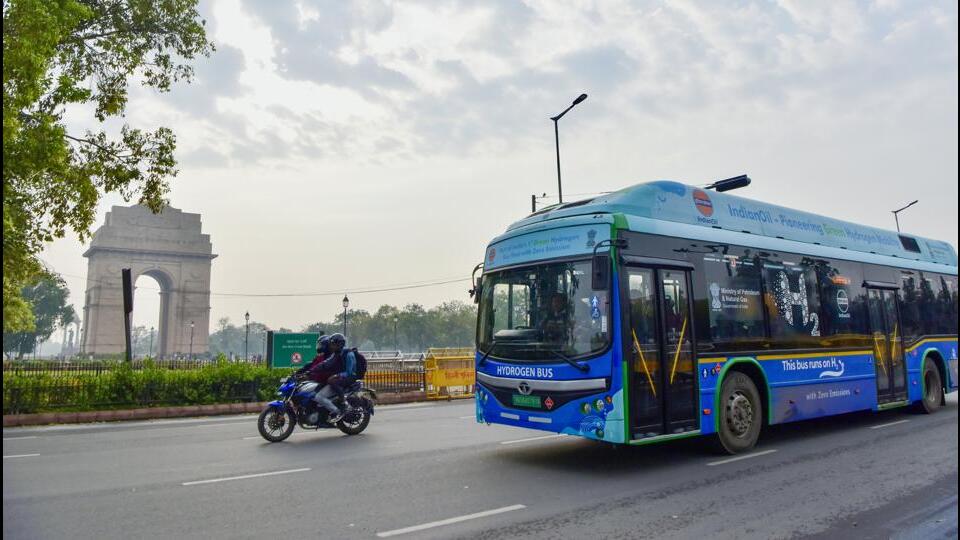
Announcing the transport outlay, chief minister Rekha Gupta said the capital is on track to become home to the world’s second-largest electric bus fleet. “Currently, Delhi ranks third globally with 2,152 electric buses—1,752 operated by DTC and 400 under the DIMTS cluster scheme. With the planned addition of over 5,000 electric buses by year-end, Delhi is poised to leap ahead in electric mobility,” she said.
Shenzhen in China is widely recognised as having the largest electric bus fleet in the world, with an estimated 16,000 electric buses.
The budget has also allocated ₹2,929.66 crore for the Delhi Metro expansion, a significant jump from last year’s ₹500-crore allocation. This funding will accelerate work along three priority corridors, where nearly 60% of construction is already complete.
The Delhi Metro Rail Corporation (DMRC) currently operates a 394.25 km network across 289 stations. Under Phase 4, DMRC is constructing 103km of new lines across six corridors.
While three corridors—the Magenta Line extension from Janakpuri West to RK Ashram Marg, the Pink Line extension from Majlis Park to Maujpur, and the new Golden Line from Aerocity to Tughlakabad—are already underway, three additional corridors, including a new line from Lajpat Nagar to Saket G Block, a Green Line extension from Indraprastha to Inderlok, and the Rithala-Narela-Nathupur Red Line, are in the pre-tendering stage with work set to begin this financial year. Gupta said.
Free bus rides for women will continue, but with a revamped system that issues a single digital card per user, replacing the previous practice of issuing multiple pink tickets — a system Gupta criticised as a breeding ground for corruption.
“No free scheme for the welfare of people will be discontinued but the corruption in the system will be eliminated now,” the chief minister declared.
Further, ₹1,000 crore has been allocated for centrally funded urban transport projects, and new welfare boards will be established for auto and taxi drivers, gig workers, and other semi-skilled personnel in the transport sector.
Gupta said Delhi is rapidly advancing toward a smart, green, and sustainable public transport system. “Our goal is to make transportation more convenient, pollution-free, and world-class,” she said, while also contrasting her administration’s digitisation drive with the previous government’s alleged mismanagement.
Making a pointed reference to a recent CAG audit — which flagged cumulative losses of ₹60,741 crore for the Delhi Transport Corporation in 2021-22 despite heavy revenue grants — Gupta vowed that the state would ensure improved accountability through digital reforms in the transport sector.
Transport experts have lauded the increased budget allocation for the transport sector. Amit Bhatt, managing director (India) of the International Council of Clean Transport (ICCT), said, “The ₹12,952 crore outlay is a welcome step. The significant investments in 5,000 new electric buses and metro expansion will greatly aid in mitigating Delhi’s air pollution as transport is one of the largest contributors to pollution. But there should be simultaneous progress on last-mile connectivity.”


Stay updated with all top Cities including, Bengaluru, Delhi, Mumbai and more across India. Stay informed on the latest happenings in World News along with Delhi Election 2025 and Delhi Election Result 2025 Live, New Delhi Election Result Live, Kalkaji Election Result Live at Hindustan Times.


