
 E-Paper



LG, Kejriwal flag off 400 e-buses in big green push
Delhi has added a new batch of 400 electric buses to its fleet, making it the largest fleet of electric buses in India


Lieutenant governor (LG) VK Saxena and chief minister Arvind Kejriwal on Tuesday flagged off a new batch of 400 electric buses from the Rohini bus depot. With the addition of the new buses, Delhi Transport Corporation (DTC) now has 800 e-buses — officials said this is the largest fleet of electric buses in the country, surpassing Pune that has 458 such buses.
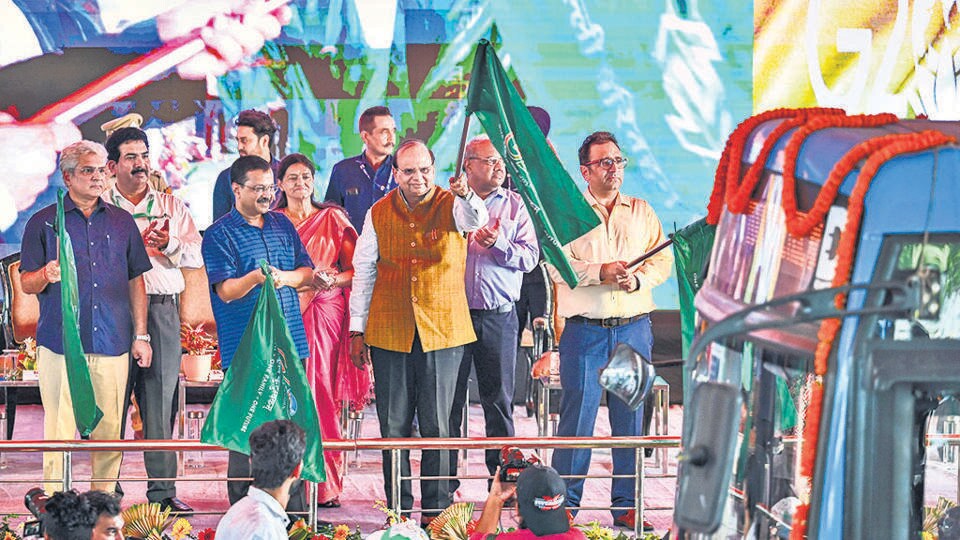
Kejriwal said that, by the end of the year, Delhi will have 1,900 electric buses.
“Once we have 1,900 e-buses, we will be among the few cities across the world to be using such large number of electric vehicles. With 1,900 e-buses, every year, 107,000 tonnes of carbon dioxide will be saved. Not just this, by 2025, in just over two years, we plan to increase our e-bus fleet by 10 times from 800 to over 8,000,” he said.
The new electric buses are all air-conditioned, and come equipped with ramps for the differently abled —the bus can “kneel” to one side for better accessibility, the CM explained. The buses also have three panic buttons each, a two-way communication system with a centralised control room, GPS for live tracking, and a fire detection and suppression system.
“These electric buses will go a long way in mitigating air pollution in the city, besides providing comfortable and safe transport to the people. These 400 buses are the first tranche of the 1500 e-buses being provided by the government of India under the FAME-II scheme (a Central scheme to give a boost to the development of electric vehicles) for creating a robust and green public transport infrastructure in Delhi,” LG Saxena said.
Explaining the financials behind procuring the electric buses, Kejriwal said, “We are getting 921 buses under the Centre’s subsidy, which is ₹45 lakh per bus. So, we have received ₹417 crore subsidy from the Centre, for which we are thankful. Meanwhile, the total cost of procuring the buses is ₹4,100 crore and the state government has paid the remaining cost. E-buses also need additional expenditure as separate electrified depots have to be built for charging these buses. We’ve spent ₹182 crore for depots where 1,500 e-buses can be kept.”
He added that the state government has already awarded contracts for 3,980 additional e-buses that are being procured without any subsidy from the Centre.
He also said that the Delhi government’s mohalla bus service, which will provide last mile connectivity using smaller buses, is expected to be launched in the next 10 days.
Experts welcomed the addition of e-buses and said that a similar model needs to be adopted by other cities to curb pollution from vehicular sources.
“Electrification and increasing public transport modal share are going to be key pieces in meeting India’s overall net zero targets and achieving national energy security. Delhi’s addition of 400 e-buses will not only help move closer to achieving these targets, but also help the city in achieving better air quality and providing better mobility to its citizens,” said Sudeept Maiti, programme head, transport, WRI India.

Stay updated with all top Cities including, Bengaluru, Delhi, Mumbai and more across India. Stay informed on the latest happenings in World News along with Delhi Election 2025 and Delhi Election Result 2025 Live, New Delhi Election Result Live, Kalkaji Election Result Live at Hindustan Times.


