E-Paper



Delhi civic body’s key role in air pollution battle barely an election issue
It oversees the sweeping of roads — and road dust, partly from the Thar thanks to the denuded Aravallis, is a significant year-round contributor to pollution — and is responsible for the maintenance of colony roads less than 60ft wide

 Prefer HTon Google


Bad air is to Delhi what traffic is to Bengaluru (with farm fires in Punjab perhaps being the equivalent of the Silk Board junction), although, surprisingly, it does not seem to be a hot-button issue in the coming elections to the Municipal Corporation of Delhi (MCD).
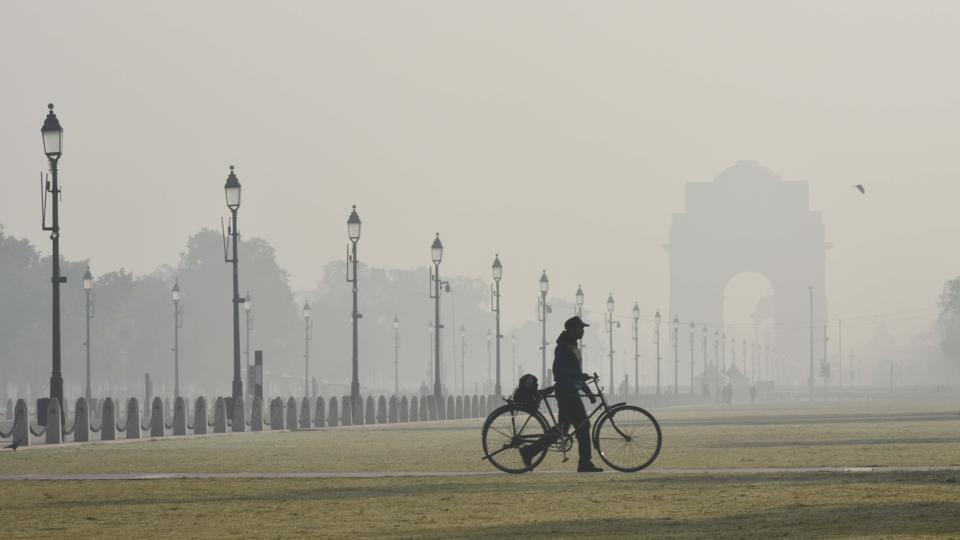
Surprising, because MCD does have an important role in the fight against bad air.
It manages Delhi’s waste and garbage (and therefore, is directly responsible for garbage being burnt, and according to the latest data, around 3,000 tonnes of Delhi’s garbage falls between the cracks every day; some does end up being burnt).
It oversees the sweeping of roads — and road dust, partly from the Thar thanks to the denuded Aravallis, is a significant year-round contributor to pollution — and is responsible for the maintenance of colony roads less than 60ft wide.
It is also in charge of construction permits -- and construction too is a consistent contributor to air pollution.
And finally, as the agency in charge of parking in the Union territory, it can directly control vehicular emissions (indeed, parking is an intervention many cities. use to tackle emissions).
If Delhi’s perennially dusty — and it is — then MCD is to blame.
Burning of waste can contribute to as much as 10% to Delhi’s winter pollution
Data submitted to the PMO for October 2021-September 2022 showed there were 302 cases of open waste burning detected by MCD, with ₹5.9 lakh in fines collected.
IIT Kanpur’s 2016 source apportionment study -- there is really no recent authoritative data, one of the continuing problems in dealing with pollution — said that Delhi burns around 190 to 246 tonnes of municipal solid waste (MSW) each day, releasing 2,000 kg/day of PM10 and about 1,800 kg/day of PM2.5. It further stated that municipal waste burning’s contribution was around 10% of the PM10 and PM 2.5 in the ambient air in winters.
“A complete ban on MSW burning can almost bring the emissions from this source to zero and one can see an improvement of 5-10% in air quality,” the study said.
It is likely that the number has risen in the six years since that study was done.
Anumita Roychowdhury, executive director, research and advocacy at the Centre for Science and Environment (CSE) says there is considerably scope for improvement of waste management in Delhi. “As per recent data, only around 50-60% of Delhi’s waste is being processed, with the rest ending up at landfill sites or just being burnt in the open. Simply by effectively treating this waste, both landfills and open waste burning can be eliminated as sources.”
The BJP, which has been running the civic body for 15 years, has attacked the Aam Aadmi Party (AAP), which runs the city’s elected government on the issue of air pollution in its MCD election campaign song, which was released on November 16. AAP’s song, though, avoids the issue of air pollution, although it does touch upon the issue of sanitation in Delhi and projects chief minister Arvind Kejriwal as the person who can find the solution to this problem.
Delhi’s landfills are constantly catching fire
Delhi has three landfills, in Bhalswa, Okhla and Ghazipur, which hold a total of 28 million tonnes of legacy waste. They catch fire from time to time, with the blaze often lasting for days.
Data collated by Delhi Fire Service (DFS) shows since 2016, there have been 365 fire incidents at the Bhalswa landfill site, of which 36 were major fires. Ghazipur has seen 121 fires since 2016, including 68 major ones. The data for Okhla was not available.
Studies show that methane, which is the main cause of landfill fires, is also toxic, and continues to be released into the atmosphere from the garbage. A fire makes things far worse -- raising the ambient PM2.5 concentration in the area, owing to combustion, while secondary particulate formation and the release of gases also occur simultaneously. PM10 levels also spike on account of the smoke.
Dipankar Saha, former head of Central Pollution Control Board’s air laboratory says that depending on the wind speed, the smoke can travel several kilometres away from the landfill site. “Unburnt hydrocarbons are released during the combustion process and landfill sites also have plastic and batteries which can release toxic chemicals, heavy metals and furans into the air.”
Delhi BJP spokesperson Praveen Shankar Kapoor says the party has already been working to eliminate waste at landfill sites, with 442 dhalaos (dumping spots) also shut down at the local-level to prevent waste accumulation.
“Fire incidents at landfill sites have been reducing over the years and when we come to serve again, we will ensure there are firefighting MCD teams posted at all three landfill sites until till complete elimination of legacy waste. For this, we had already prepared an action plan and a target of mid-2024 to completely eliminate landfill sites. Already, we have seen a reduction in the height of all three landfills by 15-20 metres.”
AAP spokesperson Reena Gupta said her party will, if it comes to power, not only manage waste, but also control dust pollution.
“The party will address the issue of road dust (contributing to 21% of PM 2.5 levels) by ensuring that mechanised road sweeping machines are used as effectively as possible, in accordance with the National Green Tribunal’s (NGT) directive. Waste collection continues to be a major challenge in the city and the party aims for 100% waste segregation at source (household and business level) and will recycle as much as possible, thus effectively reducing the incidence of landfills. Landfill sites are operating beyond their saturation point, at the “risk of human lives” and continue to spew toxic smoke. We will also ensure that existing landfills are managed in a scientific manner by the MCD staff.”
Road and construction dust a year-round problem
In addition to waste management, MCD is also directly in charge of dust management too, ensuring water sprinklers are deployed to prevent road dust re-suspension, while mechanised road sweepers (MRS) are supposed to cover around 1,500km of Delhi roads each day. According to MCD data, around 150 tonnes of road dust is collected each day through its 52 MRS. MCD is also one of the agencies enforcing dust norms at construction and demolition sites in Delhi and has the power to shut down sites found violating dust norms.
IIT Kanpur’s 2016 source apportionment study found that dust from roads, digging and agriculture was accounting for the highest suspended particulate matter sources in Delhi, contributing 38% of PM2.5 and 56% of PM10. Experts say effectively managing dust, particularly through greening activities is a key area of focus for Delhi -- and MCD is also in charge of parks.
“Parks come under the MCD and it is also responsible for management of dust from central verges, unpaved sidewalks and dust generated from inner colonies. Poor maintenance of these roads and a lack of green cover makes large parts of the city easy sources for dust generation, perennially leaving certain parts of the city with high PM 10 concentration,” says Roychowdhury.
Atin Biswas, programme director of CSE’s municipal solid waste sector added that MCD’s failure in managing Delhi’s waste, be it municipal waste or construction and demolition waste (C&D), is to blame for the city-state’s bad air. “These ultimately emerge as sources of pollution. While municipal solid waste is burnt, construction and demolition waste is turning out to be a source of dust and air pollution.”
An MCD official defended the corporation’s record.
“Between April 1 and November 15, around 52,000 potholes or road patches have been fixed. During the same period, 2.5km of non-paved areas has been greened and 27km of non-paved and open road area has been paved,” added this person, who asked not to be named. This person added that almost 900,000 shrubs and trees were planted by the corporation this year. “More machines such as water sprinklers, anti-smog guns and mechanized road sweepers are being procured.”