The rise in temperature and erratic rainfall over the last month has led to an increase in mosquito density and dengue cases, a senior municipal official said on Tuesday, quoting data.
According to the Municipal Corporation of Delhi (MCD), 107 dengue cases have been reported so far this year, of which 52 were reported in April. This is the highest number of dengue cases for the month of April in at least the past five years. In previous Aprils, Delhi reported 32 dengue cases in 2025, 35 in 2024, 18 in 2023 and 20 in 2022, the vector-borne disease report states.
This April was also the wettest in 18 years, with the capital recording 30mm of rainfall, nearly twice the long-period average of 16.3mm. The previous high of 38.8mm was recorded in April 2008.
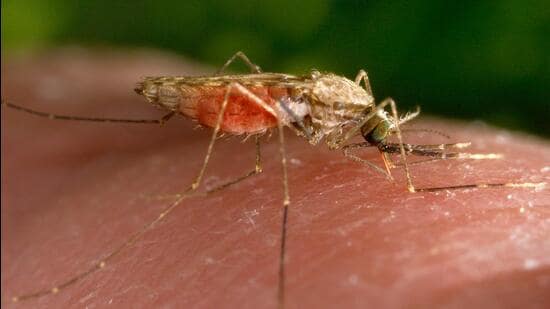
The mosquito density index is an entomological surveillance metric used to estimate the abundance of mosquitoes—usually Aedes aegypti, the primary vector for dengue and chikungunya—in a specific area. By measuring larval, pupal or adult mosquito populations, the index helps identify high-risk areas for disease transmission and guides targeted mosquito-control efforts.
“Domestic breeding checkers have also found 2,443 larval sites during their inspections over the past week. Erratic rain spells and high temperatures have led to an increase in mosquito breeding sites. A prolonged period of heat eliminates mosquito eggs,” a civic official said.
{{/usCountry}}“Domestic breeding checkers have also found 2,443 larval sites during their inspections over the past week. Erratic rain spells and high temperatures have led to an increase in mosquito breeding sites. A prolonged period of heat eliminates mosquito eggs,” a civic official said.
{{/usCountry}}Between January 1 and May 3, 15,649 instances of mosquito breeding in houses, containers and stagnant water have been recorded, with 15% of these detections coming in the past week.
The MCD report states that Delhi has reported 107 confirmed dengue cases so far, along with 87 cases where patients could not be traced. There were another 32 cases where the infection was found to have been acquired from other states.
“Rainfall has played a key role in the rise in mosquito density over April. Intermittent rainfall prevents water from drying up completely, allowing it to stagnate in containers, drains and other water bodies for longer periods. This provides sufficient time for mosquitoes to complete their breeding cycle and multiply,” the official said.
Another official said the early rise in temperature also led to a spurt in mosquito density, while clogged drains and stagnant water have also been cited as key reasons behind mosquito breeding. “Mosquitoes become active and breeding levels rise rapidly above 35°C, and we have witnessed an unusually early beginning of summer this year,” the official added.
Apart from dengue, Delhi has reported 29 malaria cases so far this year, including five cases last week. In comparison, 39 cases were reported during the same period in 2025, 35 in 2024, and two in 2023. Chikungunya cases remain low, with five cases reported so far this year, including two reported last week. This compares with six cases in 2025, 17 in 2024, and none in 2023 till the end of April.
The MCD action taken report states that the civic body has issued 16,261 legal notices over mosquito-breeding conditions and launched prosecutions in 1,712 cases. It has also issued administrative challans of ₹50,000 and above in 358 cases, recovering over ₹1 lakh.
Stay updated with all top Cities including, Bengaluru, Delhi, Mumbai and more across India. Stay informed on the latest happenings in World News along with Delhi Election 2025 and Delhi Election Result 2025 Live, New Delhi Election Result Live, Kalkaji Election Result Live at Hindustan Times.
Stay updated with all top Cities including, Bengaluru, Delhi, Mumbai and more across India. Stay informed on the latest happenings in World News along with Delhi Election 2025 and Delhi Election Result 2025 Live, New Delhi Election Result Live, Kalkaji Election Result Live at Hindustan Times.