E-Paper



Delhi EV policy draft ready, to be placed in Cabinet
The draft of the Delhi Electric Vehicle (EV) policy for 2020 is ready and will be presented to the cabinet after discussions with the state transport minister. The policy aims to combat air pollution by switching to electric buses and providing subsidies to encourage residents to switch to EVs. The new policy targets and changes have not been disclosed yet. Delhi sold 4,907 EVs in August, accounting for 9.2% of all vehicles sold in the city-state. It is important for Delhi to sustain its momentum in the EV sector and expand its ambitions, according to experts.

 Prefer HTon Google


The draft of the fresh Delhi Electric Vehicle (EV) policy, 2020, is ready, and will be presented before the cabinet after discussions with the state transport minister Kailash Gahlot, transport department officials involved in the drafting process said on Saturday.
The policy, implemented in August 2020, expired on August 31. The government, however, extended the provisions of the policy, notably the subsidies provided on buying a vehicle.
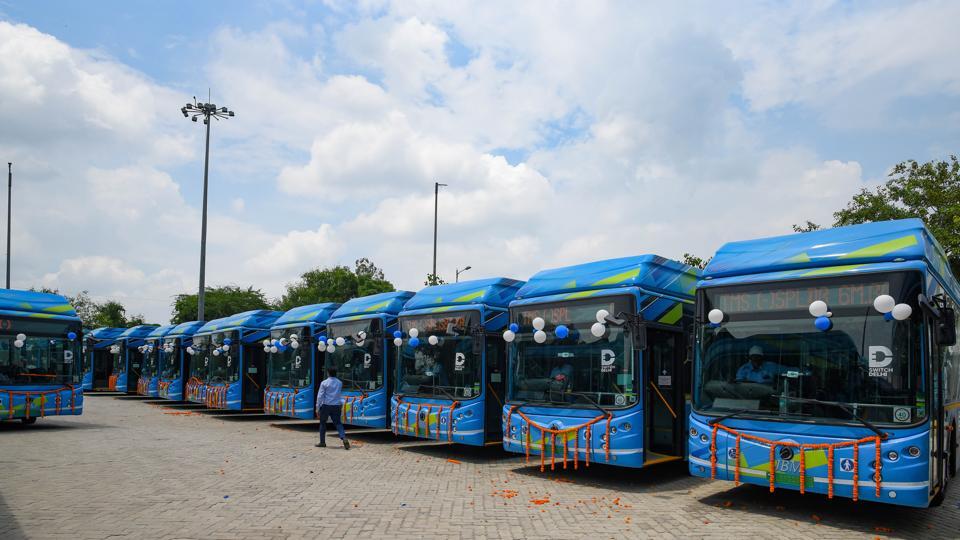
The Delhi Electric Vehicle Policy -- one of the flagship plans of Delhi’s Aam Aadmi Party (AAP) government -- was aimed at fighting high levels of air pollution in the city by cutting vehicular emissions. The policy sought to achieve this objective by bringing about a paradigm shift in the Capital’s transport sector by introducing two key changes. One, the state government embarked on a major switch from Compressed Natural Gas (CNG)-run public buses to electric buses. Of the total 3,700buses run by the Delhi Transport Corporation (DTC), the Capital now has 800 electric buses. And, the government has committed to buy only electric buses to replace the CNG ones that will be retired from the fleet.
The second major change was encouraging residents to switch to electric vehicles by providing subsidies. The policy has set a target of 25% of all new vehicles registered in Delhi to be electric by 2025.
“The draft is ready with some changes and new policy targets. We are hoping that the minister will approve it in a meeting next week, after which it will be sent for cabinet’s approval, and for the final nod by the lieutenant governor,” one of the officials said asking to remain anonymous. The official quoted above, however, did not share the contours of the draft policy, saying they were waiting for an approval by the minister.
When asked, Gahlot’s office did not comment on the draft.
Meanwhile, on the occasion of World EV Day on Saturday, Gahlot said that Delhi will keep up the momentum to achieve the goals that have been set under the state EV policy.
“Today, we celebrate the future of sustainable transportation. Delhi is leading the way in sustainable transportation and our commitment to EVs is making our city cleaner and greener...,” Gahlot posted on X (formerly Twitter).
Officials said that after consultation with industry stakeholders, the changes in the new policy were discussed with the minister even when it was being drafted.
According to Delhi government data, 4,907 EVs were sold in Delhi in August, which was 9.2% of all vehicles sold in the city-state, according to data from the Vahan dashboard of the Union road transport ministry. To be sure, of these 4,907 vehicles, only 434were cars, and 2,108 were two wheelers and 1,685 were e-rickshaws.
Under the Delhi government EV policy, two-wheelers are entitled to a subsidy of ₹5,000 per kWh of battery capacity (maximum ₹30,000). Three-wheelers can get a subsidy of ₹30,000 per vehicle, irrespective of the total cost and battery capacity. The subsidy for four-wheelers is not applicable anymore as it was offered only for the first 1,000 e-cars that would get registered under the scheme. For four wheelers, Delhi government had allowed subsidy of ₹10,000 per kWh battery capacity, subject to a maximum of ₹1.5 lakh.
Meanwhile, experts said that it is critical for Delhi to sustain the momentum .
“Delhi has played a crucial role in driving the adoption of EVs in India...due to its progressive EV policy. It is imperative that Delhi doesn’t lose this momentum...it is time to expand the ambitions in the EV sector, prompting the introduction of Delhi EV Policy 2.0. This policy should support by a robust implementation plan to chart the course for Delhi to emerge as India’s EV capital,” said Amit Bhatt, managing director (India), International Council of Clean Transport (ICCT) — an American public policy think tank.
.