E-Paper



Delhi Jal Board initiates clean-up and rejuvenation of Bhalswa Lake
The phase one of the project will focus on revamping the drainage network and cleaning a 30 metre periphery where waste has accumulated over the years

 Prefer HTon Google


New Delhi: The Delhi Jal Board (DJB) has initiated the clean-up and rejuvenation of the Bhalswa lake — one of the largest water bodies in Delhi spread over 150 acres — with the phase one of the project focusing on revamping the drainage network and cleaning a 30 metre periphery where waste has accumulated over the years.
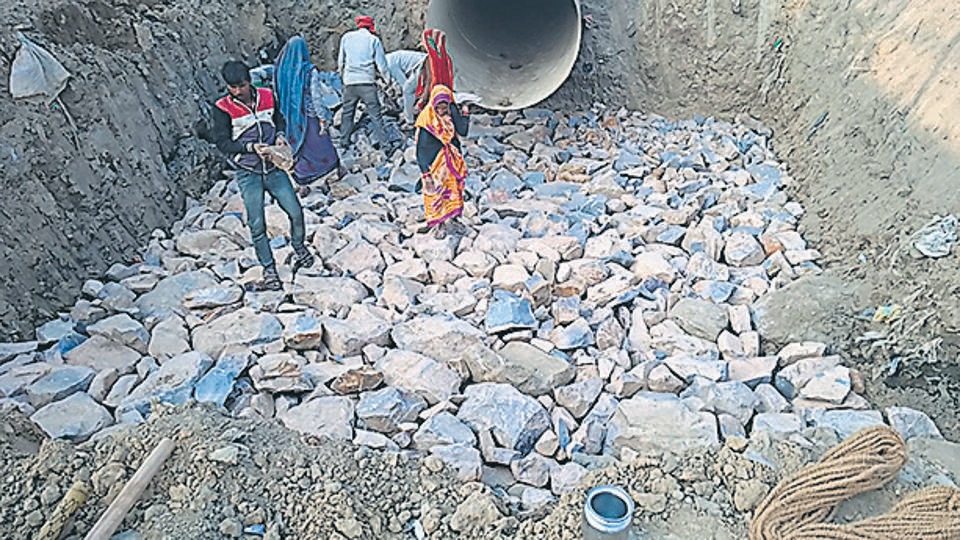
Originally falling under the jurisdiction of Delhi Development Authority (DDA), the lake’s revamp was brought under the state government’s “City of lakes” project last year.
Located right next to the Bhalswa landfill and Bhalswa Dairy Colony, the water body remains severely polluted due to constant discharge of animal waste as well as groundwater contamination from the landfill, a senior DJB official said.
“In the first phase of the rejuvenation project, we are focusing on controlling the sources of pollution and cleaning up waste that has accumulated over the past few decades. People have illegally punctured the drains from dairy colony to dump animal excreta in the water body. The first phase will revamp the drainage network and, simultaneously, we will also clean a 30m periphery of the lake where solid waste has accumulated, making island like formations. The estimated cost of first phase is ₹5 crore,” said a DJB official working on the project, asking not to be named.
The water utility will also lay down an interceptor drain along the periphery of the lake to act as a second layer of protection for contaminants in the future. It will channel the sewage into the supplementary drain.
The official said agencies have begun work on phase one, adding that it is expected to be completed before the the monsoon this year.
DJB’s water quality tests show that the lake has a total dissolved solid (TDS) level of 3,000 and a bio-chemcial oxygen demand (BOD) level ranging between 400-500mg/L.
TDS level between 100-250 is considered acceptable for drinking; if it around 1,000, it is unfit for human consumption. According to officials, 3mg/L is the prescribed BOD standard when water is considered fit for bathing.
Under the second phase of the project, DJB will undertake measures for the purification of water in the lake. “We have decided to link the Bhalswa lake with the outlet water from the recently inaugurated Coronation Pillar Sewage treatment plant. In situ water polishing will be carried out by replicating the interventions made in Sanjay Van lake in south Delhi,” another official explained, again asking not to be named.
At Sanjay Van lake, a total of 597 floating rafters with pollutant-absorbing plants were introduced to improve the water quality. The floating rafter technology uses plants such as cyperus and canna to soak up pollutants and excess nutrients such as phosphates and nitrates. Simultaneously, aeration is also being carried out for improving the TOD levels and speeding up the oxidation of organic matter and pollutants.
The water utility estimates that the entire project will be completed before monsoon next year.
The horse-shoe shaped Bhalswa lake at the foot of eponymous landfill was twice its current size, but over the past few decades, the water body shrank as the landfill and the surrounding housing colonies ate into it.
Regular dumping of garbage and emptying of dairy waste right into the western end of the lake has severely polluted its water.
Environmental activist Diwan Singh said lakes like Bhalswa are crucial for sustaining the ecology and the city. “Such lakes are developed due to change in the course of river over very long periods of time. The sand in this region is young alluvium which has a very fast groundwater recharge capacity. It is crucial that we revive and improve the water quality at sites like Bhalswa. Dairy waste has to be stopped for reviving the lake,” he said.
Singh also expressed concerns about the leachate from the landfill leading to ground water pollution in the area.
A DJB official, however, said that the gradient of subsurface aquifers is such that leachate from Bhalswa landfill should move towards Sanjay Gandhi transport Nagar, away from the Bhalswa lake where ground water levels are relatively higher. Moreover, the official said, the interceptor drain should trap any surface run-off.