
 E-Paper



Delhi LG orders survey of tree damage, directs officials to ensure upkeep
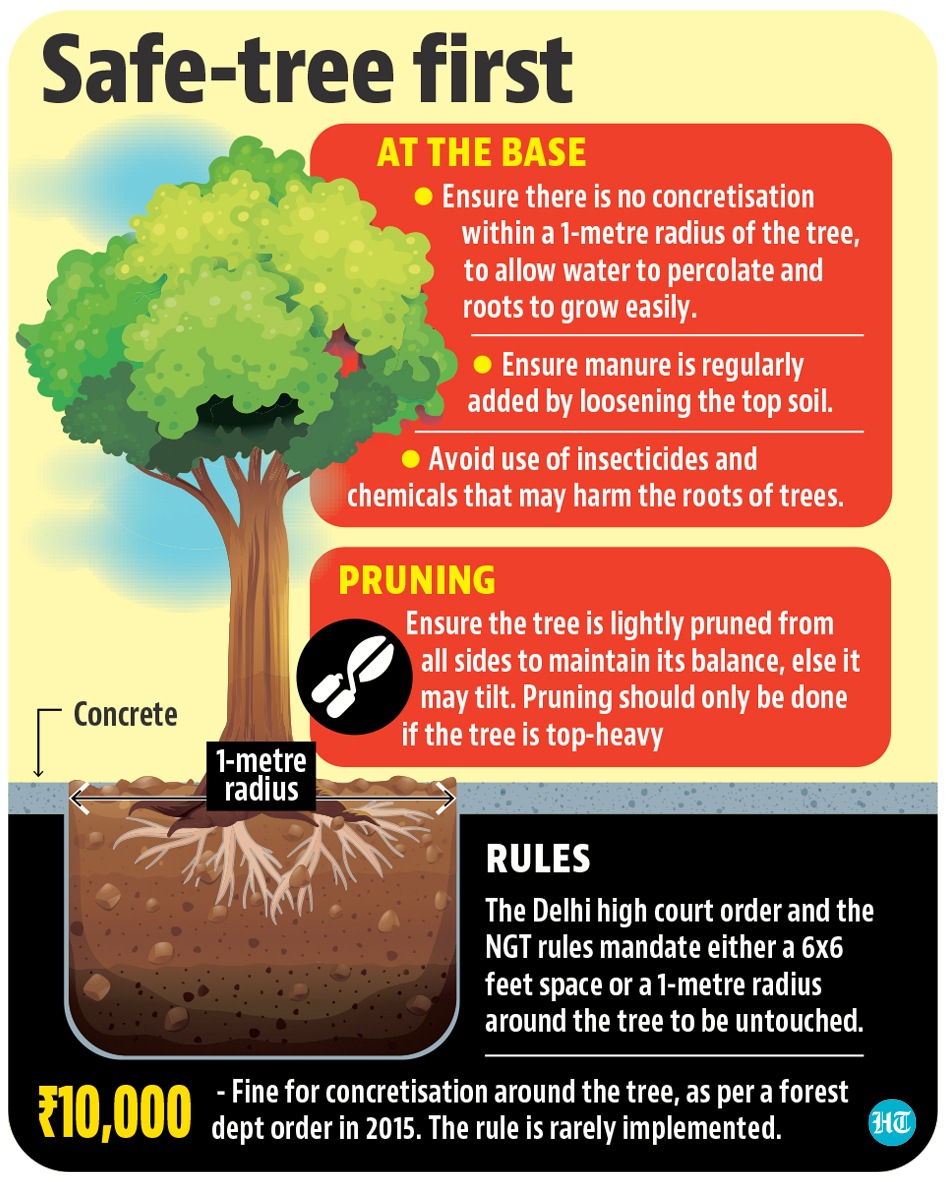
The LG also directed officials to de-concretise a one metre radius around tree bases, conduct necessary pruning, and identify and trim weak branches of trees, especially those hanging over the roads, so that the damage is not repeated.


A day after an intense thunderstorm uprooted hundreds of trees and caused large-scale damage to vehicles and other property in the Capital, newly appointed lieutenant governor (LG) Vinai Kumar Saxena on Tuesday asked officials to carry out a detailed review to understand the reason behind such a large number of trees falling during the storm.
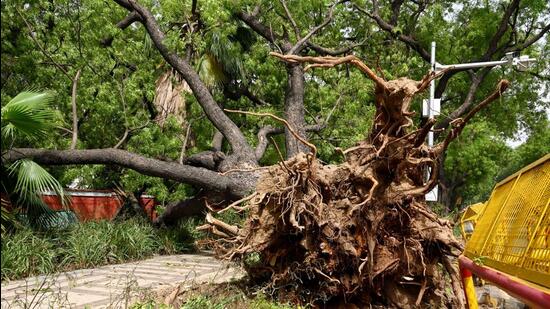
The LG also directed officials to de-concretise a one metre radius around tree bases, conduct necessary pruning, and identify and trim weak branches of trees, especially those hanging over the roads, so that the damage is not repeated.
“I share the concern of every resident of Delhi about the maintenance and upkeep of trees in the city and their related uprooting and breakage that happens in the event of a storm, throwing the city traffic out of gear. Let me assure you that we have taken the matter seriously and will address it at the earliest,” the LG said in a tweet.
The LG stressed on result-oriented seamless inter-department coordination between agencies like the Municipal Corporation of Delhi (MCD), New Delhi Municipal Council (NDMC), Public Works Department (PWD), Delhi Jal Board (DJB), environment and forest department, and traffic police, in the matter.
The LG instructed civic bodies to identify the trees which have weakened roots due to concretisation of pavements and take necessary steps to improve the health of such trees.
“Even as experts blamed concretisation around tree bases and unscientific approach towards maintaining the green cover, the LG had, right on the first day in office on Thursday, directed officials to scientifically prune trees above 45 feet of height and 10 feet above the surface. The LG had underlined that research worldwide and empirical evidence all across showed that such pruning not only strengthens the trees and make them healthier but also prevents their natural drying up,” said an official from the LG office.
“The LG laid emphasis on pruning of all weak, diseased and unevenly grown trees immediately. During the inspection on Thursday, the LG ordered trimming of the weak branches, mostly hanging over the roads, that posed a serious threat to the commuters. LG has also instructed civic bodies to identify the trees whose roots have weakened due to concretisation of pavements and take necessary steps to improve the health of such trees,” the official said.
According to rules set by a Delhi high court order and later a National Green Tribunal (NGT) mandate, there should be no concretisation in a one metre radius or 6x6 sqft space around a tree. A forest department order issued in 2015 states any agency that does not leave this space will be fined ₹10,000 per tree.
Padmavati Dwivedi, a tree activist who conducted a tree census in 2012 at Sarvodaya Enclave, had found 394 trees suffering from lopping (tilting to one side), 75 to have been choked by tree guards or nails, 293 colony trees to be completely strangled or concretised, and only 172 with at least two feet of space around them. A subsequent survey conducted in 2019 showed 77 trees “vanished”, presumably fallen during storms or felled by locals.
“Climate change will hurl more such extreme weather events and storms over the next few years and that makes the annual health maintenance of trees even more important. This includes treating pests organically, adding manure to the soil and pruning scientifically and only when essential,” said Dwivedi, adding that incorrect pruning practices were often leading to trees lopping to one side, leaving them more vulnerable to such storms. “Concretisation around trees remains a problem and de-choking them from it should be a norm,” she says.
Faiyaz Khudsar, scientist in-charge at the Yamuna Biodiversity Park (YBP), said in cases where older trees fall during a storm, often it is because the root system is unable to penetrate too deep to support the heavier top canopy. “This is why deconcretisation is important as trees on central verges or medians are often choked and if the base is weak, the top will not receive the support it needs. We have seen this with several older trees,” he said.
He added that central Delhi was an extension of the Aravallis and that native Aravalli species need to be planted there while species native to the Yamuna floodplains are preferred in areas closer to the river. “Native species and a diversity in them will ensure deep root systems, better stability and better chances of withstanding a storm,” he added.

Stay updated with all top Cities including, Bengaluru, Delhi, Mumbai and more across India. Stay informed on the latest happenings in World News along with Delhi Election 2025 and Delhi Election Result 2025 Live, New Delhi Election Result Live, Kalkaji Election Result Live at Hindustan Times.


