
 E-Paper



Delhi: One in 3 residents depend on water tanker, finds survey
The report shows how families earning between ₹6,000 and ₹10,000 a month spend as much as 15% of their income on water

 Prefer HTon Google


A survey of more than 500 households across 12 informal settlements in Delhi has found that one in three residents depends on private water suppliers and nearly as many rely on erratic Delhi Jal Board (DJB) tankers that arrive barely once or twice a week. The findings, published in a water audit report by Greenpeace India on Monday, underline deep inequities in the Capital’s water supply.
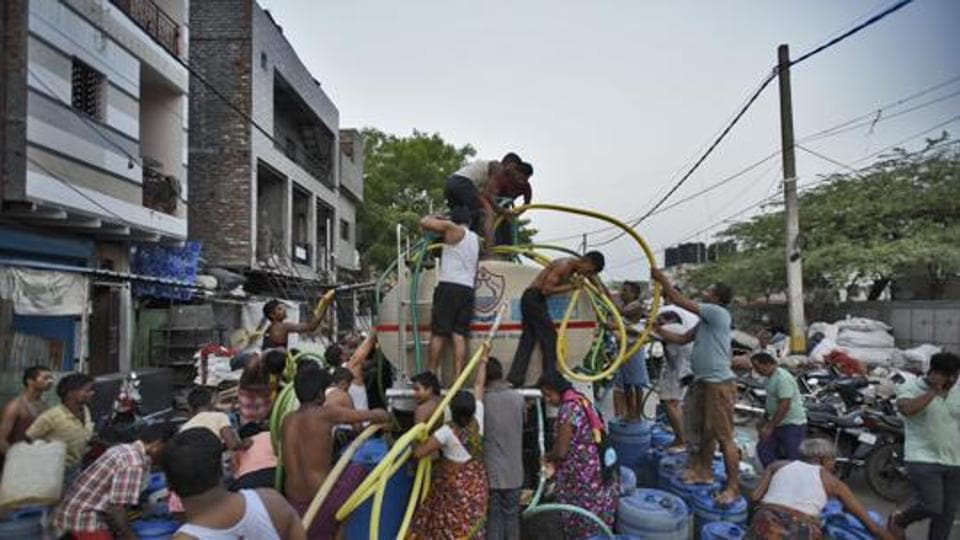
The report — Water Access Audit: Gaps, Costs and Beyond — shows how families earning between ₹6,000 and ₹10,000 a month spend as much as 15% of their income on water, often cutting back on food, healthcare, or education. “Water is a basic right, but for these families, it’s an everyday crisis,” said Vaishali Upadhyay, campaigner with Greenpeace India. “In the absence of water ATMs, people pay ₹15– ₹30 per gallon to private suppliers. Summer and heatwaves only worsen the pain, forcing impossible choices between water and food, school fees or medicine.”
The audit was carried out in settlements including Sakurpur Basti, Savda Ghevra, Daya Basti, Chunna Bhatti, Khajan Basti, BIW Colony, Seemapuri, Sunder Nagri, Lohar Basti, Sangam Vihar (waste pickers basti), Raghubir Nagar JJ Colony and Kusumpur Pahari.
It found 34% of respondents relying on private suppliers, 29% on DJB tankers, 21% on water ATMs, 14% on submersible pumps, and 2% borrowing from neighbours. Yet most of these services were irregular. While the Delhi government had announced 3,000 water ATMs in April 2025, only 20 were installed by June -- none in the surveyed settlements.
HT reached out to Delhi government for comment on the findings, but no response was received till the time of going to press.
Shortages are routine. Nearly 80% of respondents reported frequent or occasional scarcity, particularly between March and July. Many families spend ₹500- ₹1,500 each month on water, eroding already stretched household budgets.
Even in areas where water ATMs exist, such as Savda Ghevra and Sakurpur, over a third of respondents complained of breakdowns and irregular supply. “Residents walk long distances or pay steep rates for unsafe water. Tankers come rarely, and ATMs are either broken or overcharge. The infrastructure is failing those who need it most. Clean, affordable water shouldn’t be a privilege -- it’s a necessity,” said Ankit Rana, a member of the survey team.
The report urges urgent policy intervention, recommending that the government not only fulfil but expand its pledge of 3,000 ATMs to 5,000 by 2026, with round-the-clock access across public and residential areas.


Stay updated with all top Cities including, Bengaluru, Delhi, Mumbai and more across India. Stay informed on the latest happenings in World News along with Delhi Election 2025 and Delhi Election Result 2025 Live, New Delhi Election Result Live, Kalkaji Election Result Live at Hindustan Times.


