
 E-Paper



Delhi to resume source apportionment study, with focus on PM10
The Delhi government plans to restart a study on PM10 pollution sources, shifting focus from PM2.5, to better tackle air quality issues in the city.

 Prefer HTon Google


New Delhi
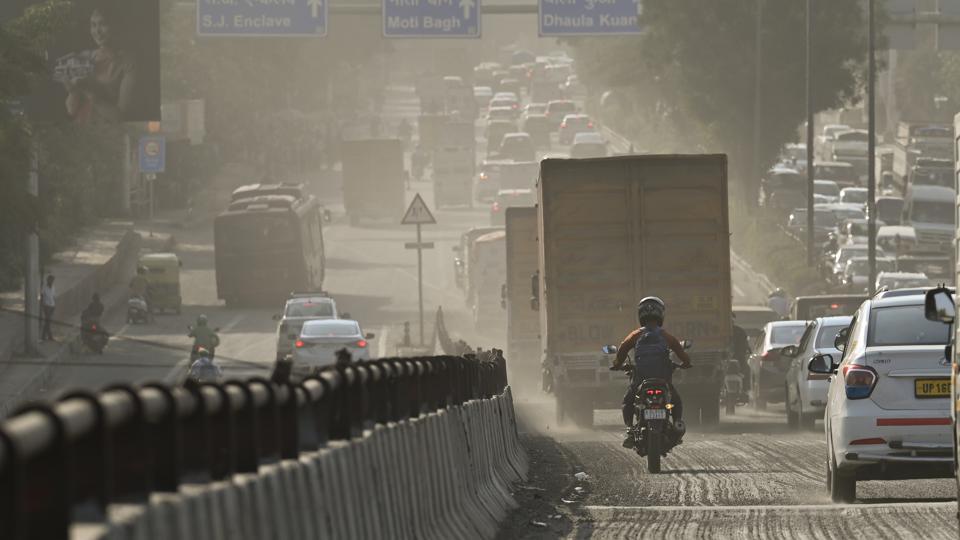
The Delhi government is planning to restart its real-time source apportionment study, albeit with a focus on PM10 (particulate matter with a diameter of 10 microns or less) instead of PM2.5, as done earlier, two years after the IIT Kanpur’s study was halted due to unsatisfactory results, officials aware of the matter said on Friday.
Officials said that with the Indian Institute of Tropical Meteorology (IITM) in Pune already calculating the estimated contribution of sources to Delhi’s PM2.5 load, through its Decision Support System (DSS), the government wants to focus on PM10 for multipronged action against both types of particulate matter.
“We have analysed Central Pollution Control Board (CPCB) app data and on multiple days this winter, PM10 was the lead pollutant. While we know dust contributes to high PM10 levels, there is a need to assess where this dust is coming from and what other sources are causing high PM10 levels in Delhi,” a government official aware of the matter said.
A meeting on the subject is scheduled at the Delhi Secretariat for 3pm on January 1, the official said.
Delhi environment minister Manjinder Singh Sirsa said the government was following a scientific approach to tackle pollution in the city, which includes reviving the real-time source apportionment study.
“This will give us data on what is contributing to high PM10 levels. It will also help us generate data on the impact of our initiatives; for instance, misting through poles, anti-smog guns and even the use of mechanised road sweepers to tackle dust. The government wants to use technology and scientific innovations to gather data and tackle pollution in Delhi,” he said.
On August 5, HT reported how the Delhi government, through the Delhi Pollution Control Committee (DPCC), was planning to revive its super-site for the real-time source apportionment study in Delhi, with plans to collaborate with IITM, Pune. The decision was taken in a DPCC board meeting on July 31, as per the minutes of the meeting made available.
The super-site, near Rouse Avenue, was run by IIT Kanpur until November 2023, following which its tenure ended. The government decided not to collaborate further with IIT Kanpur, citing dissatisfaction with the institute’s methodology. DPCC subsequently took over the infrastructure, but has been seeking to collaborate with another expert institution.
Real-time data was made available by IIT Kanpur to the Delhi government from November 2022 and to the public from January 30, 2023, after Delhi chief minister inaugurated the super-site.
In October 2023, the previous state government also flagged that the study had been halted by then DPCC chairman Ashwani Kumar, over alleged refusal to complete a payment of ₹2 crore to the institute. In a communique to then CM, Kumar questioned the validity of the data and the methodology. The study was eventually resumed in early November, on Supreme Court orders, but halted after the institute’s tenure ended.
Experts welcomed the move, saying that any source apportionment data will benefit the Capital.
“Ideally, the study should focus on both PM10 and PM2.5, as the cost will not be too different to incorporate both. Study on PM10 will give us more hyper-local sources, including re-suspended dust. PM2.5, meanwhile, travels longer distances and gives the Capital an idea of sources coming from outside Delhi. Overall, Delhi will benefit from this as it will allow policy-level decisions to be made based on data,” said Sunil Dahiya, founder and lead analyst at Envirocatalysts.


Stay updated with all top Cities including, Bengaluru, Delhi, Mumbai and more across India. Stay informed on the latest happenings in World News along with Delhi Election 2025 and Delhi Election Result 2025 Live, New Delhi Election Result Live, Kalkaji Election Result Live at Hindustan Times.


