
 E-Paper



Delhi transport deptt signs MoU with MapmyIndia to use geospatial tech to analyse EV trends
At present, Delhi has 2,552 charging points across 1,985 charging locations, and there are 234 swapping stations operational in the city.


The Delhi government on Thursday signed a memorandum of understanding (MoU) with private digital map company MapmyIndia Mappls to develop a web application which will act as a geospatial decision making tool to ensure effective sightings of electric vehicle (EV) charging stations in the Capital.
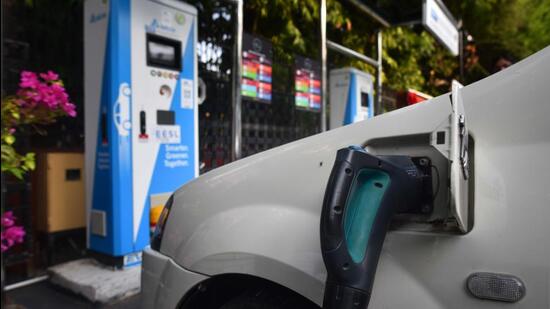
The tool aims to supplement the planning process in deploying and creating more EV charging stations in the city, and utilising geospatial data which will showcase which parts of the city have more EV users.
The state transport department, which had been working with MapmyIndia on a pilot testing project for the last few months, said the tool will focus on three key areas – locating and showcasing the coordinates of existing charging points in Delhi on a map as well as their type specifications; second, showcasing the location coordinates of each EV consumer along with their vehicle type and segment, which will help in adding more semi-public and public EV charging points; and third, focus on depicting location coordinates of upcoming public charging stations, with the next 100 upcoming charging points to be showcased on a map.
At present, Delhi has 2,552 charging points across 1,985 charging locations, and there are 234 swapping stations operational in the city. Furthermore, the city will add approximately 900 public charging points and 100 swapping stations across 100 locations. EV charging at these stations can be availed for ₹2.50 per unit of electricity.
The Delhi Electric Vehicle Policy envisions that 25% of all new vehicle registrations by 2024 be that of EVs. Considering the policy’s focus on mass adoption of electric two- and three-wheelers vehicle segment, it is critical for the city to provide for an accessible and adequate network of charging infrastructure.
A transport department official said during the testing phase, the web application has also been equipped to identify existing government buildings, apartments, malls and other public complexes where there is a high dwell time for vehicles. “Locations where vehicles remain parked for 2-3 hours or longer are where EV charging points can be set up,” the official said.
Principal secretary-cum-commissioner (transport) Ashish Kundra said this partnership will allow the department to support the development of a customisable tool for decision making in order to achieve its target of creating 18,000 EV charging points by 2024.
“The tool could be used for planning and identifying locations for deploying charging stations in the city. Moreover, the tool will also have the potential to map information with regards to average distance and movement of the vehicles, which can be instrumental to provide accessible public charging stations and battery swapping infrastructure for vehicles with high utilisation for instance,” he said.
Rohan Verma, CEO and executive director, MapmyIndia, said “We are very grateful for the opportunity to contribute to Delhi’s march towards becoming the EV capital of India, and for Delhi to become a cleaner, greener and better place. MapmyIndia Mappls mGIS maps and technology platform will be used to provide a decision-making tool to enable the same.”
Stay updated with all top Cities including, Bengaluru, Delhi, Mumbai and more across India. Stay informed on the latest happenings in World News along with Delhi Election 2025 and Delhi Election Result 2025 Live, New Delhi Election Result Live, Kalkaji Election Result Live at Hindustan Times.


